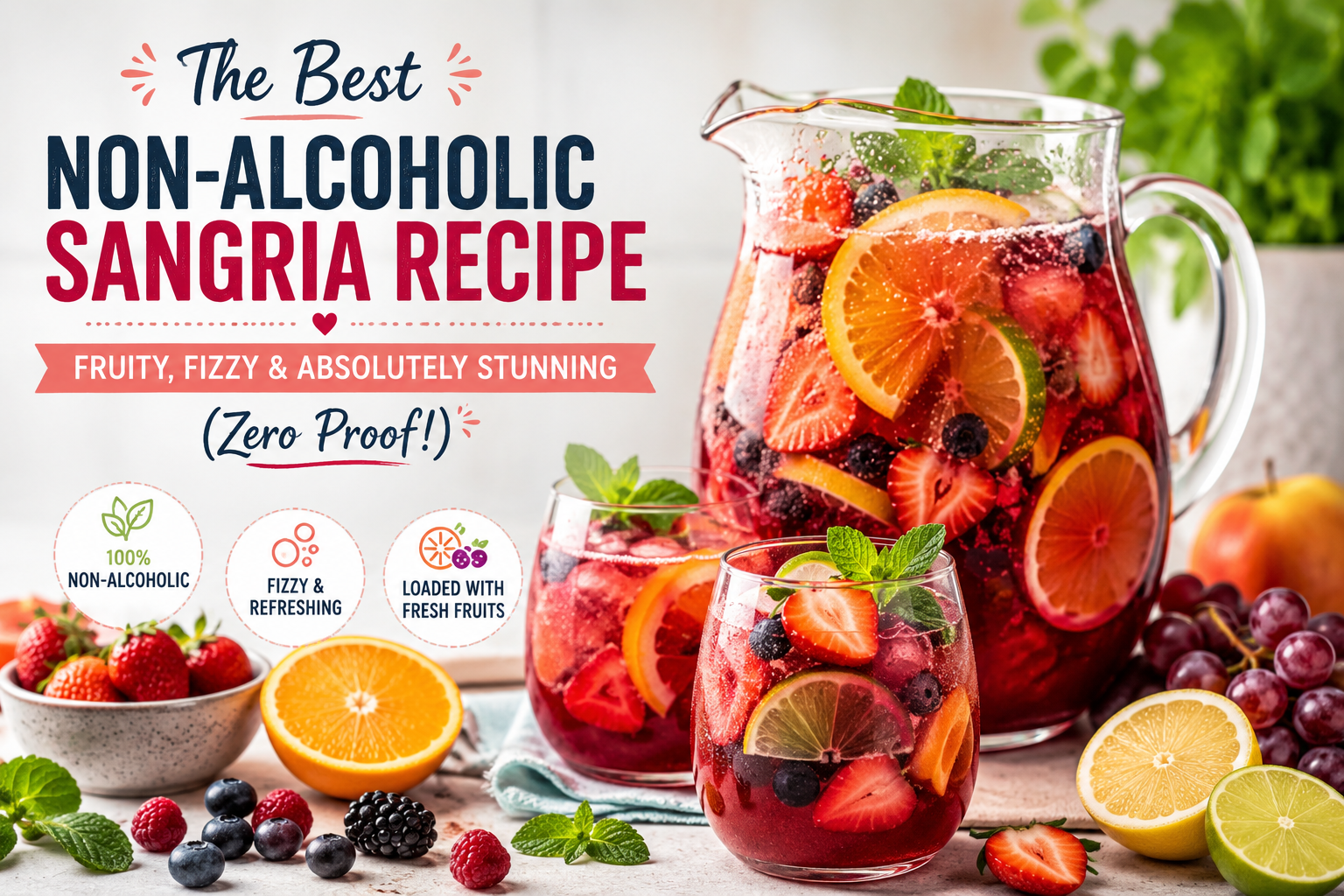
Prep Time: 10 minutes | Chill Time: 30 minutes (or overnight) | Total Time: 40 minutes | Serves: 6 to 8 | Difficulty: Beginner
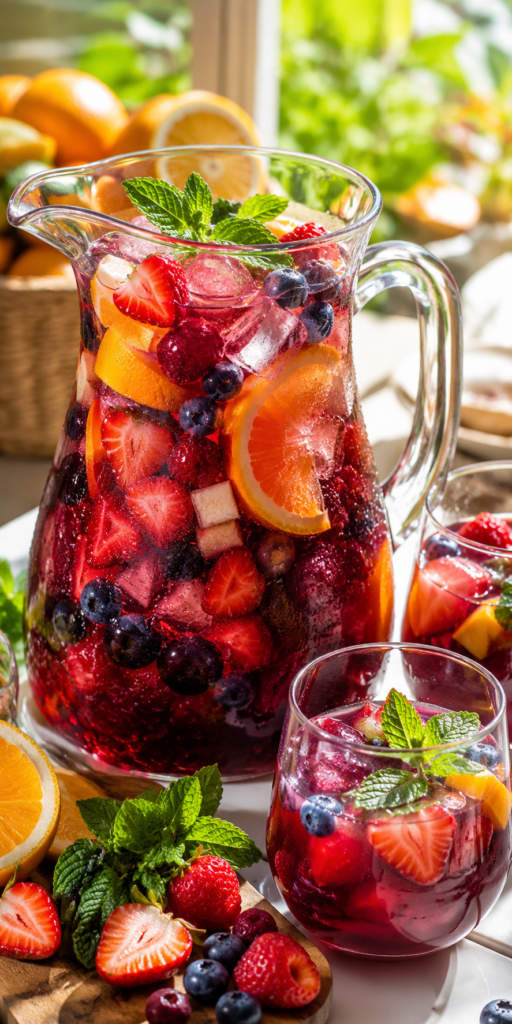
Picture this: a gorgeous glass pitcher filled with deep ruby liquid, jewel-bright slices of orange, plump berries, crisp apple, and a cascade of bubbles rising to the surface. Fresh mint tucked in the corners. Ice clinking gently.
Now picture everyone at the table being able to drink it — kids, pregnant guests, designated drivers, sober friends, health-conscious family members, all of them — without a single compromise on flavor or fun.
That is exactly what this non-alcoholic sangria recipe delivers.
This is not a watered-down imitation of the real thing. It is a fully realized, deeply flavored, visually stunning drink that stands on its own with complete confidence. The layered fruit flavors, the gentle tartness, the sweetness that builds slowly, the effervescent finish — every element is intentional and every sip is genuinely satisfying.
Make it for a Mother’s Day brunch. Bring it to a summer barbecue. Serve it at a baby shower, a birthday, a casual Friday evening, or a holiday table. It works everywhere, it pleases everyone, and it takes about ten minutes to put together.
Let’s make it.
What Is Non-Alcoholic Sangria?
Sangria is a traditional Spanish punch, originally made with red wine, fresh citrus, seasonal fruit, a sweetener, and a splash of something sparkling. It has been a centerpiece of Spanish social culture for centuries — the drink of long afternoons, warm evenings, and tables full of food and conversation.
Non-alcoholic sangria replaces the wine with a thoughtfully chosen combination of fruit juices that recreate the depth, color, and complexity of the original — without any of the alcohol. Done well, the result is a drink that captures everything that makes sangria wonderful: the fruitiness, the layered flavor, the gorgeous color, the celebratory feeling.
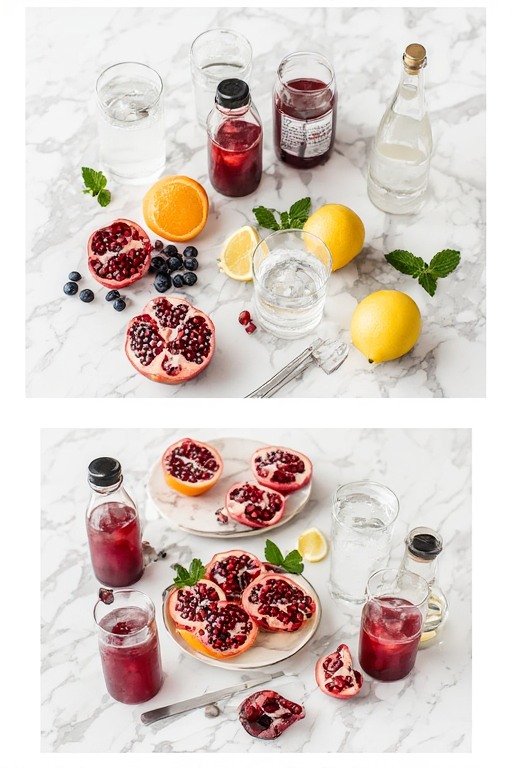
The key difference between a good non-alcoholic sangria and a mediocre one is in the juice selection. A single juice — say, plain grape juice alone — tastes flat and one-dimensional. The secret is building a base from multiple juices that together create something far more nuanced: grape for depth and that signature sangria color, orange for brightness and citrus lift, lemon for tartness and structure, and pomegranate for a beautiful complexity and slight earthiness that mimics the tannins of red wine.
The result is a drink that genuinely does not feel like something is missing. It feels complete.
Why This Recipe Beats Every Other Version
There are dozens of non-alcoholic sangria recipes online. Most of them are simply grape juice with some fruit thrown in and a splash of sparkling water. They’re fine. They’re not memorable.
This recipe is different in four specific ways:
The multi-juice base creates real depth. Instead of relying on a single juice, this recipe layers four distinct juices to build a flavor profile that mimics the complexity of wine-based sangria. Each juice contributes something different — the grape provides body, the pomegranate adds tannin-like bitterness, the orange adds brightness, and the lemon adds structure.
The fruit macerates properly. Throwing fruit into juice and serving it immediately gives you juice with floating fruit. Letting the fruit sit for at least 30 minutes — ideally several hours or overnight — gives you an entirely different drink. The fruit releases its juices into the base, the base flavors absorb into the fruit, and everything melds into something cohesive and complex.
The sparkling water goes in last, always. This seems obvious but most recipes get it wrong. Sparkling water added to the pitcher goes flat. Sparkling water added to each individual glass right before serving stays beautifully fizzy through every sip.
The garnish is part of the drink. Pressed mint leaves, a twist of orange peel, a skewer of fresh berries — these are not decorative afterthoughts. They are aromatic additions that hit your nose before the liquid hits your lips, and that first impression changes how you perceive the flavor of every sip.
Ingredients
The Juice Base
- 475ml (2 cups) 100% purple grape juice — the foundation and color of the drink; use a good quality unsweetened or lightly sweetened juice, not a grape drink or cocktail blend
- 240ml (1 cup) pomegranate juice — this is the secret weapon; it adds depth, a slight pleasant bitterness, and a gorgeous deep ruby color that plain grape juice alone cannot achieve
- 120ml (½ cup) fresh orange juice — freshly squeezed is significantly better here; bottled orange juice is noticeably flatter and sweeter
- 60ml (¼ cup) fresh lemon juice — approximately 2 medium lemons; this provides tartness and structure, preventing the drink from tasting cloying
- 30ml (2 tablespoons) honey, agave syrup, or maple syrup — start with this amount and adjust to taste after the fruit has had time to macerate
The Fruit
- 1 large orange, sliced into thin rounds or half-moon shapes
- 1 medium apple (Granny Smith for tartness, Honeycrisp for sweetness), cored and diced into 1cm cubes
- 1 cup fresh strawberries, hulled and halved
- ½ cup fresh blueberries
- ½ cup fresh raspberries or blackberries
- Optional: ½ cup seedless red grapes, halved — adds visual impact and juicy pops of flavor
To Finish
- 480ml (2 cups) sparkling water or club soda — added per glass, not to the pitcher
- Ice cubes — plenty of them; the drink should be served very cold
- Fresh mint sprigs for garnish
- Optional: thin slices of lemon or lime on the rim, a twist of orange peel, a skewer of mixed berries
Sweetener Options for Specific Dietary Needs
| Sweetener | Amount | Notes |
|---|---|---|
| Honey | 2 tablespoons | Adds floral depth; not vegan |
| Agave syrup | 2 tablespoons | Vegan; mild, neutral sweetness |
| Maple syrup | 2 tablespoons | Vegan; subtle caramel note |
| Stevia | 8–10 drops | Zero sugar; adjust to taste carefully |
| Monk fruit syrup | 1.5 tablespoons | Zero sugar; very clean flavor |
| No sweetener | — | Try it first — ripe seasonal fruit may be sweet enough |
Diabetic-friendly note: This recipe works beautifully without any added sweetener if your fruit is ripe and sweet. Use unsweetened juices and taste before adding anything. Monk fruit syrup is the best zero-glycemic option if sweetness is needed.
Equipment You’ll Need
- Large glass pitcher (at least 1.5 to 2 litre capacity)
- Cutting board and sharp knife
- Citrus juicer (for squeezing fresh orange and lemon)
- Measuring cups and spoons
- Long stirring spoon
- Glasses for serving — wine glasses, large tumblers, or mason jars all work beautifully
How to Make Non-Alcoholic Sangria — Step by Step
Step 1 — Prepare the Fruit
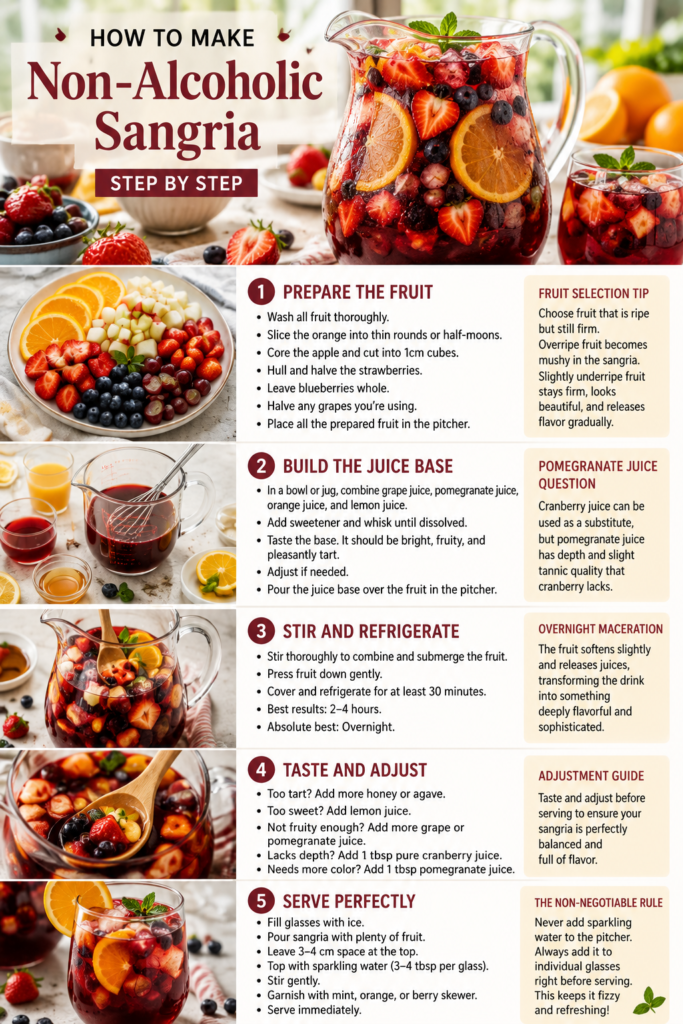
Wash all fruit thoroughly. Slice the orange into thin rounds or half-moon shapes — thin slices release more juice and look more elegant in the pitcher. Core the apple and cut into 1cm cubes — not too small or they become mushy, not too large or they don’t release enough flavor. Hull and halve the strawberries. Leave blueberries whole. Halve any grapes you’re using.
Place all the prepared fruit directly into the pitcher.
Fruit selection tip: Choose fruit that is ripe but still firm. Overripe fruit becomes mushy in the sangria and the texture becomes unpleasant when you eat the fruit pieces. Slightly underripe fruit stays firm, looks beautiful, and releases flavor gradually into the liquid over time.
Step 2 — Build the Juice Base
In a separate bowl or large measuring jug, combine the grape juice, pomegranate juice, fresh orange juice, and fresh lemon juice. Add your chosen sweetener and whisk or stir until it is completely dissolved and the mixture is fully combined.
Taste the base before pouring it over the fruit. It should taste bright, fruity, and pleasantly tart — slightly more intense than you want the final drink to be, because the ice and sparkling water will dilute it when you serve. If it tastes too tart, add a touch more sweetener. If it tastes too sweet, squeeze in a little extra lemon.
Pour the juice base over the fruit in the pitcher.
The pomegranate juice question: Some people substitute cranberry juice here, and it works reasonably well. However, pomegranate juice has a depth and slight tannic quality that cranberry lacks. If you want the drink to taste genuinely close to wine-based sangria, pomegranate is worth seeking out.
Step 3 — Stir and Refrigerate
Give everything a thorough stir, making sure the fruit is fully submerged in the juice and the sweetener is evenly distributed. Press the fruit down gently to encourage it to start releasing its juices.
Cover the pitcher with plastic wrap or a fitted lid. Refrigerate for a minimum of 30 minutes. For the best possible result, refrigerate for 2 to 4 hours. For the absolute best result — particularly if you’re making this for a special occasion — refrigerate overnight.
The longer the fruit macerates in the juice, the more the flavors meld together and the deeper and more complex the drink becomes. A batch made the night before and served the next day is dramatically better than one made and served immediately.
Overnight maceration is the single biggest upgrade you can make to this recipe. The fruit softens slightly, releases all its juices into the base, and the whole drink transforms from a pleasant fruit punch into something that genuinely tastes layered and sophisticated. If you are making this for guests, make it the night before. You will not regret it.
Step 4 — Taste and Adjust
After the chilling period, taste the sangria before serving. This is the moment to make any final adjustments:
Too tart? Add another tablespoon of honey or agave and stir well. Let it sit 5 more minutes.
Too sweet? Squeeze in the juice of half a lemon and stir.
Not fruity enough? Add another half cup of grape juice or pomegranate juice.
Lacks depth? A small splash — about 1 tablespoon — of pure cranberry juice (not cranberry cocktail) adds an extra layer of complexity.
Needs more color? A tablespoon of pomegranate juice stirred in deepens the ruby color dramatically.
Step 5 — Serve Perfectly
Fill each glass generously with ice cubes — the drink should be served very cold. Ladle or pour the sangria over the ice, making sure to include plenty of fruit pieces in each glass. The fruit is part of the drink, not just decoration.
Leave about 3 to 4 cm of space at the top of each glass. Pour sparkling water to fill — approximately 3 to 4 tablespoons per glass, but adjust to your taste. Give each glass one gentle stir to combine the sparkling water with the sangria.
Garnish with a fresh mint sprig tucked into the ice, a thin orange round on the rim, or a small skewer of mixed berries balanced across the top of the glass.
Serve immediately.
The non-negotiable rule: Never add the sparkling water to the pitcher. Always add it to individual glasses right before serving. Sparkling water in the pitcher goes flat within minutes. Sparkling water added to each glass stays fizzy through the entire drink. This one rule makes the difference between a flat, underwhelming sangria and a bright, effervescent one.
How to Make a Large Batch for a Party
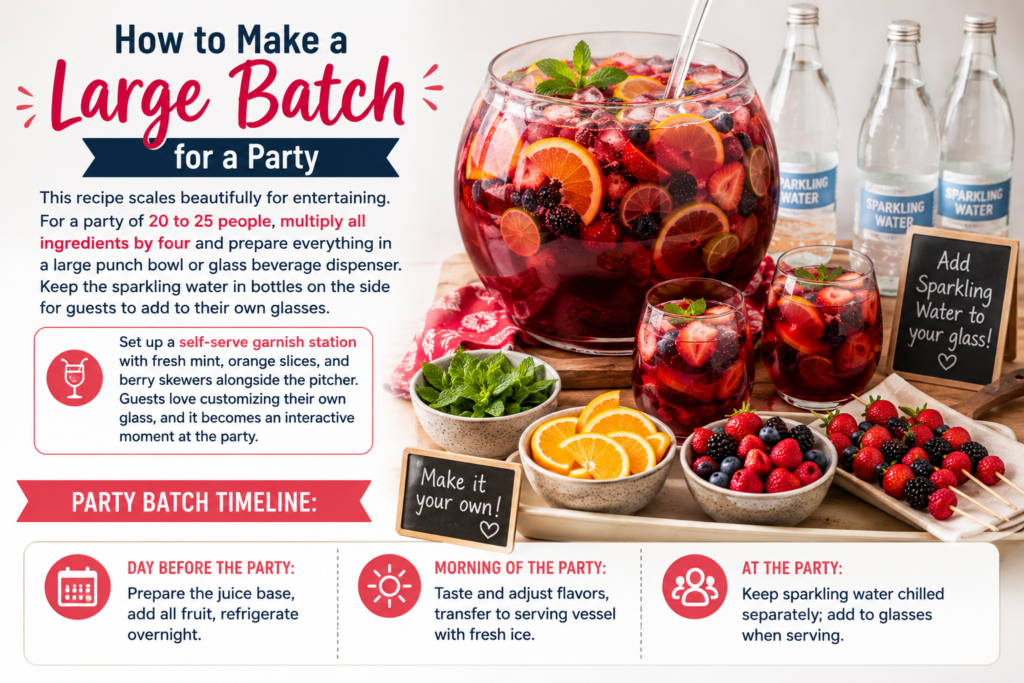
This recipe scales beautifully for entertaining. For a party of 20 to 25 people, multiply all ingredients by four and prepare everything in a large punch bowl or glass beverage dispenser. Keep the sparkling water in bottles on the side for guests to add to their own glasses.
Set up a self-serve garnish station with fresh mint, orange slices, and berry skewers alongside the pitcher. Guests love customizing their own glass, and it becomes an interactive moment at the party.
Party batch timeline:
- Day before the party: Prepare the juice base, add all fruit, refrigerate overnight
- Morning of the party: Taste and adjust flavors, transfer to serving vessel with fresh ice
- At the party: Keep sparkling water chilled separately; add to glasses when serving
What to Serve Alongside Non-Alcoholic Sangria
This sangria pairs beautifully with food. Here are the best pairings by occasion:
Mother’s Day Brunch: Avocado toast, smoked salmon on cream cheese crostini, fresh fruit platter, mini quiches, almond croissants
Summer Barbecue: Grilled chicken skewers, corn on the cob, watermelon and feta salad, fresh guacamole with chips
Holiday Dinner: Cheese board with aged cheddar and brie, stuffed mushrooms, bruschetta, antipasto platter
Afternoon Gathering: Finger sandwiches, scones with clotted cream and jam, fresh strawberries, lemon bars
Kids’ Party: Mini sandwiches, fruit skewers, vegetable crudités with hummus, cheese cubes
Common Mistakes to Avoid
Adding sparkling water to the pitcher. It goes flat within minutes. Add it only to individual glasses, right before serving, every single time.
Using overly sweet or artificial juices. “Grape drink” and “grape juice cocktail” are not the same as pure grape juice. Read the label and choose juices made from 100% fruit with no added sugar or artificial flavors.
Not chilling long enough. Thirty minutes is the minimum. Two hours is good. Overnight is best. A sangria that hasn’t had time to macerate tastes like juice with floating fruit. A properly rested sangria tastes like a whole different drink.
Skipping the pomegranate juice. It’s optional in the sense that the drink will still be good without it — but it adds a complexity that nothing else quite replicates. If you want your sangria to taste genuinely sophisticated rather than like glorified fruit punch, include it.
Using overripe or old fruit. Old fruit becomes mushy in the pitcher and releases off-flavors into the liquid. Always use fresh, firm, ripe fruit.
Forgetting to taste before serving. Every batch of fruit is different in sweetness and tartness. Always taste the sangria after chilling and adjust the sweetness or acidity before committing to the final pour.
Frequently Asked Questions
Does non-alcoholic sangria actually taste like real sangria? With the right juice base — particularly the combination of grape juice and pomegranate juice — non-alcoholic sangria gets remarkably close to the fruity, slightly tannic quality of wine-based sangria. It won’t have the alcohol warmth or the specific taste of fermented wine, but it captures the spirit, flavor profile, and visual appeal of the original so well that most people don’t feel like they’re missing anything.
Can I use non-alcoholic wine instead of grape juice? Yes, and many people prefer this approach. Non-alcoholic red wine has a more complex, wine-like flavor than plain grape juice because it goes through fermentation before the alcohol is removed. Brands like Ariel, Fre, and JØYUS are widely available and work beautifully in this recipe. Substitute it in equal amounts for the grape juice.
What is the best grape juice to use? Look for 100% pure Concord grape juice or a dark purple grape juice with no added sugar or artificial flavoring. Welch’s 100% Grape Juice is the most widely available and works very well. Avoid “grape drinks” or “grape cocktails” which are largely water and sugar.
Can I make this ahead of time? Yes — in fact, you should. Make the sangria base (without sparkling water) up to 24 hours in advance. The flavors deepen and meld significantly with time. Add sparkling water only to individual glasses right before serving.
Is this recipe suitable for children? Completely. This sangria is entirely alcohol-free, made from fruit juices and fresh fruit. Children typically love it — especially the sparkling version with plenty of ice and a skewer of fresh berries.
Can I make a single glass instead of a whole pitcher? Absolutely. Scale the recipe down by dividing everything by 6. Use approximately 80ml grape juice, 40ml pomegranate juice, 20ml orange juice, 10ml lemon juice, a teaspoon of sweetener, and a handful of mixed fruit. Top with sparkling water, add ice, and garnish.
Will the fruit sink to the bottom? Some fruit will float, some will sink — this depends on the density of each piece. Give the pitcher a gentle stir before ladling each glass to redistribute everything evenly. Using a ladle rather than pouring directly also helps you scoop up plenty of fruit for each glass.
How do I make it more tart? Add extra fresh lemon juice, a tablespoon at a time, until you reach your preferred level of tartness. A small splash of pure cranberry juice also adds pleasant tartness alongside extra depth of flavor.
What is the difference between sangria and a sangria mocktail? Traditional sangria contains red or white wine as its primary ingredient. A sangria mocktail recreates the same flavor profile — fruity, slightly tannic, sparkling, served with fruit — using only non-alcoholic ingredients. The term “sangria sipper” or “virgin sangria” is sometimes used to describe the same thing.
Nutritional Information (Per Serving, Approximately 240ml)
| Nutrient | Amount |
|---|---|
| Calories | 95 kcal |
| Carbohydrates | 23g |
| Sugar | 19g (naturally occurring from fruit and juice) |
| Fiber | 2g |
| Protein | 0.5g |
| Fat | 0g |
| Sodium | 8mg |
| Vitamin C | 35% DV |
| Potassium | 280mg |
Values are approximate and will vary based on specific juice brands and fruit quantities used. Made without added sweetener, calories reduce to approximately 75 kcal per serving.
The Bottom Line
A great non-alcoholic sangria is not a consolation prize for people who aren’t drinking — it is a genuinely beautiful drink in its own right.
The layered fruit juices, the long maceration, the perfectly timed sparkling water, the fresh fruit spilling out of every glass — this recipe delivers all of it. It is inclusive without being diminished. It is festive without being alcoholic. It is simple to make and genuinely impressive to serve.
Put a pitcher of this on any table — brunch, barbecue, birthday, holiday dinner — and watch it become the first thing that runs out.
Pour the juice. Add the fruit. Wait patiently. Serve with ice and bubbles.
Cheers to everyone.
Made this recipe? Leave a star rating below and tell us how it turned out! And if you tried one of the variations, we especially want to know which one became your favorite.