
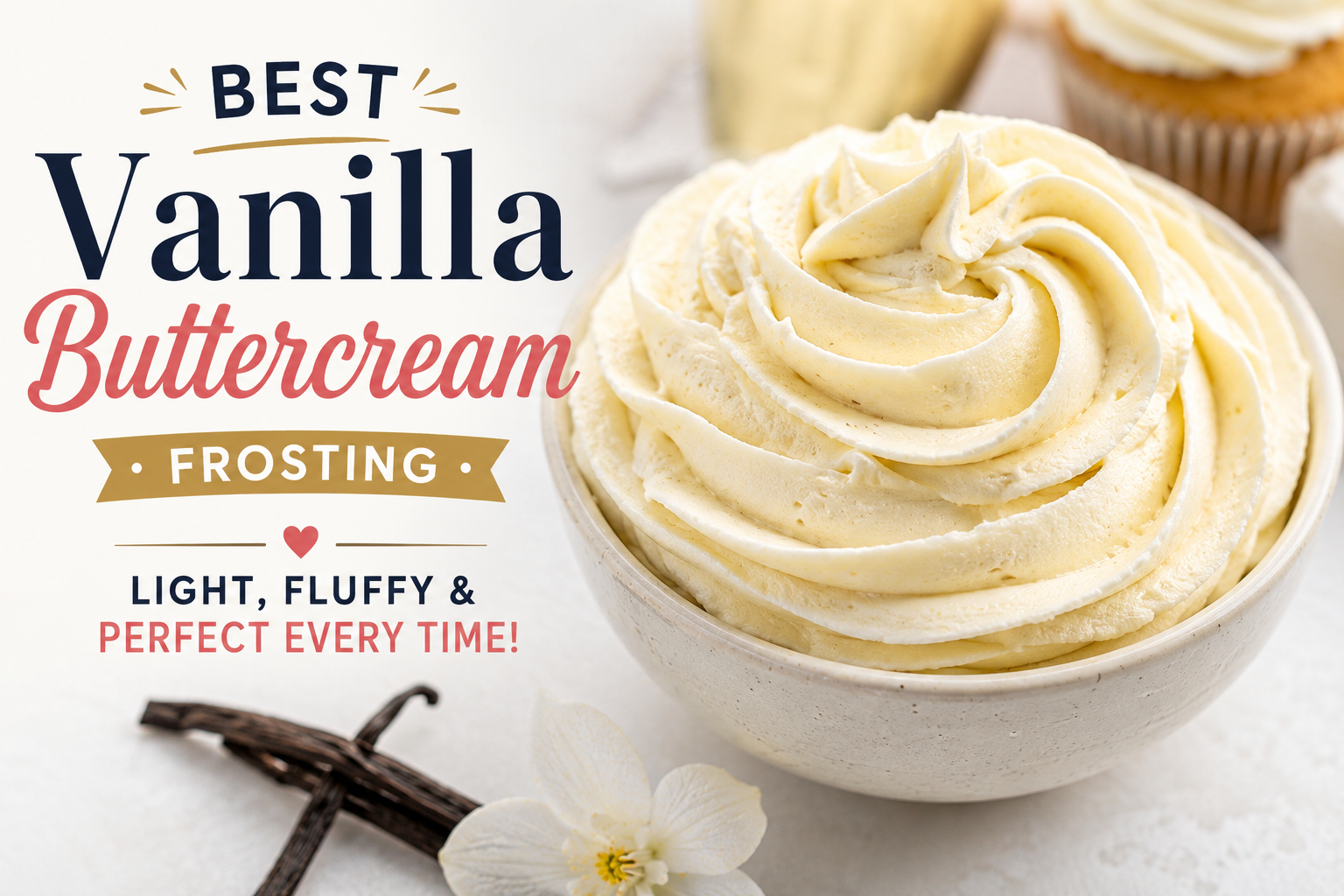
Prep Time: 5 minutes | Total Time: 10 minutes | Makes: Enough for 12 to 16 cupcakes or one 9×13 inch cake
A great cake deserves a great frosting. And honestly, a great frosting can make even a simple cake feel like something special.
I have been making this vanilla buttercream for years now — for birthday cakes, holiday cupcakes, bake sales, random Tuesday afternoons when someone in the house decides we need cupcakes. Every single time, people scrape the bowl and ask me how I made it taste so good when it is only four ingredients.
The answer is technique, not magic. Beat the butter long enough before touching the sugar. Sift the powdered sugar every time without exception. Use heavy cream instead of milk. These are the three decisions that separate a forgettable buttercream from one that people remember.
This is the frosting that goes on my vanilla cupcakes, my birthday cakes, and my sugar cookies. Once you nail the method, you will never buy store-bought frosting again.
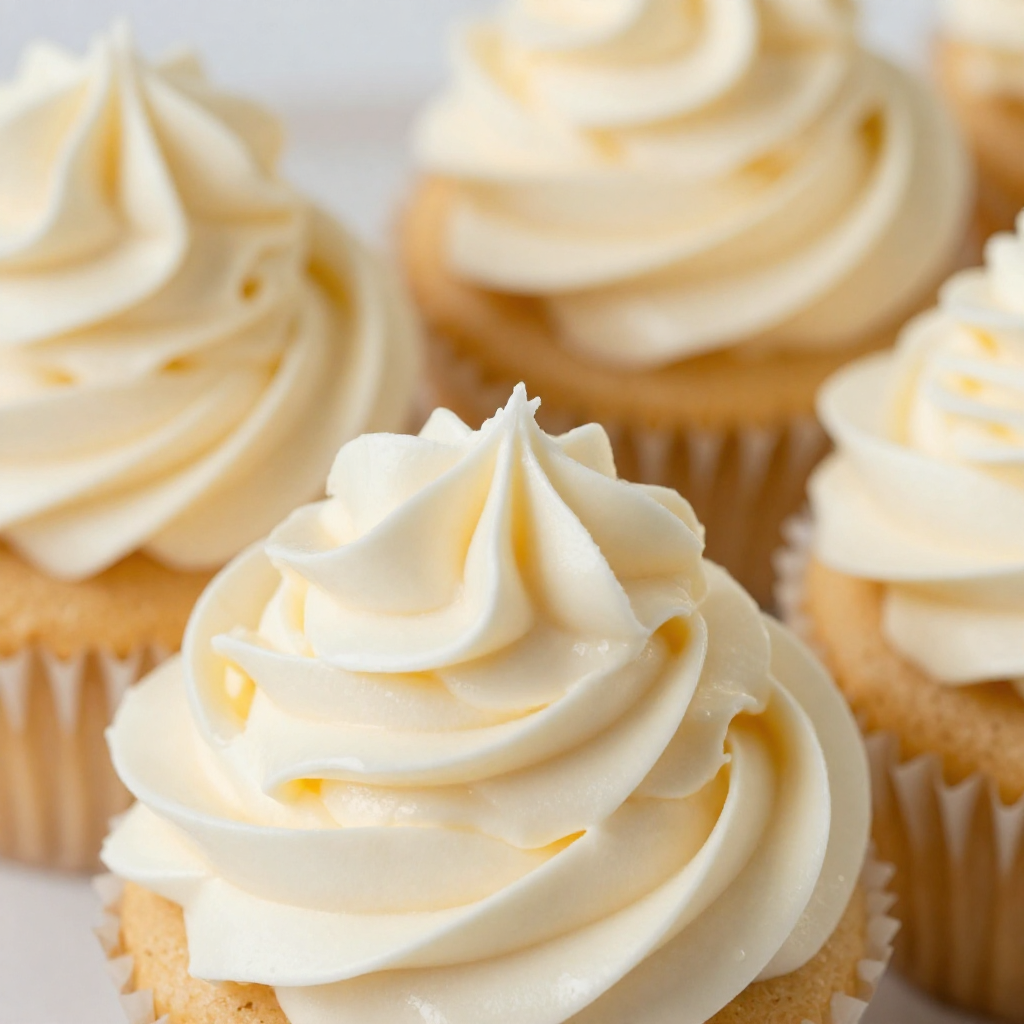
Vanilla Buttercream Frosting Recipe
American-style buttercream is the simplest of all frosting styles. No cooking, no eggs, no heating sugar syrup to a precise temperature. Just butter, powdered sugar, cream, and vanilla beaten together into something wonderfully light and creamy.
It is sweet — properly sweet, the way frosting should be — and it pipes beautifully into tall swirls that hold their shape from the moment you frost to the moment the last bite is gone. It works on cupcakes, layer cakes, sheet cakes, and cookies. It takes 10 minutes. And the leftovers, eaten directly off the spatula standing over the kitchen sink, are one of life’s small but genuine pleasures.
Helpful Reader Reviews
“I have made buttercream frosting a hundred times and never loved it until this recipe. The tip about beating the butter first changed everything. My cupcakes looked like they came from a bakery.” — Jessica ★★★★★
“SO good. My kids asked me why our cupcake frosting suddenly tastes so much better. The answer is this recipe. Making it forever.” — Claire ★★★★★
Ingredients for Vanilla Buttercream Frosting
Unsalted Butter — softened to room temperature. This is the most important preparation step in the entire recipe and cannot be skipped or rushed. Butter that is too cold will not beat properly and leaves the frosting lumpy and dense. Butter that is too warm goes greasy and the frosting loses its structure completely. Properly softened butter leaves a small indentation when pressed gently with a finger but still holds its shape. Set it out 30 to 60 minutes before starting — more in a cool kitchen, less in a warm one.
Powdered Sugar — also called confectioners’ sugar or icing sugar. Always sift it before adding. Even if the bag looks fine, powdered sugar develops lumps during storage that do not beat out fully and leave small bumpy patches in the finished frosting. Thirty seconds of sifting makes a noticeable difference in smoothness and is worth doing every single time.
Heavy Cream — the ingredient that takes this frosting from decent to genuinely exceptional. The fat content in heavy cream produces a richer, silkier, more luxurious texture than regular milk. Always use it at room temperature — cold cream can make the frosting look slightly curdled or separated when added to the butter. Whole milk works in a pinch but heavy cream is the right choice when you want the best result.
Pure Vanilla Extract — not imitation, ever. In a frosting where vanilla is the only flavor, the quality of the extract is immediately tasted. Pure vanilla extract has a warm, rounded, complex flavor. Imitation has a sharp artificial edge that is difficult to hide. Use the best quality pure extract you have.
Pinch of Salt — do not skip it. Salt does not make the frosting taste salty — it balances the sweetness and makes the vanilla flavor come forward. Without it, the frosting tastes flat and one-dimensional. With it, every element is more defined and more delicious.
Ingredients
Frosts 12 to 16 cupcakes or one 9×13 inch cake
Buttercream Ingredients:
- 1 cup (225g) unsalted butter, softened to room temperature
- 3½ to 4 cups (420g to 480g) powdered sugar, sifted
- 3 to 4 tbsp heavy cream, room temperature
- 2 tsp pure vanilla extract
- Pinch of fine sea salt
How to Make Vanilla Buttercream Frosting
Beat the Butter First — Place the softened butter in the bowl of a stand mixer fitted with the paddle attachment. Beat on medium-high speed for a full 3 to 4 minutes until the butter is noticeably pale — almost white in color — and visibly fluffy in volume. Scrape down the sides of the bowl once or twice during this process.
Pro Tip: Beat the butter alone until it looks almost white and the volume has clearly increased before adding a single spoonful of sugar. Most people rush this step or skip it entirely. This is the one technique that makes the biggest difference between dense, heavy frosting and the genuinely light, cloud-like frosting that people rave about. Set a timer and commit to the full time.
Add the Powdered Sugar — With the mixer running on low speed, add the sifted powdered sugar one cup at a time. Adding it all at once creates a sugar dust cloud and can result in uneven mixing. Add each cup slowly and wait until it is mostly incorporated before adding the next. Once all the sugar is in, increase the speed to medium and beat for 1 minute.
Add Cream, Vanilla, and Salt — Add 3 tablespoons of room temperature heavy cream, the vanilla extract, and the pinch of salt. Beat on medium speed until combined, then increase to high speed and beat for a full 2 to 3 minutes. The frosting should look very light, fluffy, and smooth at this point — noticeably increased in volume from where it started.
Taste and adjust. Add more powdered sugar if you want it sweeter or stiffer. Add the remaining tablespoon of cream if you want a slightly softer, more spreadable consistency. For stiffer frosting for detailed piping, hold back on the cream.
Final Step — Before frosting your cake or cupcakes, switch from the paddle attachment to a spatula and stir the frosting by hand for about 1 minute. This pops any large air bubbles that formed during beating and produces a noticeably smoother surface finish. The frosting is ready to use immediately or can be stored.
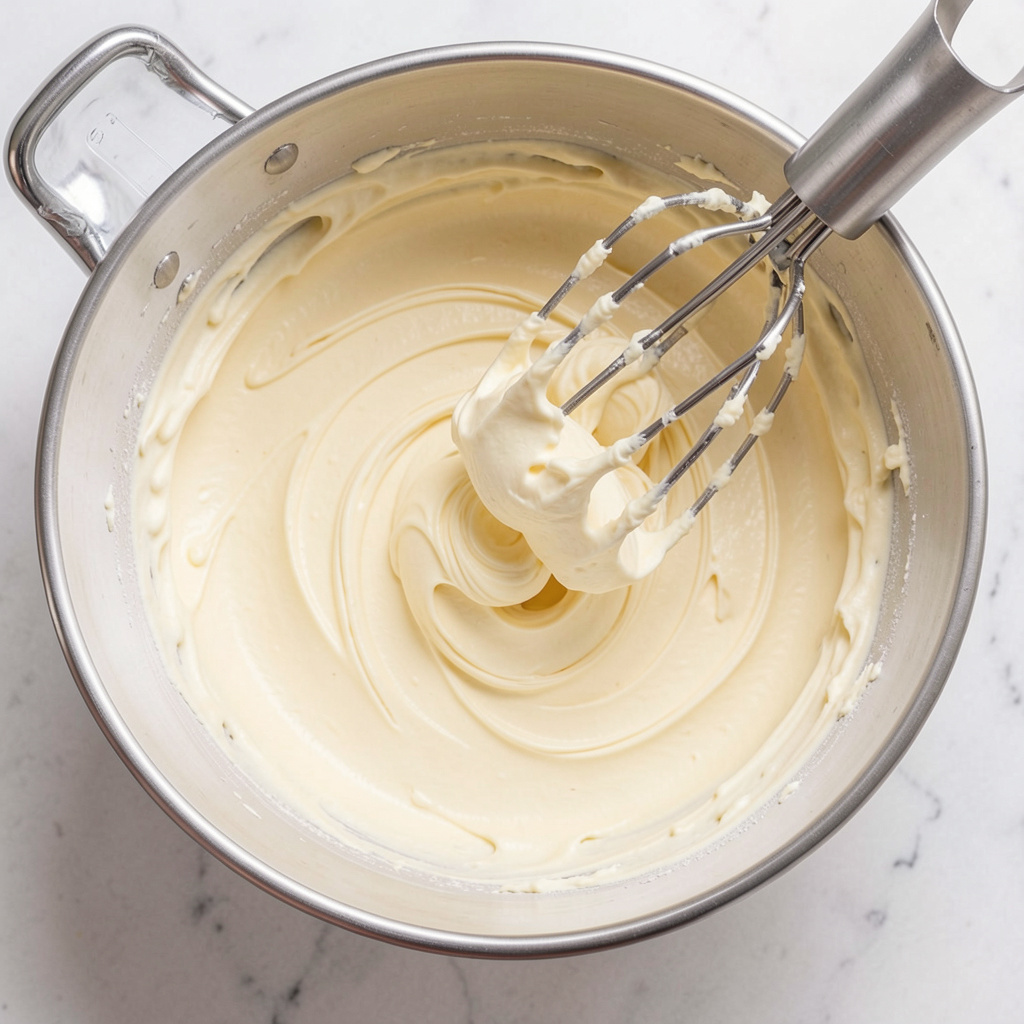
How Do I Know When the Buttercream is Ready?
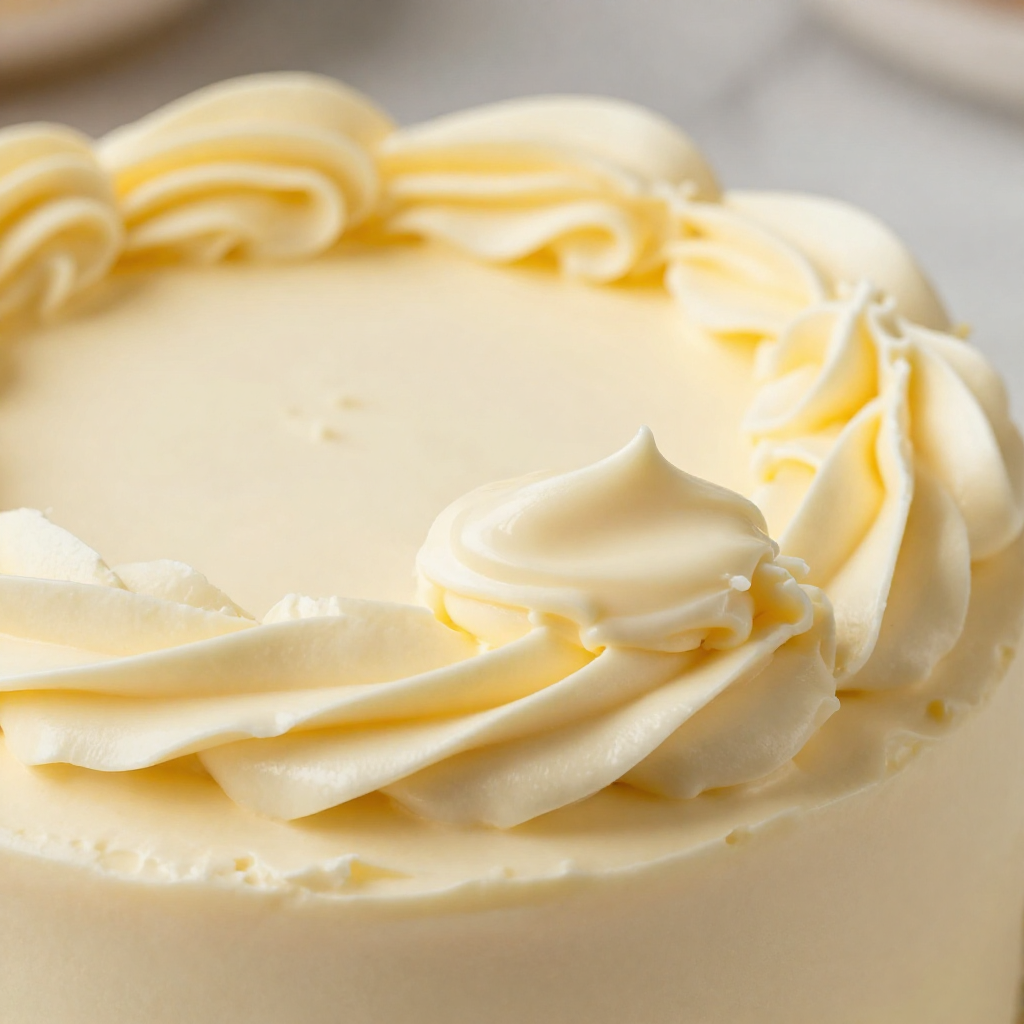
The frosting is done when it holds a stiff peak when you lift the beater — the tip of frosting stands straight up without drooping or collapsing. It should be almost white or very pale ivory in color, not yellow. It should feel light and airy rather than heavy or dense when you run a spatula through it. Pipe a small swirl onto a piece of parchment — if it holds its shape cleanly without spreading, your buttercream is perfect.
Tips for the BEST Vanilla Buttercream Frosting
Room temperature butter is non-negotiable — Cold butter will not aerate properly. Too-warm butter creates a greasy, loose frosting that cannot hold its shape. Set butter out 30 to 60 minutes before baking and your frosting will be dramatically better for it.
Always sift the powdered sugar — Lumps in powdered sugar do not beat out fully. They end up as tiny bumps in the finished frosting that catch the light and look messy. Thirty seconds of sifting prevents this entirely.
Beat the butter before adding anything else — Three to four minutes minimum on medium-high speed. This single step, more than any other, is what produces a fluffy, light frosting versus a dense, heavy one. Do not shorten it.
Use heavy cream — The fat content makes the texture genuinely richer and silkier than milk. Room temperature cream incorporates smoothly without causing the frosting to look separated or curdled.
Beat at high speed for the final few minutes — The last 2 to 3 minutes at high speed after adding the cream is what creates the airy, cloud-like texture. Medium speed is not sufficient for this final stage.
Stir by hand before using — After all that beating, the frosting contains air pockets that create gaps and bubbles on the surface of a frosted cake. Two minutes of stirring by hand with a spatula pops those air bubbles and produces a noticeably smoother finish.
Can I Bake Meatloaf in a Loaf Pan? (No — Wrong Recipe!)
But I can answer: Can I pipe this frosting vs spread it?
Both work beautifully with a few small adjustments:
For piping — Keep the frosting stiffer. Use 3 tablespoons of cream maximum. The frosting must hold peaks under its own weight when piped into tall swirls. A Wilton 1M tip produces the classic bakery-style rose swirl.
For spreading — Use the full 4 tablespoons of cream for a slightly softer, more spreadable consistency that glides smoothly across the surface of a cake or sheet pan without dragging or tearing.
Common Questions
Why is my buttercream yellow instead of white? The butter color. Higher-quality European-style butter has a deeper natural yellow that carries into the frosting. To achieve a whiter result, use standard American butter, beat for longer at high speed, or add a single tiny drop of purple gel food coloring — the purple neutralizes the yellow tone completely without making the frosting look purple.
Why is my buttercream grainy or lumpy? Almost always caused by powdered sugar that was not sifted. Lumps in the sugar do not beat out fully. The second possible cause is room temperature cream added when still cold — cold cream causes the fat in butter to seize. Always sift the sugar and always use room temperature cream.
Why is my buttercream too sweet? American buttercream is sweet by nature. To reduce the perception of sweetness, add an extra pinch of salt and a few extra drops of vanilla — both reduce the sweetness without changing the structure. Alternatively, use Swiss meringue buttercream for a noticeably less sweet result.
Can I use salted butter? Yes — reduce or eliminate the added pinch of salt and taste before serving. Salted butter varies in salt content between brands so adjust accordingly. The frosting will still be delicious.
My frosting is too stiff to pipe — how do I fix it? Add heavy cream one teaspoon at a time and beat well between each addition until it reaches the right consistency. Add slowly — the consistency shifts quickly.
My frosting is too soft and drooping — how do I fix it? Add sifted powdered sugar one tablespoon at a time until firm. Or refrigerate the frosting for 15 to 20 minutes and re-beat — the cold firms the butter and brings the structure back.
Nutritional Information (Per Serving — Based on 16 Servings)
| Nutrient | Amount |
|---|---|
| Calories | 210 kcal |
| Total Fat | 12g |
| Saturated Fat | 7.5g |
| Carbohydrates | 26g |
| Sugar | 25g |
| Protein | 0g |
| Sodium | 15mg |
| Cholesterol | 32mg |
Values are approximate per serving based on 16 servings.
More Frosting Recipes to Try
Chocolate Cream Cheese Frosting — richer and slightly tangier than pure buttercream, with a decadence that pairs beautifully with vanilla or red velvet cake.
Swiss Meringue Buttercream — silkier, less sweet, and more stable at warm temperatures. Worth the extra effort for a wedding cake or special celebration.
Cream Cheese Frosting — the natural pairing for carrot cake, red velvet, and banana cake. Tangy, creamy, and slightly less sweet.
Strawberry Buttercream — made with real reduced strawberry puree. Natural pink color, genuine fruit flavor, and absolutely stunning on white or vanilla cake.
Lemon Cream Cheese Frosting — tangy, bright, and beautifully fresh. Perfect on lemon cupcakes, carrot cake, or any cake that benefits from a citrusy lift.