
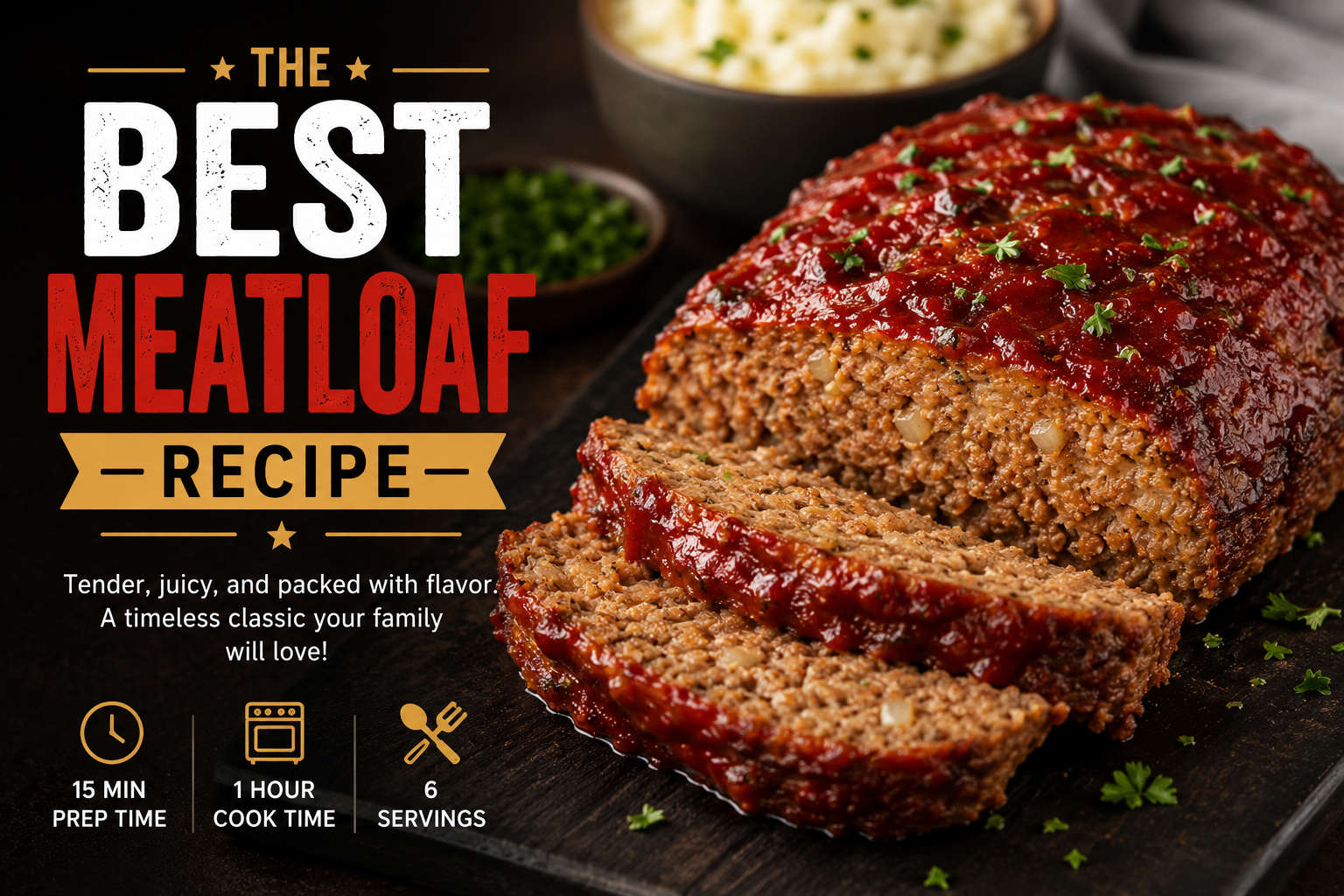
Best Meatloaf Recipe — Juicy, Tender & Loaded with Flavor (Classic + 6 Variations!)
Prep Time: 15 minutes | Cook Time: 1 hour | Rest Time: 10 minutes | Total Time: 1 hour 25 minutes | Serves: 6 to 8 | Difficulty: Beginner
Meatloaf has a reputation problem — and it is completely undeserved.
Somewhere along the way, meatloaf became the punchline of dinner conversations. The dry, gray, flavorless slab that nobody wanted but everyone had to eat. The meal that made kids groan and adults apologize before serving it.
This recipe is none of those things.
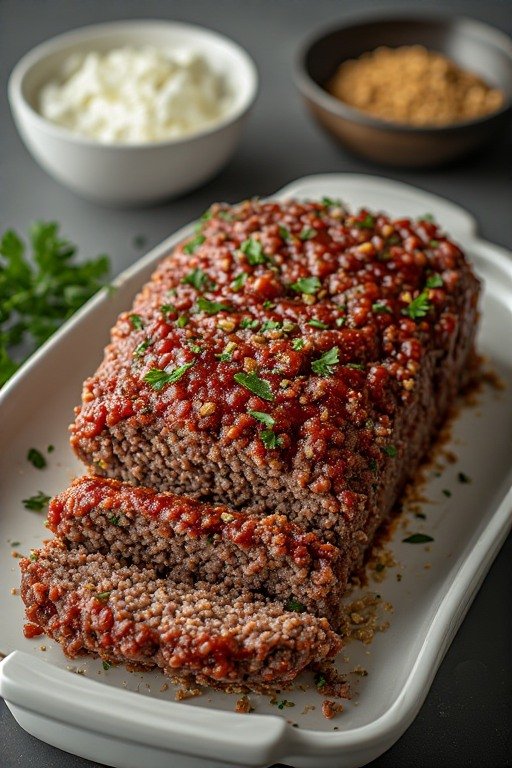
This meatloaf is juicy from the inside out, deeply flavored with sautéed onion, garlic, Worcestershire, and fresh herbs, bound perfectly so every slice holds together cleanly, and finished with a sweet-tangy brown sugar ketchup glaze that caramelizes in the oven into something genuinely extraordinary. It is the kind of meatloaf that converts people — the ones who swore they hated meatloaf — on the very first bite.
And it is genuinely simple. One bowl, one baking sheet, basic ingredients, and a handful of techniques that make all the difference between forgettable and unforgettable.
This is the meatloaf recipe your family will request on repeat. Let’s make it.
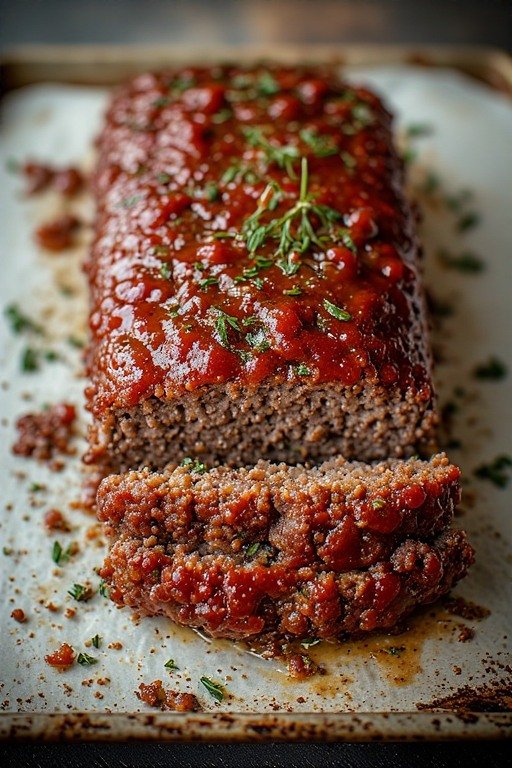
Why This Is the Best Meatloaf Recipe
Before the ingredients and steps, here are the five specific decisions that make this meatloaf better than any other you have made:
Sautéed onions instead of raw. Raw onion in meatloaf stays slightly crunchy, can have a harsh bite, and does not fully integrate into the meat. Onions sautéed in butter until soft and golden add deep sweetness, blend seamlessly into the mixture, and produce a noticeably more complex, rounded flavor.
The panade technique. A panade is a mixture of breadcrumbs and milk that is combined and allowed to absorb before being added to the meat. The milk-soaked breadcrumbs coat the meat proteins and physically prevent them from binding too tightly during baking — the result is a meatloaf that is significantly more tender and moist than one made with dry breadcrumbs mixed directly into the beef.
Free-form baking on a sheet pan, never in a loaf pan. A loaf pan traps the meatloaf in its own rendered fat — it sits in grease, the bottom becomes soggy, and the sides cook differently from the top. A free-form meatloaf shaped on a rimmed baking sheet allows fat to drain away, develops a proper crust on all sides, and browns evenly all the way around.
The double-glaze method. The glaze is applied twice — once halfway through baking and again in the final 10 minutes. The first application caramelizes and develops depth. The second application creates that glossy, sticky, gorgeous finish that makes every slice look and taste exceptional.
Never overmix. This is the single most cited mistake in every meatloaf recipe — and it is the most consequential one. Overmixing develops the gluten in the breadcrumbs and compresses the meat proteins, producing a dense, tough meatloaf rather than a tender one. Mix only until just combined — a few dry streaks are better than overmixing.
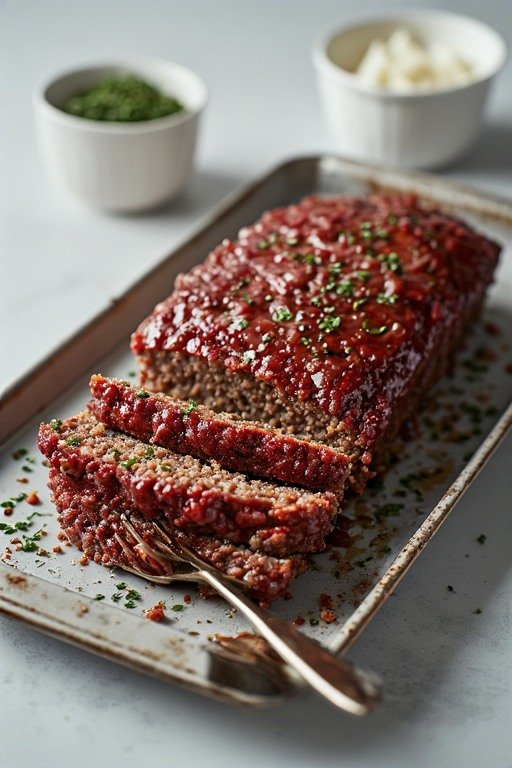
The Meatloaf Meat Guide — Choosing the Right Beef
The ground beef you choose is the foundation of the entire recipe. Here is everything you need to know.
| Fat Percentage | Label | Meatloaf Result | Recommendation |
|---|---|---|---|
| 70/30 | Ground beef | Very greasy, heavy | Not recommended |
| 80/20 | Ground chuck | Juicy, rich, slightly greasy | Good choice |
| 85/15 | Ground beef | Excellent balance | Best choice |
| 90/10 | Ground sirloin | Leaner, less juicy | Use panade technique |
| 93/7 | Extra lean | Can be dry | Not recommended alone |
The recommendation: 80/20 or 85/15 ground beef is the sweet spot for meatloaf. Enough fat to stay juicy through the long baking time, not so much that the meatloaf sits in a pool of rendered grease.
The meat blend approach: Many of the best meatloaf recipes use a blend of meats rather than pure ground beef. The classic blend is beef plus pork — the pork adds richness, moisture, and a subtle sweetness that makes the meatloaf noticeably more complex. A 50/50 beef-pork blend, or a two-thirds beef, one-third pork ratio, produces outstanding results.
Italian sausage as a component: Replacing a quarter to a third of the ground beef with mild or sweet Italian sausage adds pre-seasoned, herb-forward flavor that does significant flavor work without adding any extra ingredients. This is one of the best shortcuts in meatloaf cooking.
Ingredients
For the Meatloaf
- 2 lbs (900g) 80/20 or 85/15 ground beef — or use 1.5 lbs beef plus 0.5 lb ground pork for the best blend
- 1 medium yellow onion, finely diced
- 4 garlic cloves, minced
- 2 tablespoons unsalted butter — for sautéing the onion
- ¾ cup panko breadcrumbs — panko produces a lighter texture than regular breadcrumbs
- ⅓ cup whole milk — for the panade; the milk is what keeps the meatloaf tender
- 2 large eggs, lightly beaten
- 2 tablespoons Worcestershire sauce — the umami backbone of the entire recipe
- 1 tablespoon Dijon mustard — adds savory depth without being identifiable
- 2 tablespoons fresh parsley, finely chopped — or 2 teaspoons dried parsley
- 1 teaspoon salt
- ½ teaspoon freshly ground black pepper
- ½ teaspoon garlic powder
- ½ teaspoon onion powder
- ½ teaspoon smoked paprika — adds a gentle smokiness that makes the whole meatloaf taste more complex
For the Sweet Tangy Glaze
- ½ cup ketchup — the base; use a good quality ketchup
- 2 tablespoons brown sugar — light or dark; dark adds a deeper molasses note
- 1 tablespoon Worcestershire sauce
- 1 tablespoon apple cider vinegar — adds tang that balances the sweetness beautifully
- 1 teaspoon Dijon mustard
- ½ teaspoon garlic powder
- Pinch of cayenne — optional; adds warmth without heat
Ingredient Notes
On the panko vs regular breadcrumbs: Panko breadcrumbs are larger and lighter than regular breadcrumbs — they absorb the milk in the panade more effectively and produce a more open, tender crumb in the finished meatloaf. Regular Italian-seasoned breadcrumbs work and add extra flavor, but produce a slightly denser result. Fresh bread torn and soaked in milk (3 slices of white bread) is the most traditional approach and produces the most tender meatloaf of all three options.
On the milk: Whole milk produces the most tender result because its fat content contributes to the overall moisture of the meatloaf. Two percent milk works well. For a dairy-free version, substitute unsweetened oat milk or beef broth — both work effectively in the panade.
On the Worcestershire sauce: This is the single most important flavoring ingredient in the meatloaf beyond the beef itself. It adds umami, depth, and a complexity that makes the meatloaf taste genuinely savory rather than just beefy. Do not reduce or skip it.
On the eggs: Two large eggs provide both binding and moisture. They hold the meatloaf together and contribute to the tender texture. Never skip the eggs — a meatloaf without eggs falls apart when sliced.
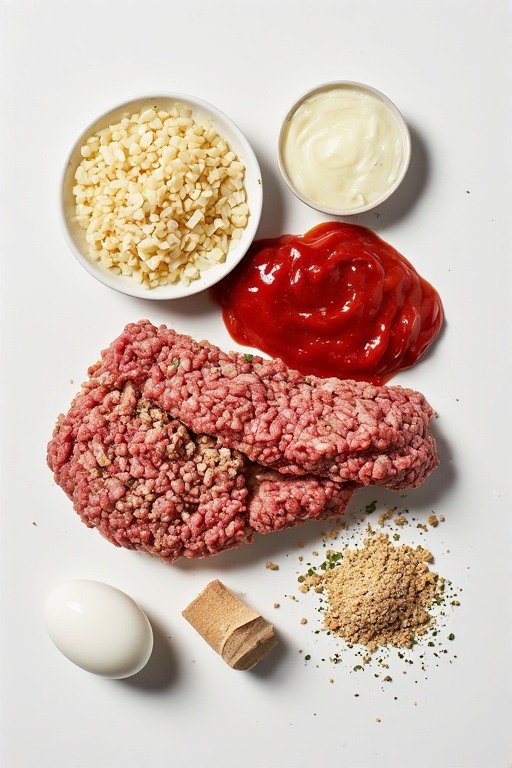
Equipment You’ll Need
- Large skillet — for sautéing the onion
- Large mixing bowl — for combining everything
- Rimmed baking sheet — essential; not a loaf pan
- Aluminum foil and parchment paper — for lining the baking sheet
- Instant-read meat thermometer — the only reliable way to check doneness
- Large spatula — for transferring the meatloaf to a serving platter
Step-by-Step Instructions
Step 1 — Make the Panade
In a large mixing bowl, combine the panko breadcrumbs and whole milk. Stir together until the milk is fully absorbed by the breadcrumbs. Set aside and let it rest for at least 5 minutes while you prepare the other ingredients.
The panade should look like a thick, wet paste by the time you are ready to use it. This resting time is important — the breadcrumbs need to fully absorb the milk rather than just being coated by it.
The panade is the single biggest upgrade in this recipe. Dry breadcrumbs mixed directly into meat absorb moisture from the meat during baking — leaving the meatloaf drier. Milk-soaked breadcrumbs are already saturated and cannot absorb any more moisture — instead, they release moisture into the meat during baking. This reversal of moisture direction is what makes the difference between a dry meatloaf and a genuinely juicy one.
Step 2 — Sauté the Onion and Garlic
In a skillet over medium heat, melt the butter. Add the finely diced onion and cook, stirring occasionally, for 8 to 10 minutes until completely soft, translucent, and beginning to turn golden at the edges.
Add the minced garlic and cook for 1 more minute until fragrant.
Remove from heat and let cool for 5 minutes before adding to the meatloaf mixture — you do not want the hot onion to begin cooking the eggs when they are combined.
Sautéing the onions is non-negotiable for the best result. Raw onion in meatloaf has three problems: the texture remains slightly crunchy, the raw flavor is harsh and sharp, and individual pieces can be identifiable and unpleasant in the finished meatloaf. Cooked onion is sweet, soft, and blends completely into the meat mixture — you taste the flavor without any textural interruption. This five-minute step is one of the highest-impact techniques in the recipe.
Step 3 — Build the Flavor Base
To the bowl with the panade, add the cooled sautéed onion and garlic. Add the beaten eggs, Worcestershire sauce, Dijon mustard, fresh parsley, salt, black pepper, garlic powder, onion powder, and smoked paprika.
Whisk or stir these non-meat ingredients together until completely combined and uniform. This pre-mixing step is important — it ensures the seasonings are evenly distributed before the meat is added, which means you are less likely to overmix when trying to work seasonings through the beef.
Step 4 — Add the Meat
Add the ground beef to the bowl with the flavor base. Using your hands — always your hands, never a spoon or electric mixer — gently fold and compress the mixture together.
Use a light touch and a folding motion rather than squeezing or kneading. You are looking for the ingredients to be just evenly combined — no more. Stop the moment you can no longer see distinct streaks of unincorporated ingredients. The mixture should look uniform but feel loose and slightly sticky rather than tightly compacted.
The doneness test: Pinch off a small piece of the raw mixture about the size of a marble. Press it into a thin patty and cook it in the same skillet you used for the onions over medium heat for 2 minutes. Taste it. This is your last opportunity to adjust the seasoning — add more salt if needed, more Worcestershire for depth, more pepper for heat. Adjust the raw mixture before shaping and baking.
Step 5 — Shape the Meatloaf
Preheat your oven to 175°C (350°F). Line a rimmed baking sheet with aluminum foil, then place a sheet of parchment paper on top of the foil. The foil catches any dripping fat and prevents it from reaching the oven floor. The parchment prevents the meatloaf from sticking to the pan.
Transfer the meat mixture to the center of the prepared baking sheet. Using damp hands — wet your palms with cold water to prevent sticking — shape the mixture into a loaf approximately 23cm (9 inches) long, 13cm (5 inches) wide, and 7cm (3 inches) tall.
Work the surface smooth and press the mixture firmly enough to eliminate any air pockets — air pockets cause the meatloaf to crack and fall apart during baking. Square off the ends neatly with your palms.
The shape matters: A meatloaf that is too tall takes longer to cook through and the exterior may overbrown before the interior reaches temperature. A meatloaf that is too flat cooks unevenly and quickly. The dimensions above produce optimal heat distribution for a meatloaf that is cooked through, moist, and properly browned all over.
Step 6 — Make and Apply the First Glaze
In a small bowl, whisk together the ketchup, brown sugar, Worcestershire sauce, apple cider vinegar, Dijon mustard, garlic powder, and cayenne until completely smooth.
Spoon half of the glaze over the top and sides of the shaped meatloaf. Use the back of the spoon to spread it evenly over every exposed surface — not just the top, but the sides as well. The sides need glaze too or they remain pale and uninteresting.
Step 7 — Bake
Place the glazed meatloaf on the center rack of the preheated oven. Bake uncovered for 45 minutes.
Do not cover the meatloaf with foil at any point during baking. Covering traps steam and prevents the glaze from caramelizing properly — the result is a pale, steamed exterior rather than a deeply colored, caramelized one.
After 45 minutes, apply the remaining glaze generously over the top and sides of the meatloaf. Return to the oven and bake for an additional 15 to 20 minutes.
In the last 5 minutes, switch the oven to the broil setting and move the meatloaf to the upper third of the oven. Watch it carefully — the broiler takes the glaze from caramelized to deeply sticky and glossy in just 2 to 4 minutes. This final broil is what creates that restaurant-quality caramelized finish on the glaze.
The meatloaf is done when an instant-read thermometer inserted into the thickest part of the center reads 160°F (71°C).
Step 8 — Rest Before Slicing
Remove the meatloaf from the oven and let it rest on the baking sheet for 10 minutes before slicing. Tent loosely with foil — do not wrap tightly.
During resting, the juices that were driven to the center by the heat of the oven redistribute throughout the meatloaf. A meatloaf sliced immediately after baking will bleed juice all over the cutting board — that lost liquid is moisture and flavor you cannot get back. Ten minutes of patience produces a slice that holds together cleanly and stays visibly juicy.
Transfer carefully to a serving platter using a large spatula. Slice with a sharp knife and serve immediately.
Transfer tip: Slide the largest spatula you own completely under the meatloaf and lift in one smooth motion onto the serving platter. If you try to transfer it in sections, it may crack. A single confident lift works best — the meatloaf is more structurally sound than it looks.
Meatloaf Baking Temperature and Time Guide
Oven temperatures vary and meatloaf size varies — use this chart alongside your meat thermometer for perfect results every time.
| Meatloaf Weight | At 175°C (350°F) | At 190°C (375°F) | Internal Temp Target |
|---|---|---|---|
| 1 lb (450g) | 35–45 minutes | 25–35 minutes | 160°F (71°C) |
| 1.5 lbs (680g) | 45–55 minutes | 35–45 minutes | 160°F (71°C) |
| 2 lbs (900g) | 55–65 minutes | 45–55 minutes | 160°F (71°C) |
| 2.5 lbs (1.1kg) | 65–75 minutes | 55–65 minutes | 160°F (71°C) |
| 3 lbs (1.4kg) | 75–90 minutes | 65–75 minutes | 160°F (71°C) |
The 30-minute-per-pound rule: A useful starting guideline is 30 minutes of baking per pound of meatloaf at 350°F — but always verify with a thermometer. Every oven is different, every meatloaf shape is different, and the only reliable indicator of doneness is the internal temperature.
The Complete Glaze Guide
The glaze is what transforms a plain meatloaf into something genuinely memorable. Here are five different glaze options — each producing a completely different flavor profile.
Classic Brown Sugar Ketchup Glaze (Used in This Recipe)
Ketchup, brown sugar, Worcestershire, apple cider vinegar, Dijon, garlic powder. Sweet, tangy, sticky, caramelized. The universal favorite.
BBQ Glaze
Replace the ketchup with your favorite BBQ sauce. Use honey instead of brown sugar. Add a teaspoon of smoked paprika. The result is smokier, bolder, and slightly more complex than the classic.
Brown Sugar Mustard Glaze
Equal parts whole grain mustard and brown sugar mixed with a tablespoon of apple cider vinegar. Bold, tangy, and slightly spicy — pairs beautifully with a pork-beef blend meatloaf.
Balsamic Glaze
Reduce ½ cup balsamic vinegar with 2 tablespoons brown sugar in a small saucepan until syrupy. Brush over the meatloaf in the final 15 minutes. Sophisticated, wine-forward, and deeply complex.
Spicy Sriracha Glaze
Combine ¼ cup ketchup, 2 tablespoons sriracha, 1 tablespoon honey, and 1 tablespoon soy sauce. For those who want heat alongside the sweet and tangy.
What to Serve with Meatloaf
Meatloaf is one of the great comfort food centerpieces — and it pairs with an extraordinary range of side dishes.
| Category | Best Sides |
|---|---|
| Classic potatoes | Creamy mashed potatoes, roasted potato wedges, twice-baked potatoes, scalloped potatoes |
| Vegetables | Roasted asparagus, glazed carrots, green beans with garlic butter, roasted broccoli, creamed spinach |
| Comfort sides | Macaroni and cheese, baked beans, cornbread, dinner rolls |
| Light sides | Simple green salad, coleslaw, steamed peas, roasted cherry tomatoes |
| Sauces | Brown gravy, mushroom gravy, extra ketchup glaze on the side |
The ultimate meatloaf dinner: Meatloaf with creamy mashed potatoes and roasted broccoli is the combination that has appeared on American dinner tables for generations — for very good reason. The rich meatloaf, the buttery potatoes, and the slightly bitter broccoli hit every flavor and texture note simultaneously.
8 Tips for the Best Meatloaf Every Time
Do not overmix — ever. The most repeated tip in meatloaf cooking is repeated for good reason. Overmixing develops gluten and tightens meat proteins, producing a dense, rubbery result. Mix with your hands just until combined and stop immediately.
Always use the panade. Milk-soaked breadcrumbs keep the meatloaf moist from the inside. Dry breadcrumbs do the opposite. This technique takes 5 extra minutes and makes a genuine, noticeable difference.
Sauté your onions before adding them. Raw onion does not fully cook in the oven in the time it takes to bake meatloaf. Sautéed onions blend seamlessly into the meat mixture, add sweetness, and eliminate any harsh raw onion bite.
Shape free-form on a baking sheet. A loaf pan traps the meatloaf in rendered fat and prevents the sides from browning properly. A free-form loaf on a rimmed baking sheet develops a proper crust on all four sides and drains away excess fat.
Apply glaze twice. One application at the start and one in the final 15 minutes. The first builds a caramelized base. The second creates the glossy, sticky finish. Single-application glazes look thin and taste one-dimensional.
Use a meat thermometer. The only reliable indicator of a properly cooked meatloaf is the internal temperature — 160°F (71°C) at the thickest point. Time guidelines are estimates; thermometers are facts.
Rest for 10 minutes before slicing. A meatloaf sliced immediately after baking falls apart and bleeds juice all over the board. Ten minutes of resting produces a clean, beautiful slice that holds its shape and stays visibly juicy.
Season more assertively than you think. A large mass of ground beef needs significant seasoning to taste properly flavored all the way through. Use the taste-test method — cook a small patty of the raw mixture and taste it before baking the full loaf.
Make-Ahead Instructions
Meatloaf is one of the best make-ahead dinner recipes in existence. Here are all the ways to prepare it in advance:
Up to 24 hours ahead — raw and shaped: Shape the meatloaf completely, place on the parchment-lined baking sheet, cover tightly with plastic wrap, and refrigerate. Do not add the glaze until you are ready to bake. Remove from the refrigerator 30 minutes before baking to take the chill off. Bake as directed, adding 5 to 10 extra minutes to account for the cold starting temperature.
Up to 3 days ahead — the meat mixture only: Prepare the complete meat mixture — panade, sautéed onion, all seasonings — but do not shape it. Cover and refrigerate. The flavors actually meld and improve overnight. Shape and bake when ready.
Up to 3 months ahead — freeze raw: Shape the meatloaf and place on a parchment-lined baking sheet. Freeze uncovered until solid — about 2 hours. Wrap tightly in plastic wrap, then in aluminum foil. Label with the date and baking instructions. Thaw overnight in the refrigerator before baking. Do not bake from frozen — the exterior will overbrown before the center reaches temperature.
Up to 3 months ahead — freeze cooked: Bake the meatloaf completely and let it cool to room temperature. Slice into individual servings. Wrap each slice individually in plastic wrap, then place all slices in a zip-lock freezer bag. Thaw individual slices overnight in the refrigerator and reheat as needed.
The freezer slice strategy: Intentionally making a double batch and freezing individual slices is one of the best weeknight meal prep moves you can make. A frozen slice of meatloaf reheated in the oven tastes remarkably close to freshly baked — and it requires zero effort on a busy evening.
Meatloaf Leftover Ideas — 8 Ways to Use Every Slice
Leftover meatloaf is genuinely one of the best meal prep ingredients in your refrigerator — here is how to use every slice brilliantly.
Meatloaf Sandwich: The classic leftover use. Thick slices of cold or reheated meatloaf between toasted white bread or a brioche bun with ketchup, yellow mustard, pickles, and thinly sliced onion. Many people argue — not entirely without basis — that the meatloaf sandwich is better than the original dinner.
Meatloaf Hash: Dice cold leftover meatloaf into cubes. Pan-fry in a skillet with diced potatoes, bell peppers, and onions over high heat until everything is crispy and caramelized. Top with a fried egg. One of the best breakfasts you will ever assemble from leftovers.
Meatloaf Tacos: Crumble or dice the meatloaf and warm in a skillet. Serve in corn tortillas with fresh pico de gallo, shredded cabbage, cotija cheese, and lime juice. The seasoned beef makes a surprisingly excellent taco filling.
Meatloaf Pasta: Crumble leftover meatloaf and add to a simple marinara sauce. Simmer together for 10 minutes and serve over spaghetti or penne. Essentially a meat sauce made in 15 minutes from leftovers — deeply flavored and satisfying.
Meatloaf Shepherd’s Pie: Dice the meatloaf finely and combine with frozen mixed vegetables, beef broth, and Worcestershire sauce in a baking dish. Top with mashed potatoes and bake at 190°C (375°F) for 20 minutes until the potato top is golden. An entirely different dinner from the same meatloaf.
Stuffed Bell Peppers: Crumble leftover meatloaf and mix with cooked rice and marinara sauce. Stuff into halved bell peppers. Top with shredded mozzarella. Bake at 190°C (375°F) for 25 to 30 minutes. A completely different meal with almost no effort.
Meatloaf Fried Rice: Dice cold meatloaf into small cubes. Add to a hot wok with day-old rice, scrambled eggs, soy sauce, sesame oil, and spring onions. The meatloaf adds savory depth that makes this fried rice genuinely exceptional.
Meatloaf Grilled Cheese: Layer thin slices of meatloaf with sharp cheddar between two slices of white bread. Butter the outsides and cook in a skillet over medium heat until golden on both sides and the cheese is melted. The ultimate comfort food combination.
Frequently Asked Questions
What is the best fat percentage for meatloaf ground beef? 80/20 or 85/15 is the ideal range. The fat keeps the meatloaf moist during the long baking time and prevents it from becoming dry and crumbly. Leaner beef (90/10 or above) can work but requires the panade technique without exception and produces a slightly less rich result. Avoid anything above 80/20 — the excess fat renders into a greasy pool around the meatloaf.
Should I use a loaf pan or bake free-form? Free-form on a rimmed baking sheet, every time. A loaf pan traps the meatloaf in its own rendered fat, prevents the sides from browning, and produces an uneven cook with a grey, greasy base. A free-form loaf on a sheet pan allows fat to drain, develops a proper crust on all four sides, and produces a significantly better finished result.
Can I make meatloaf without breadcrumbs? Yes — several alternatives work well. Rolled oats (regular, not instant) produce an excellent meatloaf with a very similar texture. Crushed crackers (Ritz or saltines) are a popular Southern variation. Almond flour works for a gluten-free version. Rice Chex or Corn Chex crushed make an excellent gluten-free alternative. Each produces a slightly different texture but all work effectively as a binding and moisture-retaining component.
How do I keep meatloaf from shrinking? Some shrinking during baking is normal and unavoidable — the proteins contract as they cook and the fat renders out. To minimize shrinkage: use 80/20 rather than very fatty beef (higher fat means more to render out), do not pack the mixture too tightly when shaping (over-compression accelerates shrinking), and bake at 175°C (350°F) rather than a higher temperature.
Can I add vegetables to meatloaf? Yes — finely diced vegetables are a great addition and actually help with both moisture and binding. Finely grated zucchini (squeezed dry), diced bell pepper, shredded carrot, and finely diced celery all work well. Dice or grate them very finely so they integrate into the mixture rather than creating identifiable chunks, and sauté them briefly with the onion.
Why is my meatloaf gray inside? Gray interior is caused by underbaking — the center has not reached the temperature at which myoglobin (the red pigment in beef) fully denatures. Use a meat thermometer and ensure the very center of the thickest part reads 160°F (71°C). Note that some gray color around the edges is normal — it is only the center that matters.
Can I make a 1-pound meatloaf with this recipe? Yes — halve all ingredients and bake at 175°C (350°F) for 35 to 45 minutes until the internal temperature reaches 160°F. The glaze quantities and technique remain exactly the same. Mini meatloaves using the muffin tin method (6 to 8 individual loaves) are another excellent option for a smaller batch.
Nutritional Information (Per Serving — Based on 8 Servings, Approximate)
| Nutrient | Amount |
|---|---|
| Calories | 320 kcal |
| Total Fat | 18g |
| Saturated Fat | 7g |
| Cholesterol | 115mg |
| Sodium | 590mg |
| Carbohydrates | 16g |
| Fiber | 1g |
| Sugar | 8g |
| Protein | 24g |
| Iron | 20% DV |
| Zinc | 35% DV |
| Vitamin B12 | 65% DV |
| Potassium | 420mg |