
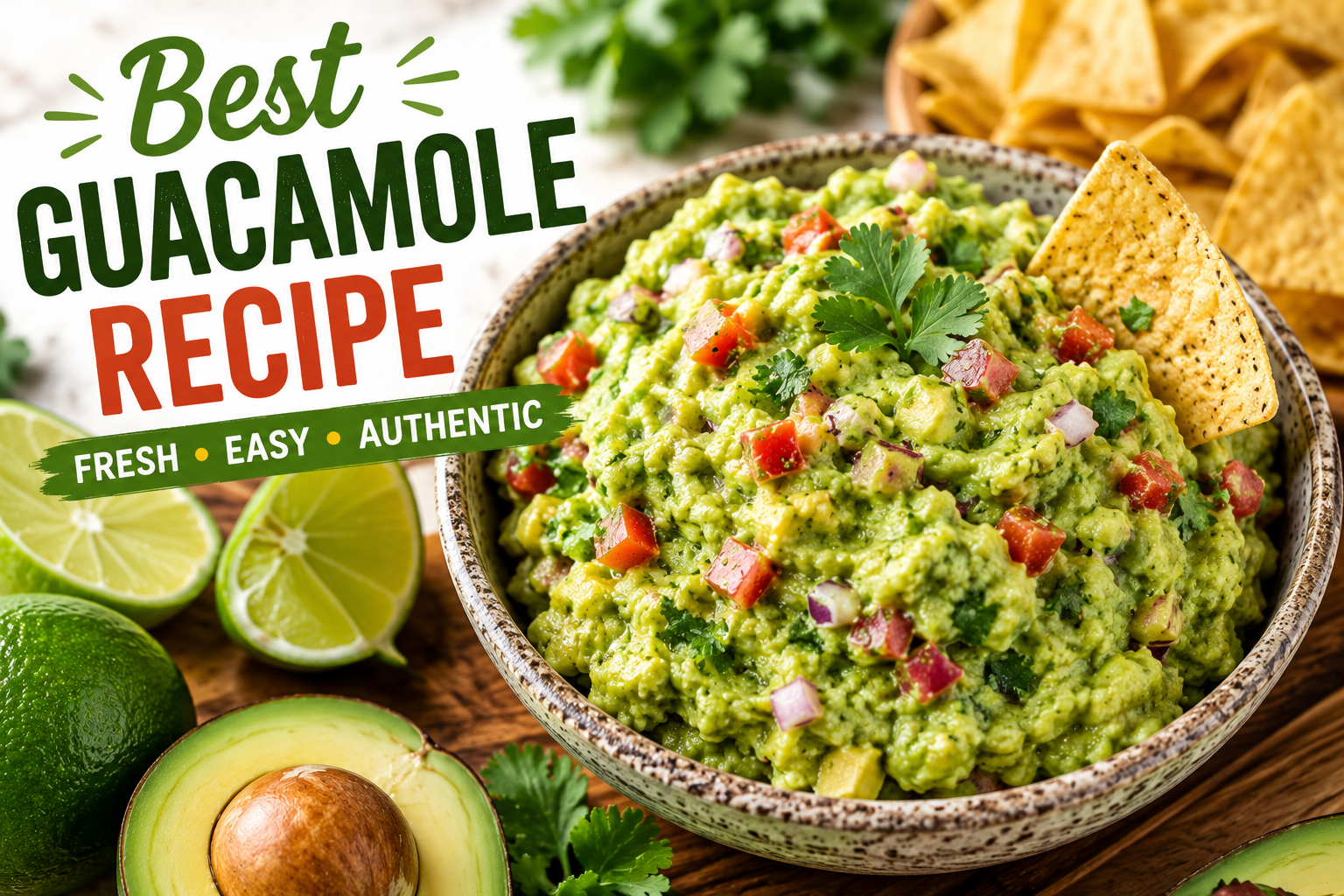
Prep Time: 10 minutes | Total Time: 10 minutes | Serves: 6 as an appetizer | Difficulty: Beginner
There are two kinds of guacamole in this world. The kind that tastes like it came from a jar — flat, pale, and forgettable. And the kind that makes people stop mid-chip, look up, and say what is in this?
This recipe makes the second kind.
Fresh ripe avocados mashed to a creamy, chunky texture. Bright lime juice that lifts every single flavor. White onion with real crunch. Juicy Roma tomato. A generous handful of cilantro. Salt that makes it all sing. Ten minutes. One bowl. No blender, no special equipment, no complicated technique.
This is the guacamole recipe you make once and never look for another. The one that disappears before anything else on the table. The one people ask for every time.
What Makes This Guacamole Authentic?
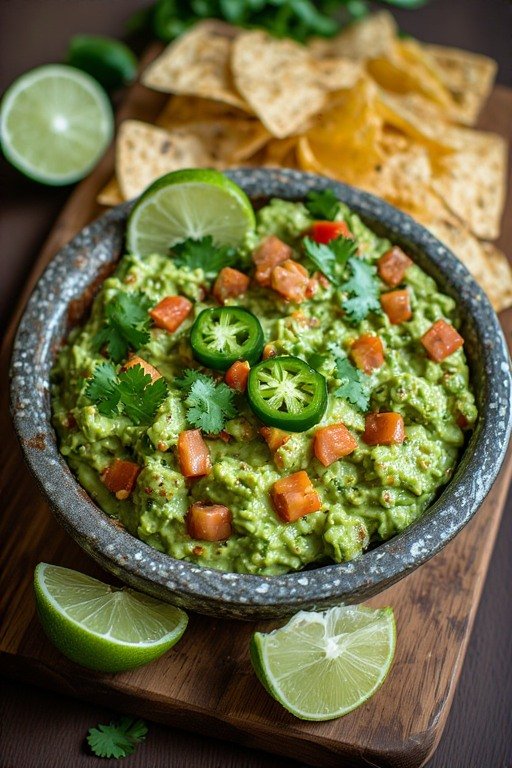
Authentic Mexican guacamole is not complicated — and that simplicity is exactly what makes it so good. The original recipe, made in a molcajete (a stone mortar and pestle), uses only what it needs: ripe avocado, lime, onion, chili, cilantro, and salt.
What authentic guacamole does NOT contain: sour cream, mayonnaise, garlic powder, cumin, or any other additions that muddy the clean, fresh flavor of the avocado. Those ingredients belong in other dishes. In guacamole, they get in the way.
The three non-negotiable elements of any authentic guacamole are:
Ripe avocados — everything else is secondary to this. An underripe avocado produces guacamole that is bland, waxy, and impossible to mash properly. An overripe one turns gray and bitter. Perfectly ripe avocados are the entire foundation.
Fresh lime juice — not bottled, not lemon (though lemon works in an emergency). Fresh lime juice has a brightness and floral quality that bottled juice simply does not have. It also keeps the guacamole green significantly longer.
Salt — more than you think. Salt does not make guacamole taste salty — it makes it taste like itself. Flat guacamole is almost always under-salted guacamole. Taste and add salt until the avocado flavor genuinely pops.
How to Pick the Perfect Avocado
This is the most important skill in guacamole making — and it is simple once you know what to look for.
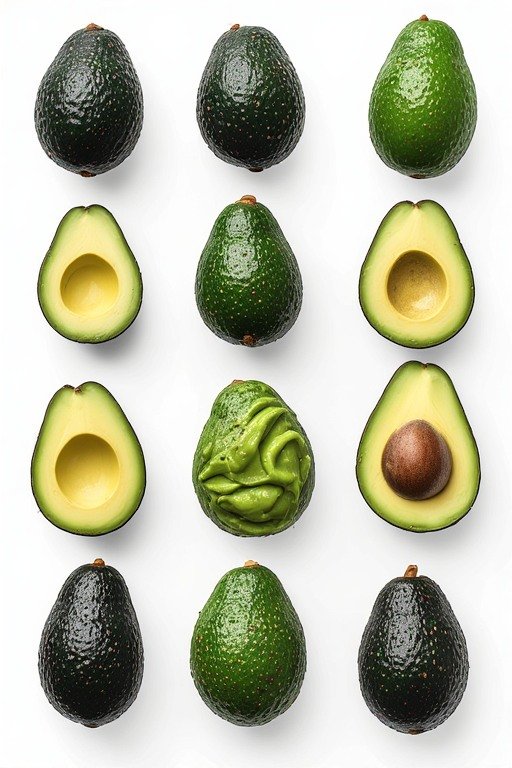
Color: Ripe Hass avocados are dark green to almost black. Bright green avocados are underripe. Almost completely black avocados may be overripe — check by feel.
The squeeze test: Gently press the avocado with the palm of your hand — not your fingertips, which leave bruises. A ripe avocado yields slightly to gentle pressure but springs back. If it feels rock hard, it needs more days. If it collapses completely or feels mushy, it is overripe.
The stem trick: Pop off the small brown stem nub at the top of the avocado. If the area underneath is bright green, the avocado is perfectly ripe. If it is brown or black, the avocado has overripe spots inside. If the stem resists coming off, the avocado is still underripe.
Buying ahead: Avocados are rarely perfectly ripe at the store on the day you want to make guacamole. Buy them 2 to 3 days early and let them ripen on the counter at room temperature.
To ripen avocados faster: Place firm avocados in a closed paper bag with an apple or banana. Both fruits release ethylene gas which accelerates ripening. Check after 24 hours — avocados in a paper bag with fruit often ripen overnight. Never microwave avocados to ripen them — it does not work and ruins the texture permanently.
To slow ripening: If your avocados reach perfect ripeness before you are ready to use them, place them whole in the refrigerator. The cold temperature slows the ripening process and can buy you 2 to 3 extra days.
Ingredients
Serves 6 as an appetizer | Makes approximately 2 to 2.5 cups
- 3 large ripe avocados — Hass avocados are the best variety for guacamole; their rich, buttery flesh mashes beautifully
- 3 tablespoons fresh lime juice — use 1 tablespoon per avocado as your scaling rule
- ½ medium white onion, finely diced — white onion is the authentic choice for its clean, sharp flavor
- 1 Roma tomato, seeded and finely diced — Roma tomatoes are less watery than other varieties
- ½ cup fresh cilantro (about ⅓ of a bunch), finely chopped
- 1 jalapeño, seeded and finely minced — optional but highly recommended
- ½ teaspoon sea salt, plus more to taste
- ¼ teaspoon freshly ground black pepper
Ingredient Notes
On the onion: White onion is the traditional choice in Mexican cooking — its flavor is sharper and cleaner than yellow onion, which can taste slightly sweet in a raw application. If white onion is unavailable, yellow onion works. Red onion adds a pleasant bite and a beautiful color, but its flavor is more assertive.
Onion taming trick: Soak the finely diced onion in cold water for 5 minutes before adding it to the guacamole. This removes the harsh, pungent raw bite while keeping all the crunch and flavor. Drain well before using. This small step makes a noticeable difference — especially for people who find raw onion overpowering.
On the tomato: Roma tomatoes have thick flesh, small seed cavities, and low water content — exactly what you want in guacamole. Regular round tomatoes have more juice and seeds, which can make guacamole watery. If using non-Roma tomatoes, seed them thoroughly: cut in quarters, remove seeds and liquid with your finger, then dice the flesh only.
On the jalapeño: Start with one seeded jalapeño for mild heat — all the flavor, minimal burn. For medium heat, leave half the seeds in. For hot guacamole, use a full seeded jalapeño or substitute a serrano pepper, which is significantly spicier. If you want zero heat, skip it entirely — the guacamole is still excellent.
On the cilantro: Fresh cilantro is non-negotiable in authentic guacamole — it provides the bright, herbal quality that makes guacamole taste fresh rather than rich. If you genuinely cannot eat cilantro due to the genetic soapy-taste reaction, substitute finely chopped flat-leaf parsley or fresh chives. The flavor is different but pleasant.
Step-by-Step Instructions
Step 1 — Prepare the Avocados
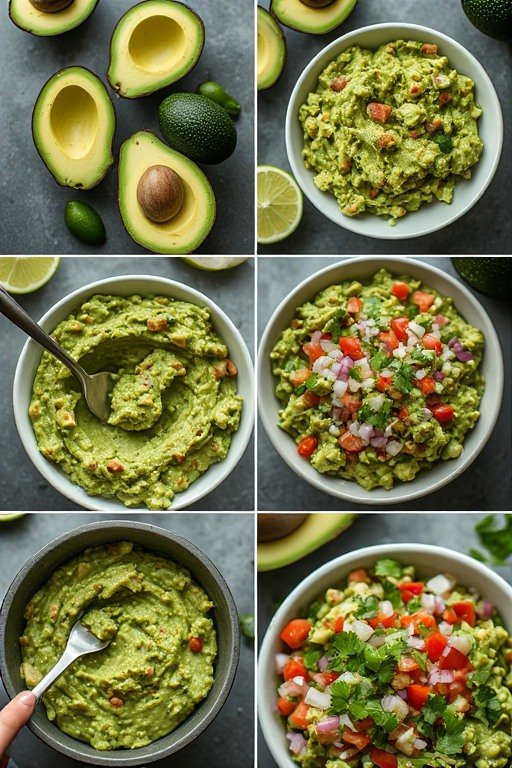
Cut each avocado in half lengthwise around the pit. Twist the two halves apart. To remove the pit safely, place the avocado half cut-side down on a cutting board and press the pit out from the back with your thumb — this is safer than the knife-in-pit method.
Use a large spoon to scoop the avocado flesh cleanly from the skin in one motion. Transfer to a medium bowl with a flat bottom — flat-bottomed bowls are much easier to mash in than round-bottomed ones.
Discard any brown or stringy spots — these come from bruising during transport and have an unpleasant flavor.
Step 2 — Add Lime and Mash
Squeeze the fresh lime juice directly over the scooped avocado flesh immediately — this is the first line of defense against browning. Adding the lime before mashing ensures every surface of every avocado piece gets coated.
Using a potato masher or a fork, mash the avocado to your preferred consistency. The key decision point is texture:
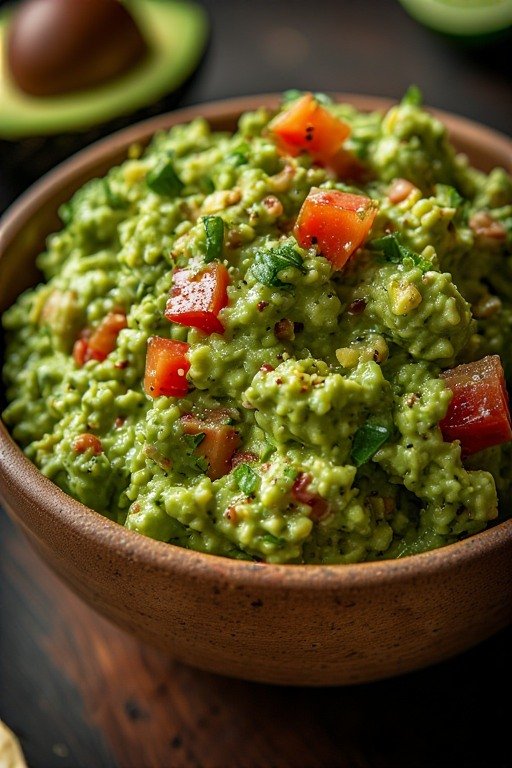
Chunky guacamole: Mash until large pieces are broken up but significant chunks remain — this is the most authentic and texturally satisfying version.
Creamy guacamole: Mash until almost smooth with only small chunks remaining — easier to spread and dip.
Fully smooth: Not traditional and not recommended — without texture, guacamole tastes more like avocado baby food than a proper dip.
The mash-first rule: Always mash the avocado before adding any other ingredients. Adding tomato, onion, or cilantro before mashing means those ingredients get pulverized into the avocado rather than staying as distinct, visible components. Mash first, mix second — every time.
Step 3 — Add the Remaining Ingredients
Add the diced onion (drained if you soaked it), seeded diced tomato, chopped cilantro, minced jalapeño, salt, and black pepper to the mashed avocado.
Stir gently with a large spoon to combine — just until everything is evenly distributed. Do not over-stir. Vigorous stirring breaks down the remaining avocado chunks and makes the texture more uniform than it should be. Fold the ingredients in with a gentle turning motion rather than stirring in circles.
Step 4 — Taste and Adjust
This step is what separates good guacamole from great guacamole.
Taste the guacamole as it is. Now ask yourself three questions:
Does it taste bright and fresh? If not, add more lime juice — a teaspoon at a time.
Does it taste flat or one-dimensional? Add more salt — a pinch at a time, stirring and tasting between each addition. Salt is almost always the answer when guacamole tastes underwhelming.
Does it taste too rich or too heavy? Add more lime juice and a pinch more salt together — the combination lifts and brightens the avocado flavor immediately.
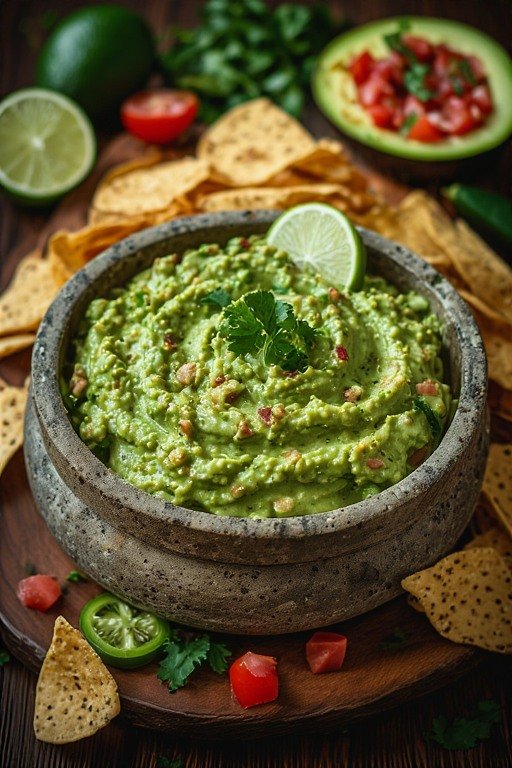
Serve immediately for the freshest flavor and the most vibrant green color.
The final taste test is essential: Every batch of avocados is different — some are richer, some are more watery, some are milder. The recipe gives you a starting point; your palate finishes the job. Never serve guacamole without tasting and adjusting at the very end.
How to Keep Guacamole from Turning Brown
Browning is caused by oxidation — the avocado flesh reacting with oxygen in the air. It is completely harmless and does not affect flavor, but it does affect appearance. Here are the three most effective methods for keeping guacamole green:
Method 1 — Plastic wrap pressed directly on the surface (Best for serving same day) Transfer the guacamole to an airtight container. Press a sheet of plastic wrap directly onto the surface of the guacamole, pressing out every air pocket so the plastic is in full contact with the dip — no gaps, no air between the wrap and the guacamole. Seal with the container lid. This method keeps guacamole green for up to 24 hours in the refrigerator.
Method 2 — The water method (Best for overnight storage) Transfer guacamole to an airtight container and smooth the surface flat. Carefully pour a thin layer of cold water — about 5mm — over the surface of the guacamole. The water acts as an oxygen barrier. Before serving, carefully pour off the water and stir the guacamole to redistribute any moisture. The guacamole underneath stays vivid green for up to 2 days.
Method 3 — The onion method Place a large chunk of white onion directly on top of the guacamole. The sulfur compounds in onion actively inhibit the browning enzyme in avocado. Cover with plastic wrap. This works surprisingly well and conveniently uses the other half of the onion from the recipe.
The honest truth about browning: Even with all these methods, some surface browning after 24 hours is normal and inevitable. Simply scrape off the thin brown layer — the bright green guacamole underneath is perfectly fresh and delicious. Browning is a cosmetic issue, not a food safety one.
5 Tips for the Best Guacamole Every Time
Use ripe avocados — no exceptions. Underripe avocados produce guacamole that is waxy, bland, and impossible to mash to the right consistency. If your avocados are not ripe, wait. No technique compensates for unripe avocados.
Mash before mixing. Adding the other ingredients before mashing turns them into a pulp rather than visible, distinct components. Mash the avocado first to your desired texture, then fold in everything else.
Fresh lime juice only. Bottled lime juice is more acidic, less bright, and noticeably inferior in flavor. The 30 seconds it takes to squeeze a fresh lime makes a genuine difference in the finished guacamole.
Season more aggressively than you think. Avocado is mild and creamy — it needs more salt than most ingredients to fully express its flavor. Add salt, taste, add a little more. Keep going until the avocado flavor genuinely pops on your tongue.
Drain juicy tomatoes. Slice the tomato, scoop out the seeds and liquid, then dice the flesh. Skipping this step means watery guacamole by the time it reaches the table. Roma tomatoes require less effort here than other varieties because they have smaller seed cavities.
What to Serve with Guacamole
Guacamole is one of the most versatile condiments in existence. Here is the complete guide:
| Use | How |
|---|---|
| Classic appetizer | With tortilla chips — always the first choice |
| Tacos | Spooned over any taco — beef, chicken, fish, shrimp |
| Burgers | Spread on the bottom bun instead of mayo |
| Toast | Spread on toasted sourdough as avocado toast |
| Nachos | Dolloped generously over baked nachos |
| Salads | Used as a creamy dressing for taco salad |
| Eggs | Alongside scrambled or fried eggs |
| Grilled fish | Served as a sauce alongside salmon or tilapia |
| Burritos | Spread inside or served alongside |
| Fajitas | Used as a cooling, creamy topping |
Frequently Asked Questions
Why does my guacamole taste bland? Almost always the answer is more salt. Avocado is naturally mild and needs generous seasoning to taste its best. Add salt a pinch at a time, stirring and tasting between each addition. Also check the lime — fresh lime juice makes a bigger flavor impact than most people realize.
Can I make guacamole ahead of time? Yes — up to 2 hours ahead for best quality. Use the plastic wrap method to prevent browning. For next-day preparation, the water method is more effective for overnight storage. Always re-taste and adjust before serving.
What is the best avocado variety for guacamole? Hass avocados are universally considered the best for guacamole. Their flesh is rich, buttery, and creamy — ideal for mashing. Florida avocados are larger and have lower fat content, producing a more watery, less flavorful guacamole.
How do I make guacamole less spicy? Remove all seeds and white membrane from the jalapeño before dicing — the capsaicin (heat) is concentrated there, not in the flesh. For virtually zero heat, skip the jalapeño entirely or use just 1 tablespoon of very finely minced green bell pepper for flavor without any heat.
Can I substitute lemon for lime? Yes — fresh lemon juice works well as a substitute and produces slightly sweeter, less sharp results. The flavor is noticeably different from lime but still excellent. Avoid bottled juice of either variety.
My guacamole turned watery — what happened? Two possible causes: the tomato was not properly seeded and drained, releasing liquid into the guacamole as it sat, or the avocados themselves were overripe and very soft. Seed and drain tomatoes thoroughly before adding them. If already made, drain off any excess liquid and stir in a small amount of fresh mashed avocado to re-balance the texture.
Nutritional Information (Per Serving — Approximately ⅓ cup)
| Nutrient | Amount |
|---|---|
| Calories | 169 kcal |
| Total Fat | 15g |
| Saturated Fat | 2g |
| Carbohydrates | 11g |
| Fiber | 7g |
| Sugar | 1g |
| Protein | 2g |
| Sodium | 200mg |
| Potassium | 485mg |
| Vitamin C | 18% DV |
| Vitamin K | 26% DV |
| Folate | 20% DV |
Values are approximate. Naturally vegan, gluten-free, dairy-free, and paleo.