
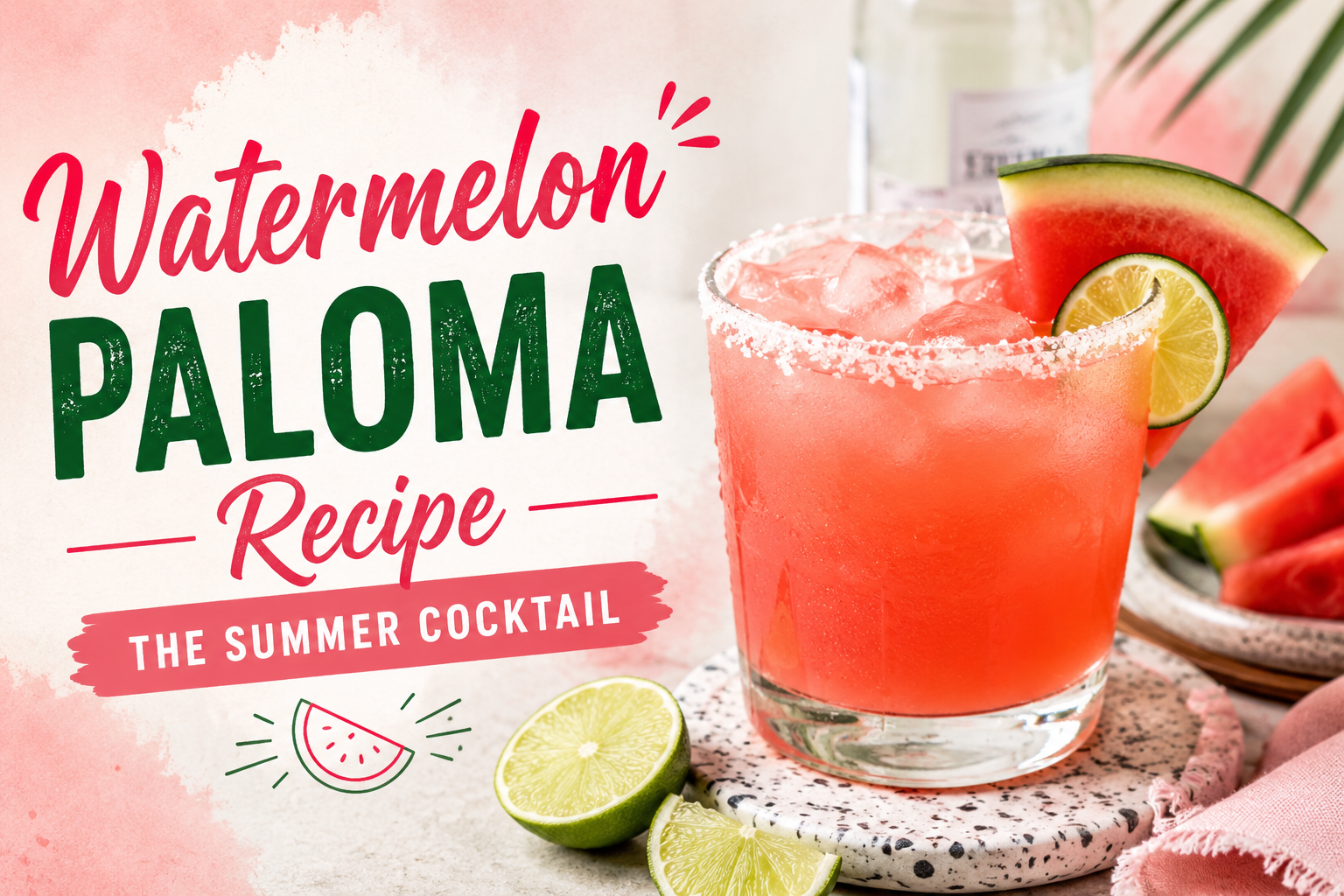
Prep Time: 10 minutes | Cook Time: 0 minutes | Total Time: 10 minutes | Serves: 1 cocktail (scales to a pitcher easily) | Difficulty: Beginner
There are summer cocktails, and then there is the Watermelon Paloma.
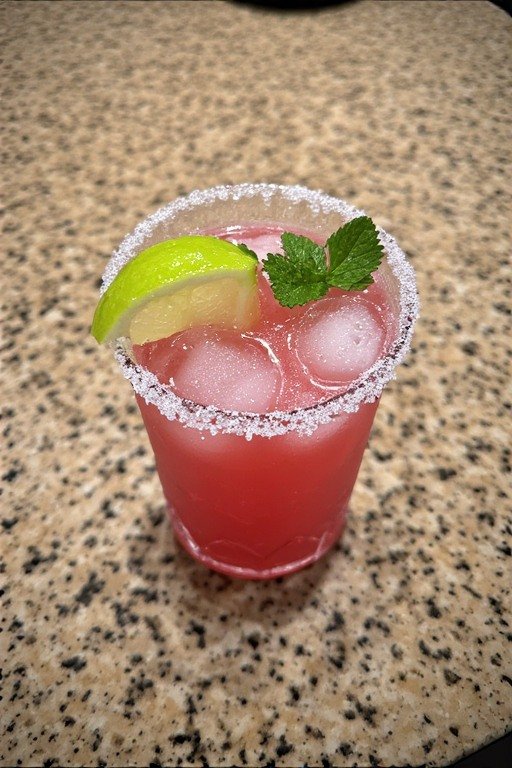
This is the drink that makes people stop mid-conversation the moment it lands on the table. That color — a deep, jewel-bright watermelon pink that catches the light like something from a magazine — is the first thing that gets you. Then the aroma hits: fresh melon, tart citrus, the clean bite of good tequila, and the faintest trace of salt from the rimmed glass.
And then you sip it.
Sweet. Tart. Fizzy. Cold. Refreshing in the most literal sense of the word — this is the drink that actually makes a hot summer day feel manageable.
The classic Paloma is already one of Mexico’s most beloved cocktails, quietly outselling even the margarita in its home country. The Watermelon Paloma takes that iconic framework — tequila, citrus, bubbles, salt rim — and adds fresh watermelon juice as the star ingredient, creating something that feels simultaneously familiar and completely new.
This recipe gives you everything: the perfect ratio of flavors, the right technique for the freshest watermelon juice, the Tajín rim that takes it from good to extraordinary, and six variations so you can make it your own.
Let’s make the best Watermelon Paloma you’ve ever had.
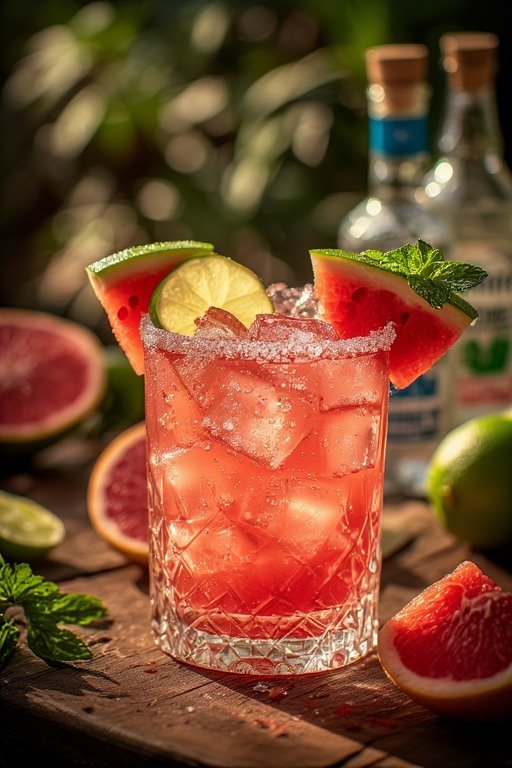
What Is a Paloma Cocktail?
Before we dive into the watermelon version, it’s worth understanding what makes a Paloma a Paloma — because unlike a margarita, it’s a cocktail that many people haven’t encountered until someone makes it for them and they immediately declare it their new favorite drink.
The Paloma is a classic Mexican cocktail built on three pillars: tequila, fresh lime juice, and grapefruit — either fresh grapefruit juice, grapefruit soda, or both. The name means “dove” in Spanish, and the drink has an elegant lightness that matches the name beautifully. It is less sweet than a margarita, less sharp than a straight tequila drink, and more complex than either.
Its exact origin is debated — some attribute it to Don Javier Delgado Corona, a legendary bartender in Tequila, Jalisco. What is not debated is its status in Mexico, where it is the most commonly ordered tequila cocktail, and its rapidly growing popularity everywhere else as people discover that grapefruit and tequila are, quite simply, one of the great flavor marriages in the cocktail world.
The Watermelon Paloma adds fresh watermelon juice to this framework, contributing natural sweetness, a stunning pink color, and a summer freshness that transforms the drink into something completely irresistible from June through September.
Why This Watermelon Paloma Recipe Is Better
Most Watermelon Paloma recipes online make one of several common mistakes. They use store-bought watermelon juice (which tastes processed and flat). They skip the grapefruit entirely (which is what makes it a Paloma rather than a watermelon margarita). They use bottled lime juice (which is noticeably inferior). Or they use a cheap tequila that overpowers every other flavor.
This recipe gets every element right:
Fresh watermelon juice, properly made. Blended and strained, not just muddled. The difference in texture and flavor is significant — blended juice is silky, fresh, and deeply flavored in a way that muddled watermelon simply is not.
Both fresh grapefruit and grapefruit soda. Fresh grapefruit juice provides brightness and that characteristic pleasant bitterness. Grapefruit soda adds effervescence and a slightly sweeter, rounder grapefruit note. Together, they create a more complex, more interesting Paloma base than either one alone.
Fresh lime, always. There is no version of this cocktail where bottled lime juice produces a comparable result. Squeeze your limes.
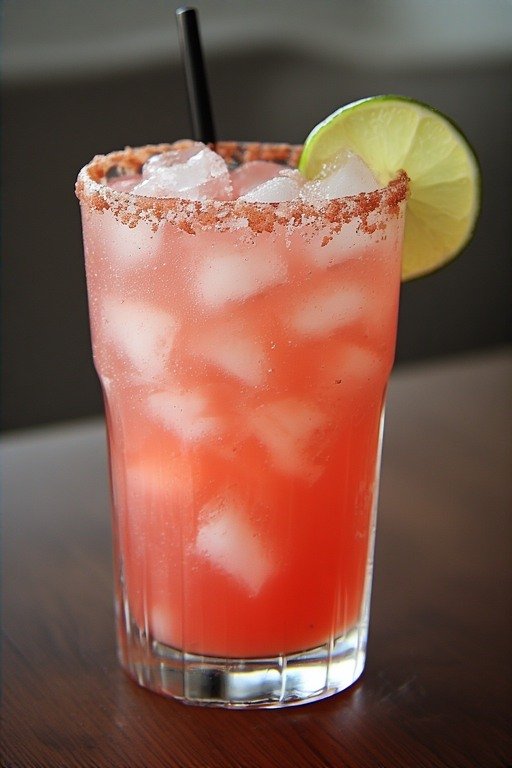
A Tajín rim instead of plain salt. This is the upgrade most recipes skip. Tajín — a Mexican chili-lime seasoning — adds a gentle heat and citrus complexity to every sip. The combination of sweet watermelon, tart citrus, and the subtle spice from the Tajín rim is genuinely extraordinary.
The right tequila. Blanco (silver) tequila, 100% agave. The unaged brightness of blanco lets the watermelon and citrus flavors lead, which is exactly what you want.
Ingredients
For One Cocktail
- 2 oz (60ml) blanco tequila — 100% agave; Patron Silver, Casamigos Blanco, Espolòn, or Don Julio Blanco are excellent choices
- 3 oz (90ml) fresh watermelon juice — from approximately 1.5 cups of fresh watermelon cubes, blended and strained
- 1 oz (30ml) fresh grapefruit juice — freshly squeezed from a pink or ruby red grapefruit
- ½ oz (15ml) fresh lime juice — approximately 1 medium lime
- ½ oz (15ml) agave syrup — or simple syrup; reduce or skip entirely if your watermelon is very sweet
- 2 to 3 oz grapefruit soda — Fever Tree Pink Grapefruit Soda is the best option; Jarritos Grapefruit or Squirt also work well
- Ice — large cubes preferred; they melt more slowly and dilute the drink less
For the Rim
- Tajín seasoning — the ideal choice; the chili-lime combination is perfect with watermelon
- Or: coarse salt, flaky sea salt, or a 50/50 mix of Tajín and flaky salt (highly recommended)
- 1 lime wedge — for moistening the rim
For Garnish
- Thin triangle of fresh watermelon, rind on
- Lime wheel or wedge
- Fresh mint sprig
- Optional: a thin slice of grapefruit on the rim
For a Pitcher (Serves 6 to 8)
- 1½ cups (360ml) blanco tequila
- 3 cups (720ml) fresh watermelon juice (from approximately half a medium watermelon)
- 1 cup (240ml) fresh grapefruit juice
- ½ cup (120ml) fresh lime juice
- ⅓ cup (80ml) agave syrup
- 2 cups (480ml) grapefruit soda — added to individual glasses, not the pitcher
- Plenty of ice
How to Make Fresh Watermelon Juice
This is the step that makes the biggest difference in the quality of your Watermelon Paloma, and it takes about 3 minutes.
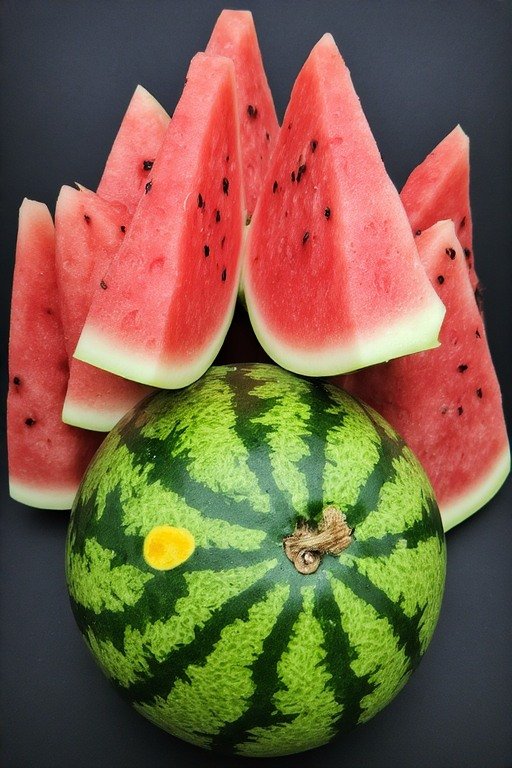
Choose the right watermelon: Look for a watermelon that feels heavy for its size — that heaviness is water content, which means more juice. A yellow spot on one side (the field spot where it rested on the ground) indicates ripeness. Tap it — it should sound hollow and deep, not high-pitched and thin.
Cut and cube: Slice the watermelon, remove the rind, and cut the flesh into rough chunks. Remove seeds if your watermelon has them, though seedless varieties make this faster.
Blend: Add the watermelon chunks to a blender. No water needed — watermelon is 92% water and blends into juice almost instantly. Blend on high for 30 to 45 seconds until completely smooth.
Strain: Pour the blended juice through a fine mesh strainer into a bowl or large measuring jug. Press gently with a spoon to extract all the liquid. Discard the fibrous pulp. The strained juice should be smooth, vibrant, and deeply colored.
Use immediately or refrigerate: Fresh watermelon juice is best used within 24 hours. It separates slightly as it sits — just give it a quick stir before using.
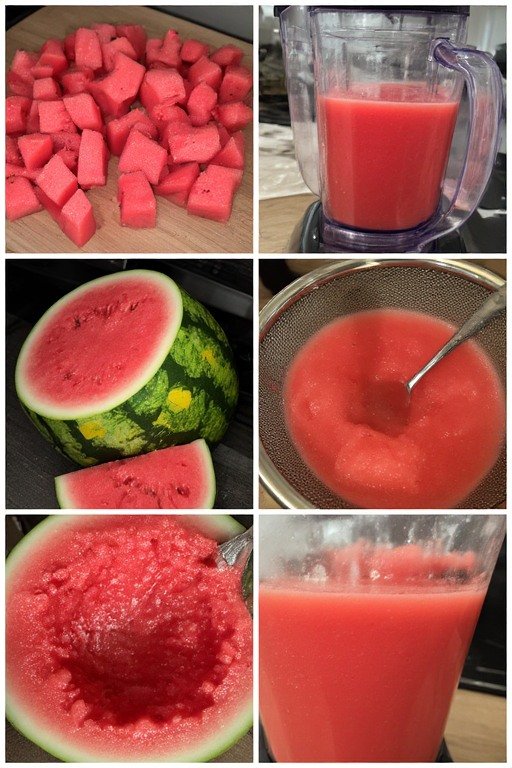
Yield guide: 1.5 cups of watermelon cubes yields approximately 3 oz (90ml) of strained juice — enough for one cocktail. Half a medium watermelon yields approximately 3 cups of juice — enough for a pitcher serving 6 to 8.
Step-by-Step Instructions
Step 1 — Rim the Glass
Pour Tajín (or your chosen rim mixture) onto a small, shallow plate, spreading it into an even layer wide enough to dip the glass rim.
Run a cut lime wedge firmly around the outside edge of the rim of a rocks glass or lowball glass — you want to moisten the outer rim but not the inside of the glass. This precision matters: salt or Tajín on the inside of the rim falls into the drink and makes it too salty; on the outside, it seasons each sip perfectly.
Turn the glass upside down and press the moistened rim into the Tajín. Rotate slowly to ensure full, even coverage. Set the glass upright and let the rim dry for 1 to 2 minutes before adding ice — this helps the coating adhere and not fall off.
The outer rim only rule: Every professional bartender rims only the outside edge of the glass. If you rim the inside, the salt or Tajín dissolves into the drink within minutes and the whole cocktail becomes overseasoned. A properly rimmed glass stays perfectly balanced from first sip to last.
Step 2 — Fill the Glass with Ice
Add large ice cubes to your rimmed glass. Fill it generously — the cocktail needs to be very cold from the first sip to the last. Large cubes are preferable to small ice or crushed ice because they melt significantly more slowly, diluting the drink less as you enjoy it.
Set the filled glass aside while you prepare the cocktail.
Step 3 — Combine and Shake
Add the following to a cocktail shaker:
- Fresh watermelon juice
- Blanco tequila
- Fresh grapefruit juice
- Fresh lime juice
- Agave syrup
Fill the shaker halfway with ice. Seal it tightly and shake vigorously for a full 20 to 25 seconds. The exterior of the shaker should feel intensely cold — almost painfully so — when it’s ready. This vigorous shaking chills the cocktail thoroughly, slightly aerates it, and integrates all the flavors perfectly.
Why shake instead of just stir? Shaking introduces tiny air bubbles that give the cocktail a lighter, more vibrant texture. It also chills the drink more quickly and more thoroughly than stirring, which matters with a cocktail that relies so heavily on fresh juice — properly chilled juice tastes crisper and more refreshing than room temperature juice simply poured over ice.
Step 4 — Strain and Pour
Using the cocktail shaker’s built-in strainer, pour the shaken mixture over the ice in your prepared glass. Pour until the glass is about three-quarters full — leave room for the grapefruit soda.
For an extra-smooth, completely pulp-free cocktail, double strain through a fine mesh sieve as you pour. This is optional but produces an exceptionally clean, polished result.
Step 5 — Top with Grapefruit Soda
Pour the grapefruit soda slowly down the inside edge of the glass — this preserves the carbonation better than pouring it directly down the center. Fill until the glass is full, leaving just enough room for the garnish.
Give the drink one gentle stir with a bar spoon — just one or two rotations, enough to lightly combine the soda with the cocktail without losing the bubbles.
Fever Tree Pink Grapefruit Soda: If you can find it, this is the best grapefruit soda for a Watermelon Paloma. It has a genuinely grapefruit-forward flavor, natural ingredients, and a balanced sweetness that doesn’t overwhelm the fresh fruit juices. Jarritos Grapefruit is an excellent and widely available Mexican alternative that fits the heritage of the cocktail beautifully.
Step 6 — Garnish and Serve
The garnish is not just decorative — it’s the first aromatic impression the drink makes. Add:
A thin triangle of fresh watermelon with the rind still on, pressed against the rim or perched on top of the ice. A lime wheel sliced and notched to sit on the rim. A sprig of fresh mint tucked into the ice — as you bring the glass to your lips, the mint aroma hits first and primes your palate for the drink.
Serve immediately. This cocktail is at its very best the moment it’s made and assembled — do not let it sit.
The Perfect Watermelon Paloma Pitcher (For Parties)
The Watermelon Paloma is one of the best cocktails in existence for batch preparation, and here is the exact method for making a pitcher that serves 6 to 8 people.
Pitcher Instructions
Combine the tequila, fresh watermelon juice, fresh grapefruit juice, fresh lime juice, and agave syrup directly in a large glass pitcher. Stir thoroughly to combine and dissolve the agave.
Taste the mixture — it should taste bright, fruity, and slightly more tart than you want the final drink to be, since the ice will dilute it slightly when you pour.
Do not add grapefruit soda to the pitcher. It will go flat within minutes. Keep the grapefruit soda chilled separately and add it to each individual glass right before serving.
Do not add ice to the pitcher. Ice in the pitcher dilutes the cocktail as it sits. Add ice to individual glasses when serving.
Refrigerate the pitcher for up to 4 hours before your party. The flavors meld beautifully as it sits — a pitcher made 2 hours in advance tastes noticeably more cohesive and rounded than one served immediately.
To serve: Rim glasses with Tajín or salt. Fill with ice. Pour the pitcher mixture until three-quarters full. Top each glass with grapefruit soda. Garnish and serve.
Batch party tip: Set up a garnish station with a plate of watermelon triangles, a bowl of mint sprigs, and pre-cut lime wheels. Let guests garnish their own glasses — it becomes part of the experience and takes one task completely off your plate during a party.
How to Pick the Perfect Watermelon
The quality of your watermelon is the single biggest variable in the quality of this cocktail. Here is exactly what to look for:
Weight: Pick up two watermelons of similar size and choose the heavier one. Heavier means more water content, which means more juice yield and sweeter flavor.
The field spot: Look for a creamy yellow or orange patch on one side — this is where the watermelon sat on the ground as it ripened. A white or pale field spot indicates the watermelon was picked before full ripeness. A deep yellow or orange spot indicates long, sun-ripened sweetness.
The sound test: Knock on the watermelon with your knuckle. A ripe watermelon produces a deep, hollow thud — like a drum. An underripe watermelon produces a higher-pitched, more metallic sound.
The stem: A dried, brown stem indicates the watermelon was allowed to naturally ripen on the vine. A green stem may indicate it was picked early.
Size: For cocktail making, medium watermelons tend to have the highest sugar concentration. Very large watermelons can be dilute and less sweet.
What to Eat with a Watermelon Paloma
This cocktail pairs magnificently with food. Its sweet-tart-salty profile makes it one of the most versatile food cocktails in existence.
Mexican and Tex-Mex food: Tacos (especially fish or shrimp tacos), guacamole and chips, elote (Mexican street corn), ceviche, quesadillas. The cocktail’s citrus and salt complement the bold flavors of Mexican cuisine beautifully.
Grilled foods: Grilled chicken, grilled shrimp skewers, BBQ ribs, grilled corn. The watermelon sweetness cuts through the smokiness of grilled food in exactly the right way.
Light summer appetizers: Watermelon and feta salad (an obvious but brilliant pairing), prosciutto-wrapped melon, caprese skewers, shrimp cocktail.
Spicy food: The sweet watermelon and fizzy soda are a genuine relief alongside spicy food — this cocktail is one of the best spice-balancers in the cocktail world.
Cheese: Salty, aged cheeses like cotija, manchego, or aged cheddar are outstanding alongside the sweetness of this cocktail.
Rim Variations — Beyond Basic Salt
The rim of a Watermelon Paloma is not an afterthought. It is a seasoning that affects every sip. Here are five rim options ranked from most recommended to most adventurous:
1. Tajín (Highly Recommended) The classic choice for good reason. The chili-lime combination adds both heat and citrus to every sip, perfectly complementing the watermelon and grapefruit. Available at almost every grocery store.
2. 50/50 Tajín and Flaky Sea Salt The best of both worlds — the complexity of Tajín with the pure mineral salinity of flaky sea salt. This is the rim used in most well-regarded cocktail bars when they make a Watermelon Paloma.
3. Chili Salt Combine 2 tablespoons flaky sea salt with ½ teaspoon cayenne pepper and ½ teaspoon smoked paprika. Mix well. The smoky heat adds a gorgeous complexity without the citrus of Tajín.
4. Watermelon Sugar Rim Combine 2 tablespoons fine sugar with ½ teaspoon dried watermelon powder (available at specialty stores) and a pinch of fine salt. Sweet, fruity, and unexpected — beautiful on the mocktail version.
5. Herb Salt Combine flaky sea salt with very finely minced fresh mint leaves and a pinch of lime zest. Press together until the salt turns pale green. Fresh, aromatic, and genuinely sophisticated.
Frequently Asked Questions
What is the difference between a Paloma and a Margarita? Both are tequila cocktails with citrus, but they are quite different in character. A margarita is built on lime juice and orange liqueur — it is tart, citrus-forward, and punchy. A Paloma uses grapefruit as its primary citrus, which adds a pleasant bitterness alongside the tartness. The result is lighter, more refreshing, and slightly less sweet than a margarita. Most people who try both prefer one or the other strongly — they are genuinely different drinking experiences.
Can I use store-bought watermelon juice? Yes, though fresh is significantly better. Store-bought watermelon juice tends to be sweeter, less vibrant, and occasionally has a slightly processed flavor. If you use it, reduce or eliminate the agave syrup since store-bought juice is often already sweetened. It works perfectly well in a pitcher situation where convenience matters more than absolute quality.
What if I can’t find grapefruit soda? Use a combination of fresh grapefruit juice (1 oz) and plain sparkling water or club soda (2 oz). This gives you full control over the grapefruit intensity and sweetness. It’s actually the approach preferred by many bartenders — more control, cleaner flavor.
Is a Watermelon Paloma a strong drink? At the standard recipe with 2 oz of tequila in a generous serving, a Watermelon Paloma has a similar alcohol content to a standard margarita. The watermelon, citrus, and sparkling components make it taste considerably lighter and more refreshing than the alcohol content would suggest — which is exactly why it’s important to enjoy it mindfully.
Can I use flavored tequila? Technically yes, but it is not recommended for this recipe. Flavored tequilas often contain additives and artificial flavoring that clash with fresh fruit juices. The complexity you want comes from the fresh ingredients, not from the tequila itself. Use a clean, unflavored blanco for the best result.
How do I make watermelon juice without a blender? Muddle the watermelon chunks in a cocktail shaker using a muddler or the back of a wooden spoon until fully broken down. Press the muddled watermelon through a fine mesh sieve, pushing firmly with a spoon to extract all the juice. This method produces excellent juice but requires more effort than blending. For a large pitcher, a blender is strongly recommended.
Can I make this drink ahead for a dinner party? Yes — this is one of the best cocktails for advance preparation. Make the full pitcher mixture (without soda) up to 4 hours before your party and refrigerate. Rim your glasses up to 2 hours before. Set up a garnish station in advance. Add ice to glasses and pour when guests arrive, topping each glass with grapefruit soda at the moment of service.
Nutritional Information (Per Cocktail, Approximate)
| Nutrient | Amount |
|---|---|
| Calories | 195 kcal |
| Carbohydrates | 22g |
| Sugar | 17g (naturally from fruit) |
| Fiber | 1g |
| Protein | 1g |
| Fat | 0g |
| Sodium | 85mg (primarily from rim) |
| Vitamin C | 28% DV |
| Vitamin A | 12% DV |
| Potassium | 310mg |
Values are approximate. The Tajín rim accounts for most of the sodium. Mocktail version (without tequila): approximately 85 kcal.