

One of the most popular questions from new parents is: “When can my baby begin eating baby food?” The switch from breastfeeding or formula to solid food is an enormous milestone in a baby’s development. But timing, foods to eat, and how to feed are important to make your child safe and healthy.
In this guide, we will consider the appropriate age to introduce baby food, readiness signs, ideal first foods, what to avoid, tips on feeding, and expert advice.
The Right Age to Introduce Baby Food
Both the American Academy of Pediatrics (AAP) and the World Health Organization (WHO) recommend:
Infants should be breastfed or formula-fed exclusively for the first 6 months of life.
At 6 months and beyond, parents can introduce solid foods gradually along with ongoing breast milk or formula.
???? Others are ready between 4–6 months, but it is not advisable to introduce solids before 4 months because the digestive system and swallowing reflex are yet to develop.
Signs That Your Baby Is Ready for Solids
It is more helpful to look for the following signs of readiness rather than just age:
Good head and neck control – The baby is able to hold the head still while sitting.
Ability to sit with support – An upright safe position minimizes the risk of choking.
Loss of tongue-thrust reflex – Baby no longer spits food out using the tongue.
Appears interested in food – Imitates you eating, reaches for food, or opens the mouth when offered.
Bigger appetite – Baby continues to appear hungry after normal milk feeds.
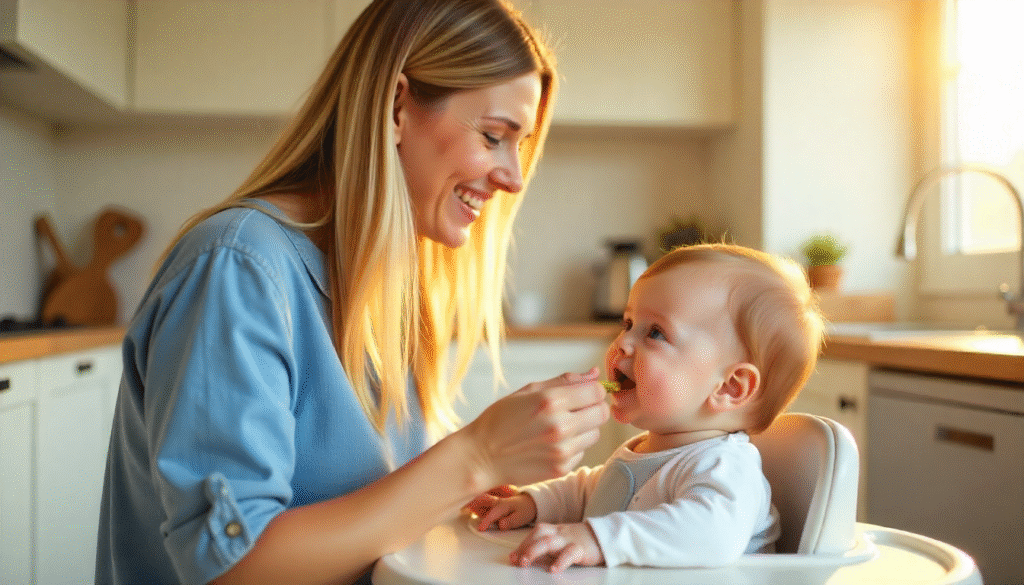
Best First Baby Foods to Try
When your baby is ready to start, begin with single-ingredient, soft, and easy-to-digest foods.

Iron-fortified cereals (rice, oatmeal, or barley) with breast milk or formula.
Pureed vegetables such as sweet potatoes, carrots, pumpkin, peas.
Mashed fruits like banana, apple, pear, avocado.
Mashed proteins – lentils, beans, chicken, or turkey.
👉Add single food at a time and wait 3–5 days before introducing another to look for allergies.
Foods to Avoid in the First Year
Some foods are not safe for babies under 12 months:
Honey → infant botulism risk.
Cow’s milk as primary beverage → too difficult to digest before 1 year of age.
Whole nuts, raw vegetables, popcorn → can cause choking.
Fizzy drinks or salty crisps → bad for babies.
Feeding Tips for Parents
Start with 1–2 teaspoons once daily, gradually adding to amount.
- Feed with a little spoon, not from a bottle.
Keep the baby sitting upright. - Do not force food – let your baby set the pace.
- Breast feed or give formula as usual, as solids are only a topping, not a replacement, for milk in the first year.
Common Mistakes Parents Make
- Early introduction of solids (prior to 4 months).
- Providing juices or sweet beverages rather than milk or water.
- Disregarding food allergy signs (rash, diarrhea, vomiting).
- Having babies eat full plates from the start.
Conclusion
Remember, baby food should supplement breast milk or formula, not replace it, during the first year. With patience and healthy choices, you’ll help your child develop good eating habits that last a lifetime.
Frequently Asked Questions
Q1: Can I feed my baby baby food at 4 months?
👉 Only upon advice from your pediatrician and upon readiness signs from your baby.
Q2: When may I give water to my baby?
👉 Small amounts after 6 months are okay, but still breast milk or formula as the primary drink.
Q3: When can I introduce finger foods?
👉 At 8–10 months, when your baby is able to grab and chew soft foods like steamed carrot or mashed banana.
Q4: What if my baby won’t eat baby food?
👉 Wait patiently. Try again after a few days. Some babies take time to adapt.
Q5: How much food per day should my 6-month-old have?
👉 Begin with once a day, then gradually to 2–3 meals by 9 months.
“Introducing solids is not just about filling a baby’s stomach—it’s about helping them explore new flavors, textures, and begin lifelong healthy eating habits.”
— Dr. Claire McCarthy, Pediatrician, Harvard Medical School