Just one of the most delicate and beautiful parts of a woman’s life is that during pregnancy her immune system gradually decreases in order to protect the developing baby within. Unfortunately this decrease in immune system also increases the chances of pregnancy women developing infections including food poisoning. What may seem like an ordinary stomach issue to others may become dangerous for an expectant mother and her unborn child.
Here in this article you will find all about what food poisoning is, why it can be more dangerous if you are pregnant, symptoms to look for, safe treatments and how to prevent it.
🍎 What Is Food Poisoning?
Food poisoning is a condition caused by eating or drinking contaminated food / drink that has harmful bacteria / viruses or parasites.
Common causes include: Bacteria: Salmonella, Listeria, E. coli, and Campylobacter Viruses: Norovirus and Hepatitis A Parasites: Toxoplasma gondii Contamination is most commonly due to poor cooking ( forget to wash vegetables ), undercooked meat or storage at low temperatures.
🤰 Why Is Food Poisoning More Dangerous During Pregnancy?
This is the way the immune system changes from being able to handle pregnancy; basically it ‘s making the body more susceptible to infection at the same time. Food poisoning in pregnancy is riskier because: Higher infection risk. Bacteria like Listeria can get through the placenta and get into the baby. Dehydration risk Vomiting and diarrhea can cause dehydration which decreases blood flow and nutrition to fetus. Preterm labor: Heavy foodborne illness can cause contractions / early labor. Miscarriage risk: Bacteria can cause miscarriage and stillbirth, such as Listeria monocytogenes. Even mild food poisoning can cause complications if not treated correctly.
⚠️ Common Symptoms of Food Poisoning During Pregnancy
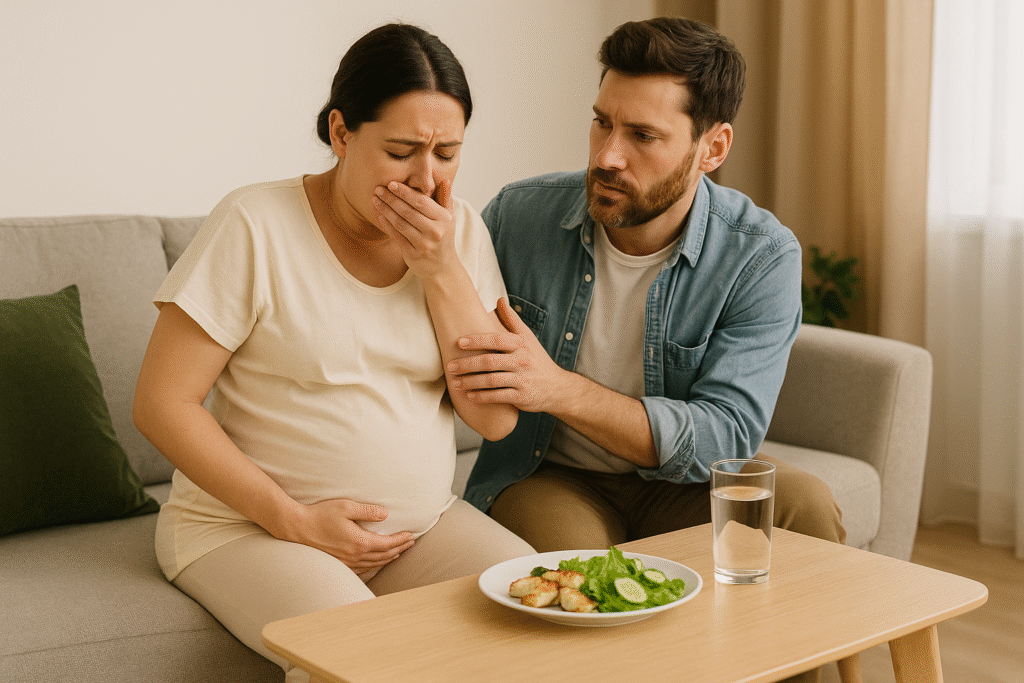
Signs/symptoms may appear within hours or even days after consumption of contaminated food. Look out for: Nausea and vomiting Diarrhea or loose stools Stomach cramps or abdominal pain Fever and chills Weakness and fatigue Headache or dizziness In severe cases: blurred vision or muscle pain (Listeria infection) If symptoms persist for more than 24 hours and you are unable to hold liquids down, see a doctor right away
🧬 Types of Foodborne Illnesses Harmful During Pregnancy.
1. Listeriosis (Listeria infection)
- Contains in soft cheeses, unpasteurized milk, deli meats and smoked seafood.
- It can cause miscarriage, premature birth, or newborn infection.
- Symptoms include fever, muscle pain, and sometimes confusion.
2. Salmonella Infection
- Caused by undercooked eggs, poultry, or unwashed produce.
- Leads to severe vomiting, diarrhea, and fever.
- In rare cases, it can cause blood infections.
3. E. coli Infection
Often from raw or undercooked meat and contaminated water.
Can cause kidney problems in severe cases
4. Toxoplasmosis.
- From raw meat or contact with cat litter.
- May cause eye or brain damage to the fetus.
💊 Safe Treatment for Food Poisoning During Pregnancy
If you suspect food poisoning, follow these steps safely:
- 1. Stay Hydrated Drink lots of fluids: water plain soup, or rehydration solution put in mouth. Avoid caffeine and sugary drinks.
- 2. Rest and Recovery Get enough sleep and avoid heavy meals until symptoms subside.
- 3. Consult Your Doctor Never self-medicate. Your doctor may give you some safe antibiotics to take if it ‘s bacteria. If dehydration is severe, IV fluids may be required.
- 4. Monitor Baby’s Movement Fetal movements decrease or stop: You should be seeing an emergency doctor right away.
🍽️ How to Prevent Food Poisoning During Pregnancy
Prevention is always better than treatment because in pregnancy both pregnant woman and the unborn baby are at risk of getting pregantence. Good food hygiene is very important to avoid getting pregantence, and eating proper and safe food to prevent pregantence. Keep in mind to cook meat, poultry, eggs and seafood thoroughly to kill harmful bacteria. Try to avoid running eggs and rare steaks as undercooked food can have dangerous pathogens like Salmonella or Listeria. Just as important is keeping the kitchen clean. Wash your hands thoroughly before and after you handle raw foods. Use separate cutting boards for raw foods and for cooked food to avoid cross contamination. Buy only pasteurized milk, cheese and juices because unpasteurized products can be contaminated with pathogenic bacteria that cause serious infections.
As for ready-to-eat foods, you’re better off reheating leftovers and deli meats before eating, and avoiding refrigerated smoked seafood and ready-to-make salads. Wash fresh fruits and vegetables under running water when you get them home, even if you are planning to peel them later, to remove pesticide residue or bacteria.
Healthy foods to avoid during pregnancy include: raw fish sushi, unpasteurized soft cheeses (such as feta, brie or blue cheese) and raw sprouts or undressed greens. These foods are particularly easy to carry bacteria or parasites that could negatively affect you and the baby. If you ever get: – a high fever (as high as 101°F (38. 3°C), ) – severe vomiting lasting more than 12 hours – dehydration (dried mouth, dizziness or dark urine ) – decreased baby movement, or – blood in stool – see a doctor right away.
Doctors will want to make sure you are doing everything they can to help your baby. The long and short of it is that food poisoning is not safe during pregnancy, but it is perfectly preventable if you follow a bit of common sense and watch what you eat, cook and store. Keeping a balanced diet, proper hygiene and drinking plenty of water are the keys to keeping both mother and child safe. If you feel sick after eating anything, don’t take chances and see your doctor right away. A little caution today will make you and the child healthy tomorrow.