
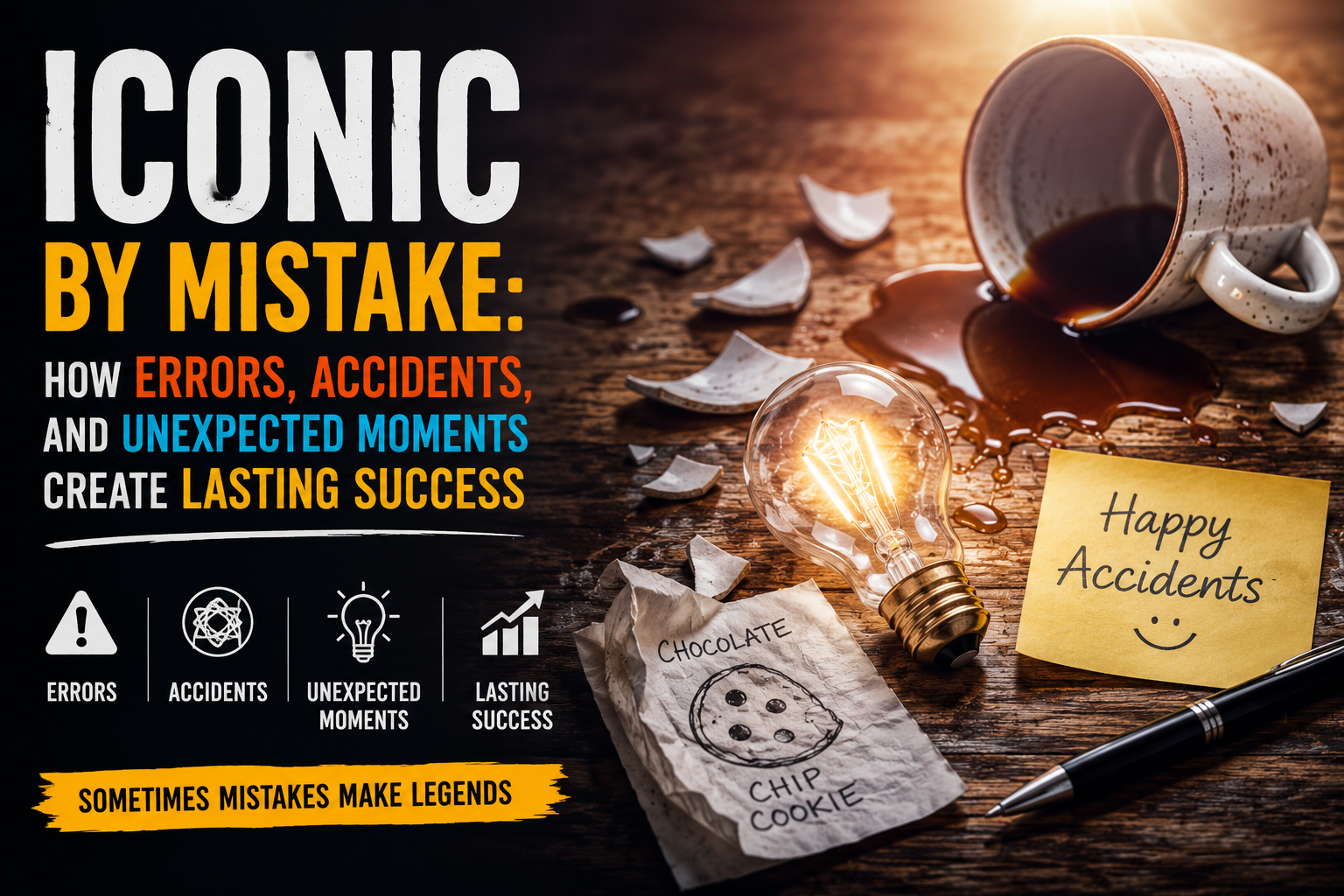
In a world obsessed with perfection, mistakes are often viewed as something to avoid at all costs. From school classrooms to professional workplaces, people are taught to strive for flawless performance. However, history, innovation, art, and personal growth repeatedly prove a different truth: some of the most iconic achievements happened because of mistakes.
The phrase “Iconic by Mistake” perfectly captures the idea that errors, accidents, and unexpected outcomes can sometimes lead to extraordinary success. What begins as a failure, miscalculation, or unplanned event can transform into a groundbreaking discovery, a cultural phenomenon, or a life-changing lesson.
Rather than seeing mistakes as evidence of weakness, we can view them as opportunities for learning, creativity, and growth. In many cases, mistakes become the stepping stones to greatness. The journey from failure to success is rarely straightforward, and some of the most memorable accomplishments in history owe their existence to unexpected errors.
Understanding the Meaning of “Iconic by Mistake”
The term “Iconic by Mistake” refers to situations where something becomes famous, influential, or successful despite—or because of—an error or accident.
These moments occur when people embrace unexpected results instead of rejecting them. Rather than giving up after something goes wrong, they explore new possibilities and discover opportunities hidden within setbacks.
An accidental invention, a misunderstood idea, a failed experiment, or even an embarrassing personal mistake can eventually become something remarkable. What matters is not the mistake itself but the response to it.
Many successful individuals understand that perfection is not the path to greatness. Instead, they recognize that growth often emerges from trial and error. Every mistake contains valuable information, and those who learn from it gain a significant advantage.
Why People Fear Mistakes
Despite the potential benefits, most people fear making mistakes. This fear often begins at an early age when errors are associated with poor grades, criticism, or disappointment.
Several factors contribute to this fear:
Fear of Judgment
People worry about what others will think if they fail. Social pressure can make mistakes feel embarrassing, causing individuals to avoid risks altogether.
Fear of Failure
Many people equate failure with incompetence. As a result, they become hesitant to try new things where success is not guaranteed.
Perfectionism
Perfectionists often believe that anything less than flawless performance is unacceptable. This mindset can create anxiety and prevent creativity.
Lack of Confidence
When individuals doubt their abilities, mistakes can feel like confirmation of their insecurities rather than opportunities for growth.
Ironically, the fear of making mistakes often limits personal and professional development more than mistakes themselves.
The Hidden Value of Mistakes
Mistakes are powerful teachers. Every error provides feedback about what works and what doesn’t.
When people approach mistakes with curiosity rather than shame, they gain valuable insights that can improve future performance.
Some of the key benefits of mistakes include:
Learning and Growth
Mistakes reveal weaknesses, gaps in knowledge, and areas for improvement. This awareness creates opportunities for growth.
Creativity
Unexpected outcomes often force people to think differently. Many innovative solutions emerge when original plans fail.
Resilience
Overcoming setbacks strengthens mental toughness and adaptability.
Experience
Practical experience gained through mistakes is often more memorable than lessons learned through success alone.
Innovation
Many inventions and breakthroughs originated from experiments that did not go according to plan.
These benefits demonstrate why mistakes should not be viewed solely as negative experiences.
Famous Examples of Being Iconic by Mistake
History is filled with examples of accidental discoveries and unexpected successes.
Penicillin
One of the most important medical discoveries in history happened by accident. In 1928, scientist Alexander Fleming noticed that mold had contaminated one of his laboratory dishes.
Instead of throwing it away, he examined it more closely and discovered that the mold was killing bacteria. This accidental observation led to the development of penicillin, which revolutionized modern medicine and saved millions of lives.
Microwave Ovens
The microwave oven was discovered unintentionally when engineer Percy Spencer noticed that a chocolate bar in his pocket melted while he was working with radar equipment.
His curiosity led to further experiments, eventually resulting in one of the most widely used kitchen appliances in the world.
Post-it Notes
The invention of Post-it Notes began as a failed attempt to create a super-strong adhesive.
Instead, researchers developed a weak adhesive that could be removed easily without leaving residue. What initially seemed like a mistake eventually became a highly successful office product used worldwide.
Potato Chips
According to popular accounts, potato chips were created when a customer repeatedly complained that French fries were too thick.
A chef sliced potatoes extremely thin out of frustration. Surprisingly, the customer loved them, and a new snack was born.
These examples illustrate how unexpected outcomes can lead to extraordinary success.
Mistakes in Personal Growth
Not every iconic mistake changes the world. Many mistakes transform individual lives in meaningful ways.
People often discover their strengths through failures.
A student who struggles in one subject may discover a passion for another field. An entrepreneur whose first business fails may gain the knowledge needed to build a successful company later. An athlete who loses an important competition may develop the discipline required to become a champion.
Personal growth rarely occurs within comfort zones.
Mistakes challenge assumptions, reveal limitations, and encourage self-reflection. They force individuals to adapt and improve.
Without mistakes, growth would be significantly slower.
The Connection Between Failure and Success
Success and failure are often portrayed as opposites. In reality, they are closely connected.
Most successful people have experienced numerous failures before achieving their goals.
Business leaders, athletes, artists, and innovators frequently encounter setbacks along the way. What separates them from others is their willingness to continue learning and improving.
Failure provides information that success cannot.
When everything goes well, there is little incentive to change. However, when something goes wrong, individuals are motivated to analyze the situation and find better solutions.
This process of experimentation, adjustment, and improvement is often the foundation of lasting success.
How Social Media Celebrates Imperfection
In recent years, social media has played an important role in changing attitudes toward mistakes.
Many viral trends, memes, and popular moments gain attention because they are imperfect or unexpected.
Authenticity often resonates more strongly than perfection.
People connect with real experiences, relatable struggles, and genuine emotions. As a result, content that includes mistakes or spontaneous moments often feels more engaging than carefully polished presentations.
This shift reflects a broader cultural recognition that imperfection is a natural part of being human.
The popularity of phrases such as “mistakes were made,” “accepted my mistakes,” and “success is the only revenge” highlights society’s growing appreciation for resilience and personal growth.
Turning Mistakes into Opportunities
Not every mistake automatically leads to success. The key lies in how individuals respond.
Here are several strategies for transforming mistakes into opportunities:
Accept Responsibility
The first step is acknowledging the mistake rather than denying it or blaming others.
Taking responsibility allows people to learn from the experience and move forward constructively.
Analyze What Happened
Understanding the causes of a mistake helps prevent similar problems in the future.
Reflection turns failure into valuable knowledge.
Maintain Perspective
A single mistake does not define a person’s worth or potential.
Viewing setbacks as temporary challenges makes recovery easier.
Stay Curious
Curiosity encourages exploration of unexpected outcomes.
Many breakthroughs occur when people investigate surprising results rather than dismissing them.
Keep Moving Forward
Progress requires persistence.
The willingness to continue despite setbacks often determines long-term success.
Lessons from Iconic Mistakes
Every mistake contains lessons that can contribute to future achievement.
Some of the most important lessons include:
- Perfection is not necessary for success.
- Failure often provides valuable information.
- Adaptability is a powerful skill.
- Resilience develops through challenges.
- Innovation frequently emerges from unexpected situations.
- Growth requires experimentation.
- Success is rarely a straight path.
These lessons apply to individuals, businesses, organizations, and societies alike.
Building a Growth Mindset
Psychologists often emphasize the importance of a growth mindset—the belief that abilities can improve through effort, learning, and persistence.
People with a growth mindset view mistakes differently.
Instead of seeing failure as evidence of limitation, they view it as an opportunity to develop new skills.
This perspective encourages continuous improvement and greater resilience.
A growth mindset allows individuals to embrace challenges, take calculated risks, and remain motivated even when facing setbacks.
Over time, this approach can lead to remarkable achievements.
Why the Future Belongs to Risk-Takers
Innovation requires experimentation, and experimentation inevitably involves mistakes.
The most successful individuals and organizations understand that avoiding all mistakes is impossible.
Instead, they focus on learning quickly, adapting effectively, and continuously improving.
In rapidly changing industries, the willingness to take risks often determines success.
Companies that fear failure may struggle to innovate, while those that embrace experimentation frequently discover new opportunities.
The future belongs to people who are willing to try, fail, learn, and try again.
Embracing Imperfection
Modern culture often promotes unrealistic standards of perfection. Carefully edited images, curated online profiles, and constant comparisons can create the illusion that successful people never make mistakes.
Reality tells a different story.
Every successful person has experienced failures, setbacks, disappointments, and unexpected challenges.
The difference is not the absence of mistakes but the ability to learn from them.
Embracing imperfection allows people to focus on progress rather than perfection.
This mindset reduces fear, increases confidence, and encourages personal development.
Conclusion
The concept of “Iconic by Mistake” reminds us that some of life’s greatest successes begin with unexpected failures. Mistakes are not the end of the journey; they are often the beginning of something better.
Whether in science, business, art, or personal growth, history consistently demonstrates that innovation and success frequently emerge from errors, accidents, and setbacks. The individuals who achieve extraordinary results are not those who avoid mistakes entirely but those who learn from them and use them as stepping stones toward improvement.
Instead of fearing mistakes, we should embrace them as opportunities for growth, creativity, and discovery. Every setback contains the potential for a comeback, and every error holds a lesson waiting to be learned.
The next time something goes wrong, remember this simple truth: today’s mistake may become tomorrow’s success story. What seems like a failure now could eventually become something truly iconic.