
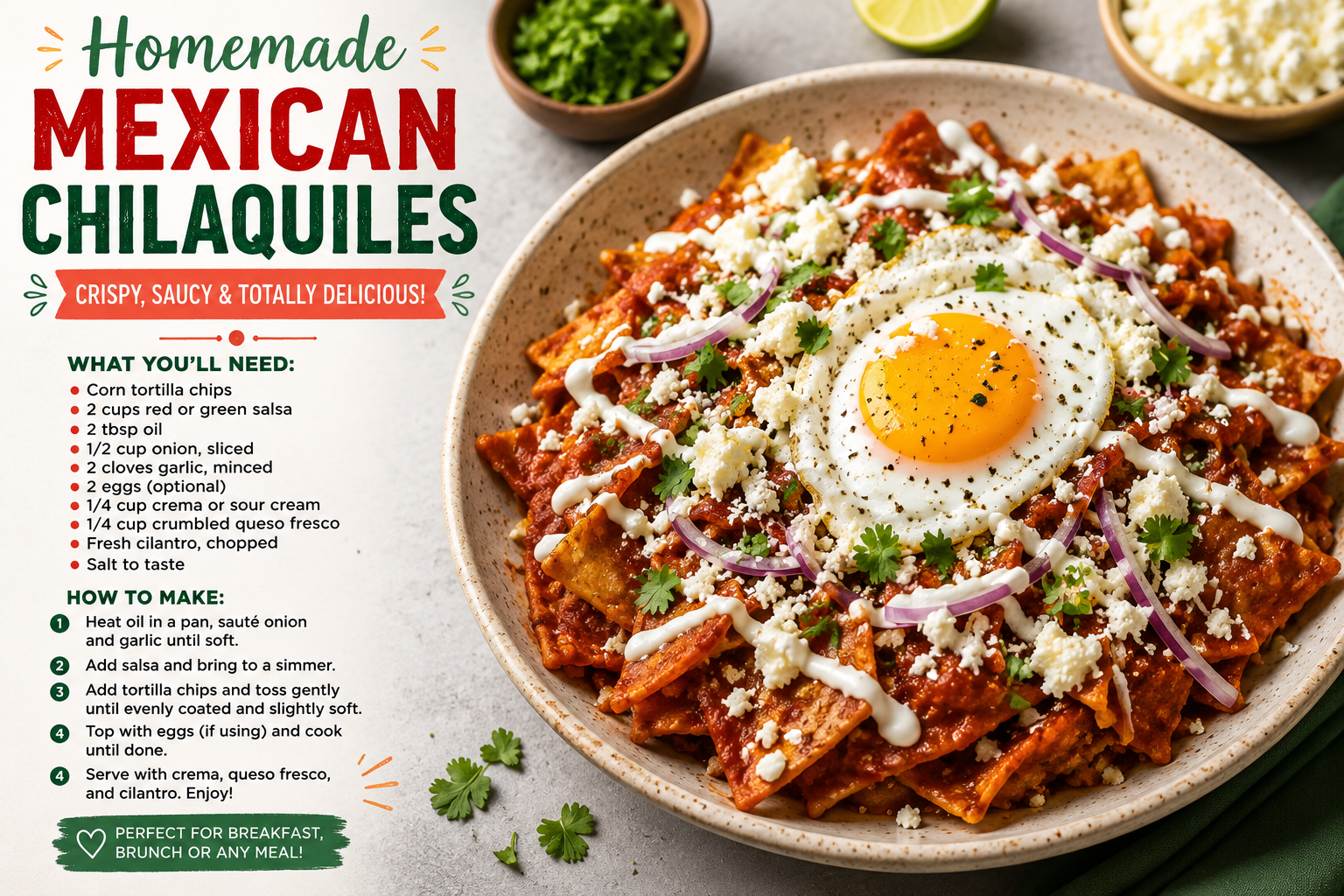
There are breakfasts that simply feed you, and then there are breakfasts that completely change the way you think about mornings. Chilaquiles are the second kind.
This is Mexico’s most beloved breakfast dish — and once you understand it, you will wonder how you ever started a day without it. Crispy corn tortilla chips, briefly simmered in a bold red or green salsa until the edges soften but the centres still hold a whisper of crunch. Topped with cool Mexican crema, crumbled queso fresco, a handful of fresh cilantro, and a fried egg with a yolk that breaks and pools across the whole thing.
It is loud with flavour. It is ready in 25 minutes. And it costs almost nothing to make.
This is that recipe — authentic, straightforward, and exactly what chilaquiles should taste like.
What Are Chilaquiles?
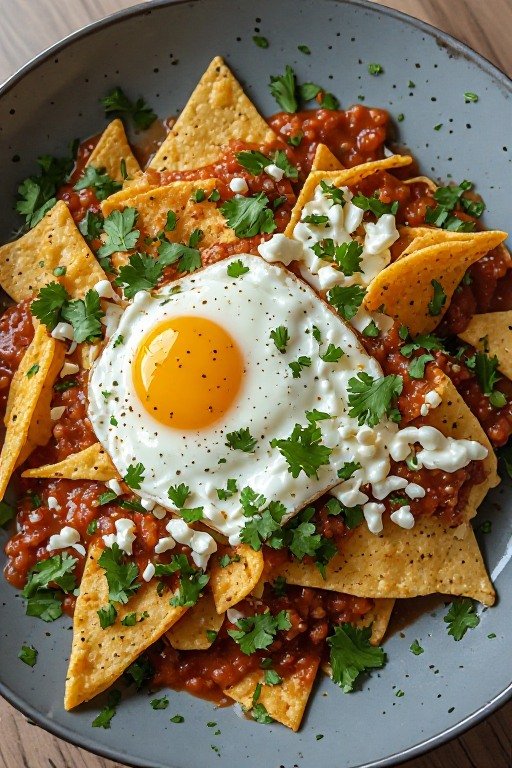
Chilaquiles (pronounced chee-lah-KEE-lays) are a traditional Mexican breakfast dish with roots that go back centuries. The name comes from the Nahuatl word meaning roughly “submerged in chile sauce” — and that description tells you everything.
The dish was originally created as an ingenious way to use up stale or leftover corn tortillas. Rather than wasting them, Mexican home cooks would cut them into pieces, fry them, and then briefly cook them in salsa — giving day-old tortillas an entirely new life as something deeply satisfying and full of flavour.
Over generations, chilaquiles evolved from a humble leftover dish into one of the most celebrated staples in Mexican cuisine. Today they appear on breakfast menus from street stalls in Mexico City to high-end brunch restaurants worldwide. But the best version is still the one made at home, in a skillet, in under 30 minutes, with good salsa and a fried egg on top.
Red Chilaquiles vs Green Chilaquiles — Which Should You Choose?
This is the first decision every chilaquiles cook must make, and it comes down entirely to personal flavour preference.
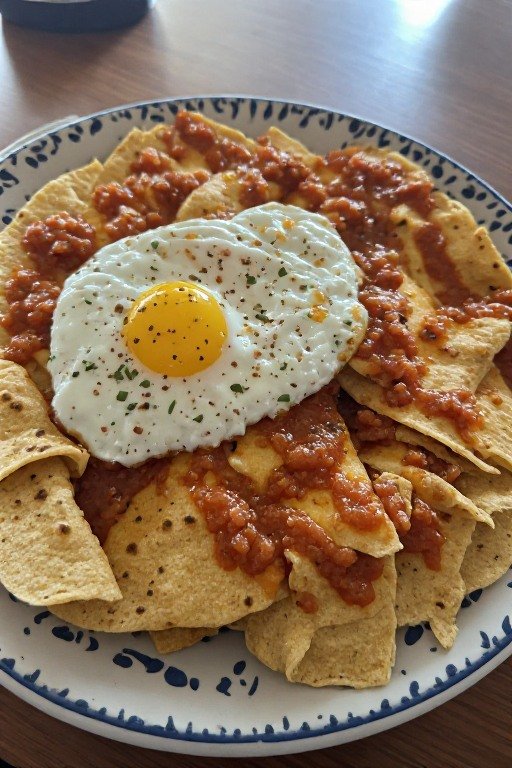
Red Chilaquiles (Chilaquiles Rojos) use a salsa made from ripe red tomatoes and dried red chiles — typically guajillo or ancho. The flavour is smoky, deep, and slightly earthy. The colour is a rich, dark red that turns the totopos a beautiful terracotta shade. Red chilaquiles pair especially well with eggs and shredded chicken.
Green Chilaquiles (Chilaquiles Verdes) use salsa verde made from tomatillos, green chiles, and cilantro. The flavour is bright, tangy, and fresh — lighter on the palate than the red version. The colour is vivid green and the overall dish feels more vibrant and acidic. Green chilaquiles are the classic pairing for eggs and avocado.
There is no wrong choice. Many families in Mexico are firmly divided on the question, and some households make both versions on the same morning — a phenomenon known as chilaquiles divorciados, or “divorced chilaquiles,” where red and green versions share the same plate, separated by a line of crema.
Start with whichever colour appeals to you most. You will inevitably make both.
Ingredients
For the Chilaquiles (Serves 4)
- 8 cups corn tortilla chips (totopos)
- 2 cups red or green salsa — store-bought or homemade
- 1 cup chicken broth or vegetable broth
- ½ cup onion, finely chopped
- 2 tbsp vegetable oil
- Salt to taste
Toppings
- ½ cup queso fresco, crumbled
- ½ cup Mexican crema or sour cream
- ¼ cup fresh cilantro, chopped
- 2 large eggs (optional but strongly recommended)
Optional Add-Ons
- 1 ripe avocado, sliced
- 1 cup shredded cooked chicken
- Pickled jalapeños
- Thinly sliced radishes
The Key to Great Chilaquiles: The Totopos
The tortilla chips are not just a vehicle for the salsa — they are the heart of the dish, and the quality of the totopos makes a significant difference in the final result.
Store-bought chips work well and are the most convenient option. Choose a plain corn chip with no additional flavourings. Thicker chips hold up better in the salsa and maintain more texture.
Homemade totopos are worth the extra effort when you have time. Cut corn tortillas into triangles, brush lightly with oil, and bake at 400°F for 10 to 12 minutes until crispy — or fry them in a thin layer of oil until golden. The flavour of a freshly made totopo in salsa is noticeably better than any bag from a shelf.
Leftover corn tortillas are the most traditional option of all. Day-old or slightly stale tortillas fry up crispier than fresh ones and absorb the salsa in a way that feels genuinely authentic. If you have them, use them.
Whatever you use, the totopos must be properly crispy before they go into the salsa. Soft chips produce only one result: a soggy, textureless mess.
How to Make Chilaquiles — Step by Step
Step 1: Heat the Oil
Pour the vegetable oil into a large, wide skillet and set it over medium heat. The oil needs to be hot before the onion goes in — you should hear an immediate sizzle when the onion hits the pan. If the oil smokes, the heat is too high. Smoking oil turns bitter and will affect the final flavour of the entire dish.
Step 2: Sauté the Onion
Add the finely chopped onion to the hot oil and cook, stirring occasionally, for about 3 minutes until soft and translucent. The onion forms the aromatic base of the dish — do not rush this step or skip it. A properly sautéed onion adds sweetness and depth that raw onion folded in later simply cannot replicate.
Step 3: Add the Salsa and Broth
Pour in your salsa and chicken broth. Stir everything together, scraping up any onion stuck to the bottom of the pan. Let the mixture come to a gentle simmer and cook for 5 minutes. This simmering step does two things: it deepens the flavour of the salsa by cooking out any raw edge, and it reduces the liquid slightly so the sauce has more body and coats the chips properly.
Taste the sauce at this point. Adjust salt if needed. The sauce should taste boldly seasoned — it is about to absorb into a large volume of unseasoned tortilla chips, so it needs to carry that flavour.
Step 4: Add the Totopos
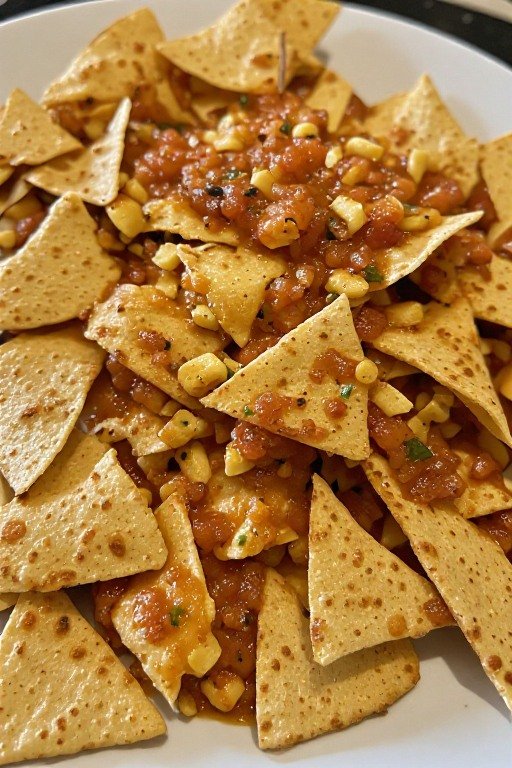
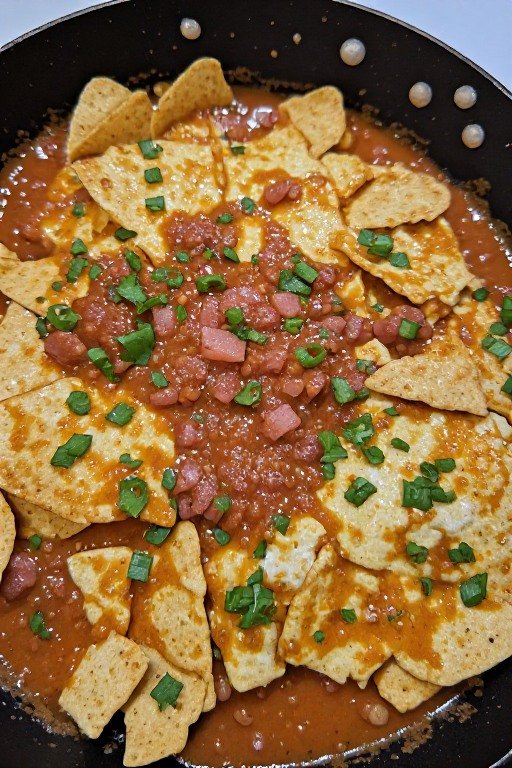
Add the tortilla chips to the skillet gradually, not all at once. Using a wooden spoon or spatula, gently fold them into the sauce so that every chip gets coated. Work carefully — you want to coat them, not crush them.
Cook for 2 to 3 minutes only. The chips should soften at the edges while still holding some crunch in the centre. This is the most critical timing judgment in the entire recipe. Thirty seconds too long and you have mush. Pull the pan off the heat while the chips still feel slightly firm — they will continue softening from the residual heat even after you stop cooking.
Step 5: Cook the Eggs
In a separate skillet, cook the eggs to your preference. Two styles work best with chilaquiles:
Sunny side up — cooked until the whites are set but the yolk is still completely runny. When you break it over the chilaquiles, the yolk runs into the salsa and chips, adding richness and a creamy quality that ties the whole dish together. This is the classic choice.
Scrambled — for a more uniform texture where the egg is incorporated throughout. Less dramatic but equally delicious.
Avoid hard-cooked eggs — the dish needs moisture and richness from a soft yolk or creamy scramble to balance the crunch and acidity of the salsa.
Step 6: Plate and Top Immediately
Divide the chilaquiles between plates carefully, disturbing the chips as little as possible. Working quickly, add the toppings in this order: first the Mexican crema in a generous drizzle, then the crumbled queso fresco scattered across the surface, then a handful of fresh cilantro. Place the egg on top.
Serve immediately. Chilaquiles do not wait. Every minute they sit on the plate, the chips absorb more liquid and lose more crunch. This is a dish that is eaten the moment it is ready — and it rewards that urgency with a texture and flavour combination that simply cannot be replicated if you let it sit.

Homemade Salsa vs Store-Bought — Does It Matter?
The honest answer: yes, it matters, and the difference is noticeable.
Store-bought salsa is convenient and produces a perfectly acceptable result. For a weekday morning when speed is the priority, it is entirely appropriate.
But homemade salsa — whether red or green — has a freshness, depth, and complexity that no jar can match. Making your own is also simpler than most people expect.
Quick homemade red salsa: Roast 4 Roma tomatoes, 2 dried guajillo chiles (soaked in hot water), ½ onion, and 2 garlic cloves under the broiler for 10 minutes until charred. Blend with salt and a splash of the chile soaking water.
Quick homemade green salsa (salsa verde): Simmer 6 tomatillos, 2 serrano chiles, and ¼ onion in water for 10 minutes. Drain and blend with a handful of cilantro, 1 garlic clove, and salt.
Both can be made the night before and refrigerated — and like most salsas, they taste even better the next day after the flavours have had time to develop.
What to Serve Alongside Chilaquiles
Chilaquiles are a complete breakfast on their own, but they pair beautifully with a few simple accompaniments that are entirely traditional:
- Refried beans — the classic pairing. Spread on the side or served in a small bowl, they add protein and a creamy contrast to the crispy chips
- Sliced avocado — cool, buttery, and a natural complement to the acidity of the salsa
- Fresh nopal salad — grilled or raw cactus paddles with tomato and onion, a very traditional Mexican side that balances the richness of the dish
- Hibiscus agua fresca — slightly tart, deeply refreshing, and a classic Mexican breakfast drink that cuts through the richness beautifully
How to Store and Reheat Chilaquiles
Chilaquiles are genuinely best eaten the moment they are made. However, if you have leftovers:
Storage: Transfer to an airtight container and refrigerate for up to 2 days. The chips will have absorbed the salsa fully by the time you reheat them — the texture changes, but the flavour remains excellent.
Reheating: Place in a skillet over medium heat with a splash of chicken or vegetable broth. Stir gently and heat through. The broth restores some moisture and prevents the chips from burning. Do not use the microwave — it produces an uneven, steamed result that turns the chips completely soft and rubbery.
Freezing: Not recommended. The totopos lose all texture when frozen and thawed, and the salsa separates.
Frequently Asked Questions
Can I use flour tortillas instead of corn?
You can, but the result is quite different. Corn tortillas are the authentic, traditional choice — their flavour, texture, and the way they absorb salsa is specific to corn. Flour tortillas become gummy and pasty when cooked in salsa and do not hold their structure the same way. Stick with corn for the best result.
Are chilaquiles vegetarian?
Yes, easily. Simply use vegetable broth instead of chicken broth and skip the eggs or substitute them with sliced avocado. The dish remains completely satisfying and flavourful.
Can I prepare the salsa ahead of time?
Absolutely — and it is recommended. Salsa made the night before has had time for the flavours to meld and deepen overnight. Store in an airtight jar in the refrigerator for up to 5 days.
What is the best cheese for chilaquiles?
Queso fresco is the most traditional choice — it has a mild, slightly salty, crumbly texture that works perfectly. Cotija cheese is a good alternative, with a more aged and saltier flavour. Panela works if you prefer something even milder. Avoid melting cheeses like mozzarella — they are not the right texture for this dish.
Why are my chilaquiles always soggy?
Three common reasons: the salsa was too thin and watery, the chips were cooked in the salsa for too long, or the dish was not served immediately. Use a thicker, well-reduced salsa, cook the chips for no more than 2 to 3 minutes, and serve the moment they leave the pan.
The History Behind the Dish
Chilaquiles have been part of Mexican kitchens for hundreds of years, long before they appeared on any restaurant menu. Their origin is rooted in necessity and resourcefulness — the corn tortilla is a staple of Mexican cooking, and a stale or leftover tortilla that might otherwise go to waste found new purpose when fried crispy and simmered briefly in salsa.
The name traces back to Nahuatl, the language of the Aztecs, with some sources linking it to words meaning “greens in broth” or “submerged in chile.” Whatever the precise etymology, the spirit is the same: transforming humble, simple ingredients into something greater than the sum of their parts.
Today chilaquiles carry a cultural significance that goes beyond breakfast. They are comfort food, hangover cure (a well-known tradition in Mexican households), celebration brunch, and weekday staple all at once. They connect the people who eat them to a long and continuous thread of Mexican culinary tradition — and they do it in 25 minutes with a single skillet.
Final Thoughts
Chilaquiles are proof that the most satisfying food in the world does not require complicated technique, exotic ingredients, or hours in the kitchen. They require good salsa, crispy chips, the discipline to pull them from the heat before they go soft, and a fried egg cracked on top at exactly the right moment.
Make them once and they become a reflex — the thing you reach for on a slow Saturday morning, the breakfast you make when you want something that feels real and honest and genuinely good.
Red or green. Egg on top. Crema drizzled. Queso crumbled. Served immediately.
That is chilaquiles. That is the recipe.
RECIPE CARD:
- Prep Time: 15 minutes
- Cook Time: 10 minutes
- Total Time: 25 minutes
- Servings: 4
- Calories: 350 kcal per serving
- Cuisine: Mexican
- Course: Breakfast, Brunch
- Diet: Vegetarian option, Gluten-Free