
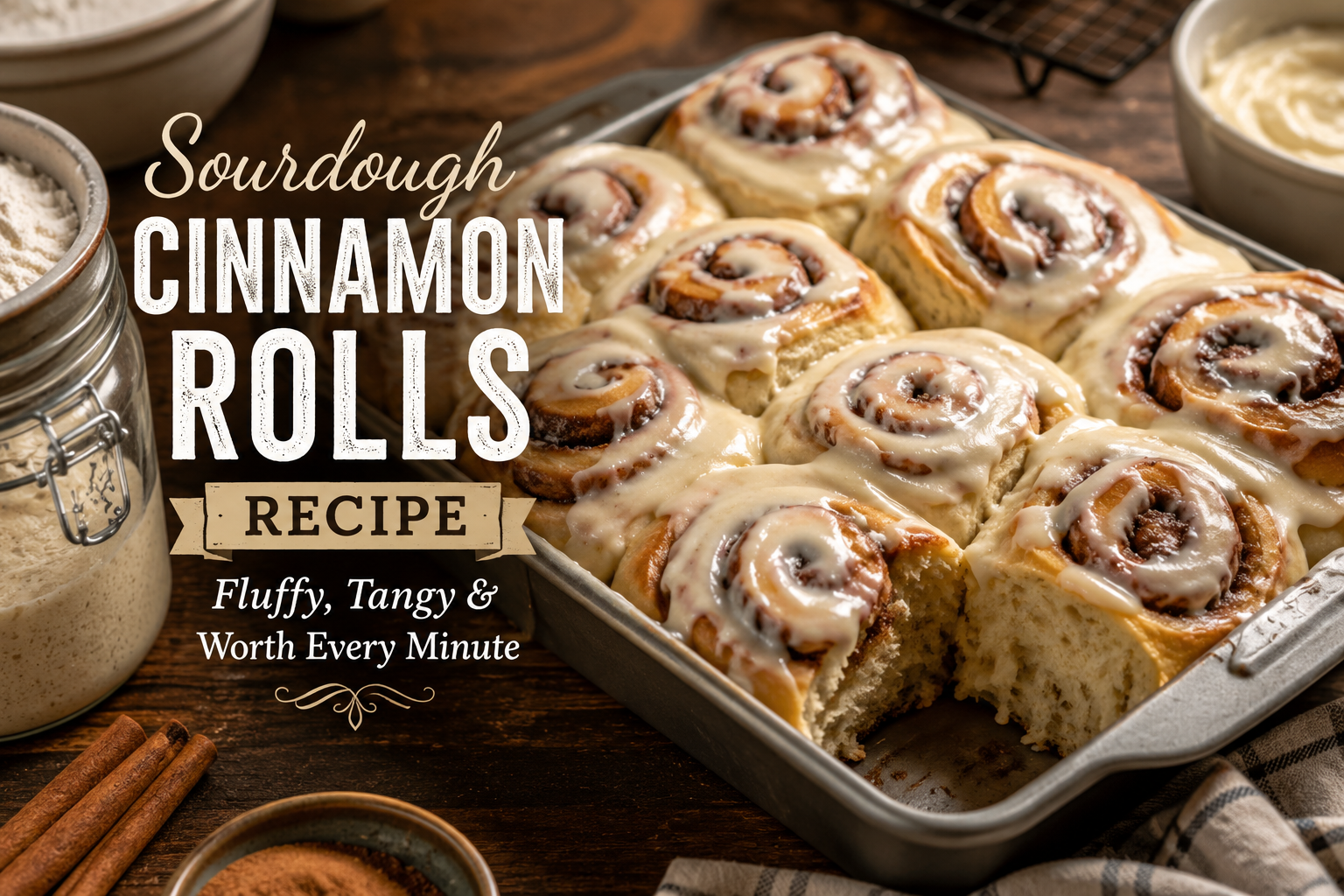
Some recipes are made to be eaten quickly, standing at the kitchen counter, still warm from the oven, frosting half-melted, fingers sticky. Sourdough cinnamon rolls are that recipe.
They take longer than the average cinnamon roll. They ask more of you. But what they give back — a deep, complex flavour, a pillowy-soft crumb with the faintest sourdough tang, spirals of caramelized cinnamon sugar, and a cream cheese frosting that melts on contact — is something no quick-rise recipe can ever match.
This is the roll that makes people stop mid-bite and ask for the recipe. This is that recipe.
Why Sourdough Instead of Instant Yeast?
Most cinnamon roll recipes call for instant or active dry yeast. They work perfectly fine. But sourdough starter changes the game in ways that are genuinely difficult to go back from.
The slow, wild fermentation of sourdough does three things that commercial yeast simply cannot. First, it develops flavour — a subtle, complex tang that cuts through the sweetness of the filling and frosting in a way that makes every bite more interesting. Second, it breaks down gluten slowly, which creates a soft, tender crumb that stays moist long after baking. Third, the natural acids in sourdough act as a mild preservative, meaning these rolls stay fresh and soft a full day longer than their yeast-risen counterparts.
Yes, they take longer. No, you cannot rush the process. But this is a weekend recipe — one that fills your kitchen with one of the best smells in existence and rewards patience with something truly extraordinary.
What You Need
For the Dough
- 1 cup active sourdough starter — fed and bubbly, used 4 to 6 hours after feeding
- 3½ cups all-purpose flour
- ⅓ cup warm milk
- ¼ cup granulated sugar
- 2 large eggs, room temperature
- 6 tbsp unsalted butter, softened
- 1 tsp salt
For the Cinnamon Filling
- ½ cup unsalted butter, softened
- ¾ cup brown sugar, firmly packed
- 2 tbsp ground cinnamon
For the Cream Cheese Frosting
- 1 cup cream cheese, softened
- 1½ cups powdered sugar
- 3 tbsp heavy cream
- 1 tsp vanilla extract
The Most Important Ingredient: An Active Starter
Before you begin, your sourdough starter must be active, bubbly, and at peak rise. Feed it 4 to 6 hours before you plan to make your dough. It should be doubled in size, full of bubbles, and smell pleasantly sour and yeasty — not sharp or like alcohol.
An active starter is the engine of this recipe. A weak or unfed starter produces dough that barely rises, rolls that are dense and gummy, and results that disappoint. Take the time to feed it properly. A healthy starter is everything here.
Not sure if yours is active enough? Drop a small spoonful into a glass of water. If it floats, it is ready. If it sinks, feed it again and wait.
How to Make Sourdough Cinnamon Rolls — Step by Step
Step 1: Make the Dough
In a large bowl, combine the active sourdough starter, warm milk, sugar, and eggs. Mix until combined. Add the flour and salt and mix until a shaggy dough forms. Now add the softened butter one tablespoon at a time, kneading it in fully before adding the next piece.
Knead the dough for 8 to 10 minutes by hand or 5 to 6 minutes with a stand mixer using the dough hook. The finished dough should be smooth, soft, and slightly tacky — it should pull away from the sides of the bowl but still feel a little sticky to the touch. This is correct. Do not be tempted to add more flour.
Step 2: Bulk Fermentation
Shape the dough into a ball and place it in a lightly greased bowl. Cover with plastic wrap or a damp towel and leave it at room temperature to rise until doubled in size.
This is where sourdough asks for patience. Depending on the strength of your starter, the temperature of your kitchen, and the humidity in the air, this can take anywhere from 4 to 8 hours. Do not rush it with heat. A slow, steady rise at room temperature develops better flavour than a fast rise in a warm oven.
The dough is ready when it has clearly doubled and feels airy and puffed when gently pressed.
Step 3: Make the Cinnamon Filling
While the dough rises, prepare the filling. Beat together the softened butter, brown sugar, and cinnamon until you have a thick, spreadable paste.
Here is the key: use all of it. Every last bit. The most common mistake in cinnamon rolls is under-filling. What looks like too much filling at the spreading stage becomes exactly the right amount once the rolls are baked — deep, caramelized, oozing pockets of cinnamon sugar in every spiral.
Step 4: Roll and Fill
Turn the risen dough out onto a lightly floured surface. Roll it into a rectangle approximately 12 inches by 18 inches. Keep the thickness as even as possible — a rolling pin and a ruler are your friends here.
Spread the cinnamon filling evenly across the entire surface, going all the way to the edges and corners. Starting at the long edge closest to you, roll the dough away from you into a tight, even log. Pinch the seam firmly along the bottom to seal.
Step 5: Cut the Rolls
Here is a trick that every experienced baker knows and most beginners do not: do not use a knife to cut your rolls. A knife, even a sharp one, compresses and squishes the dough as it cuts, ruining the spiral you worked so hard to create.
Instead, use unflavored dental floss. Slide a long piece under the log, bring the two ends up and cross them over the top, then pull firmly in opposite directions. The floss slices cleanly through the dough without any pressure, giving you perfectly round, undistorted rolls every single time.
Cut the log into 12 equal pieces, each approximately 1.5 inches thick.
Step 6: The Second Proof
Arrange the rolls in a greased 9×13 inch baking dish, leaving just a small amount of space between each one. Cover loosely with plastic wrap.
You now have two options, and both produce excellent results:
Option A — Same Day: Leave the rolls at room temperature for 2 to 3 hours until they are puffed, touching each other, and visibly risen.
Option B — Overnight in the Fridge: Place the covered dish directly in the refrigerator and leave overnight. The next morning, take them out 45 minutes to 1 hour before baking to come to room temperature. This cold proof slows fermentation dramatically, developing a deeper, more complex sourdough flavour in the finished rolls. If you have the time, this is the method to use.
Before baking, the rolls should be puffy, touching each other at the sides, and clearly risen. Rolls that are not fully proofed bake up dense and doughy in the centre.
Step 7: Bake
Preheat your oven to 375°F (190°C). Bake the rolls for 22 to 25 minutes until the tops are a deep golden brown.
To check doneness, gently press the centre of the middle roll — it should feel set and spring back slightly, not squishy or raw-feeling. If the tops are browning faster than the rolls are cooking through, tent loosely with aluminium foil for the final few minutes.
Step 8: Make the Frosting and Serve
While the rolls are baking, beat the softened cream cheese until completely smooth and fluffy. Add the powdered sugar, heavy cream, and vanilla extract and beat until silky, glossy, and spreadable.
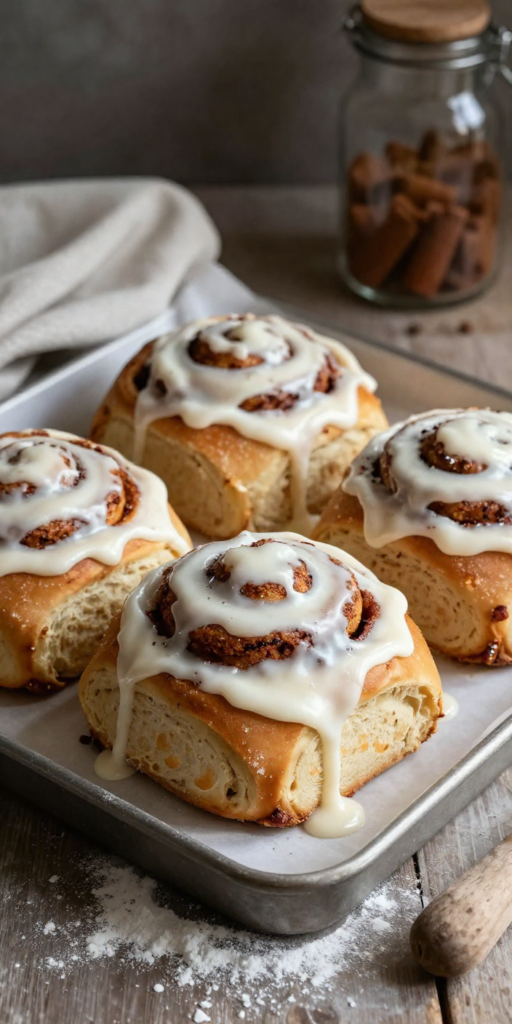
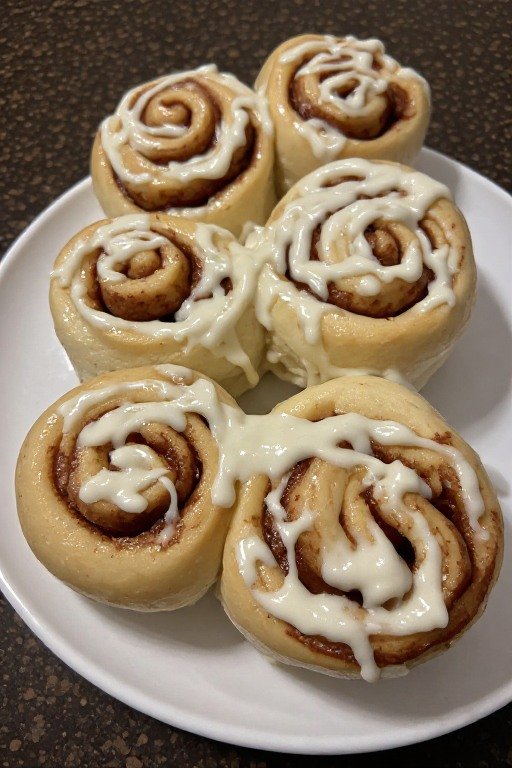
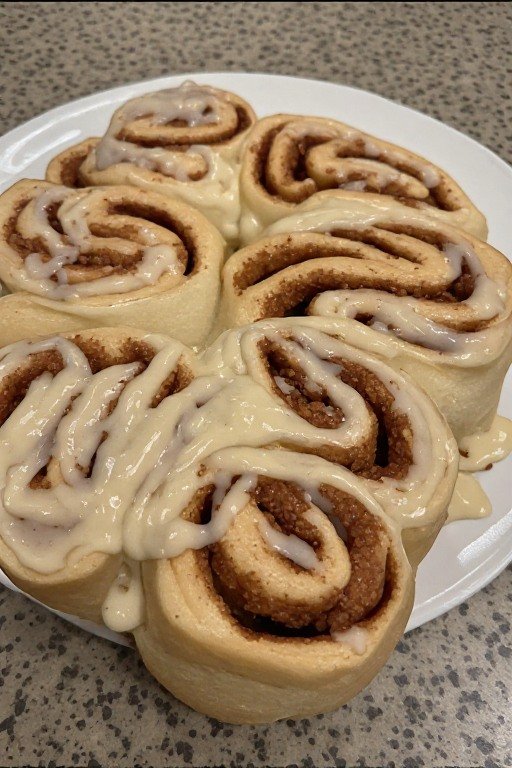
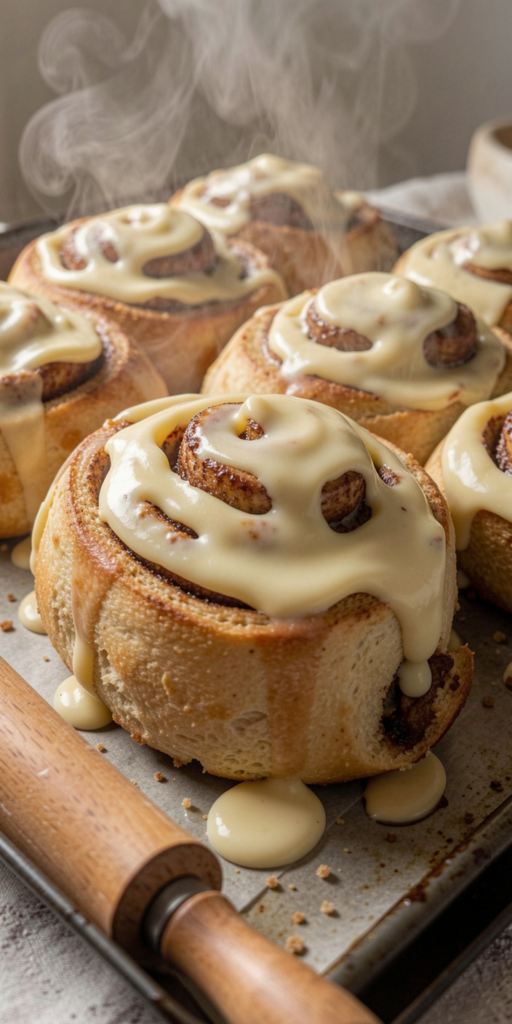
Remove the rolls from the oven and allow them to cool for exactly 5 minutes — not longer. Spread the cream cheese frosting generously over the warm rolls. The warmth melts the frosting slightly, allowing it to seep down between the layers and into the swirls. This is the detail that takes these rolls from very good to genuinely unforgettable.
Serve immediately, while warm and gooey.
Overnight Sourdough Cinnamon Rolls — The Weekend Game Plan
This is how most experienced bakers approach this recipe:
- Friday evening: Feed the sourdough starter
- Friday night (4 to 6 hours later): Make the dough, begin bulk fermentation
- Saturday morning: Shape, fill, cut, and place rolls in the fridge for the overnight cold proof
- Sunday morning: Take rolls out, let them come to room temperature, bake, frost, and serve
The result is fresh, warm cinnamon rolls on a Sunday morning with virtually no active work required that day — just the oven and 25 minutes.
Common Mistakes and How to Avoid Them
Dough not rising: Your starter was not active enough. Always do the float test before using it.
Rolls are dense in the centre: Under-proofed. The second proof was not long enough. The rolls need to look puffy and feel light before they go in the oven.
Filling leaking out everywhere: The dough was rolled too loosely or the filling was spread too close to the edge on the rolling side. Leave a half-inch gap at the top long edge before rolling.
Rolls unravelling during baking: The log was not rolled tightly enough. When rolling, apply gentle, even pressure to keep the log firm.
Frosting too stiff or thick: Add heavy cream one teaspoon at a time until you reach a spreadable consistency.
Variations to Try
- Apple Cinnamon: Add a thin layer of finely diced sautéed apples on top of the cinnamon filling before rolling
- Cardamom Brown Butter: Replace regular butter in the filling with brown butter and add ½ tsp of ground cardamom
- Nutella Swirl: Spread a thin layer of Nutella beneath the cinnamon filling for a chocolate hazelnut twist
- Orange Zest Frosting: Add the zest of one orange to the cream cheese frosting — the citrus cuts the richness perfectly
- Maple Glaze: Skip the cream cheese frosting and drizzle with a simple maple syrup glaze instead
How to Store and Reheat
Room temperature: Store in an airtight container for up to 2 days.
Refrigerator: Store for up to 5 days. The sourdough fermentation keeps them softer and fresher than regular cinnamon rolls.
Reheating: Microwave individual rolls for 20 to 30 seconds. They taste almost as good as freshly baked.
Freezer: Freeze baked, unfrosted rolls for up to 2 months. Thaw overnight in the fridge, warm in the oven, then frost before serving.
Frequently Asked Questions
Can I use sourdough discard instead of active starter?
You can, but you will need to add ½ tsp of instant yeast to the dough to compensate for the lack of active leavening. The flavour will still be excellent but the rise will come from the yeast rather than the starter.
My dough is very sticky — is that normal?
Yes. Sourdough enriched doughs are stickier than bread doughs because of the butter and eggs. Resist the urge to add more flour. A sticky dough produces a softer roll. Lightly oil your hands and surface if needed rather than adding flour.
Can I make these smaller?
Yes — cut the log into 16 pieces instead of 12 for smaller rolls. Reduce baking time to 18 to 20 minutes and check for doneness accordingly.
Why do my rolls taste flat or bland?
This usually means the starter was not active enough, or the fermentation time was too short. Sourdough flavour develops over time — the longer the bulk ferment and proof, the more complex and delicious the result.
Final Thoughts
Sourdough cinnamon rolls are not a Tuesday morning recipe. They are a Saturday ritual — the kind of bake you plan for, look forward to, and eat slowly with good coffee and no particular place to be.
But every hour of waiting is paid back the moment that first roll comes apart in your hands, warm and sticky and impossibly soft, the filling oozing into the spiral, the frosting melted into every layer.
That moment is worth it. Every single time.
RECIPE CARD:
- Prep Time: 30 minutes
- Fermentation Time: 4 to 8 hours
- Proof Time: 2 to 3 hours (or overnight)
- Bake Time: 25 minutes
- Total Time: 7 to 12 hours
- Servings: 12 rolls
- Calories: ~420 per roll
- Cuisine: American
- Course: Breakfast, Brunch, Dessert
- Diet: Vegetarian