Prep Time: 10 minutes | Rest Time: 30 minutes | Cook Time: 5 minutes | Total Time: 45 minutes | Makes: 12 to 16 pieces | Serves: 6 to 8 as an appetizer | Difficulty: Beginner
Some dishes are so perfectly conceived that they require almost no improvement across centuries of use. Classic bruschetta is one of those dishes.
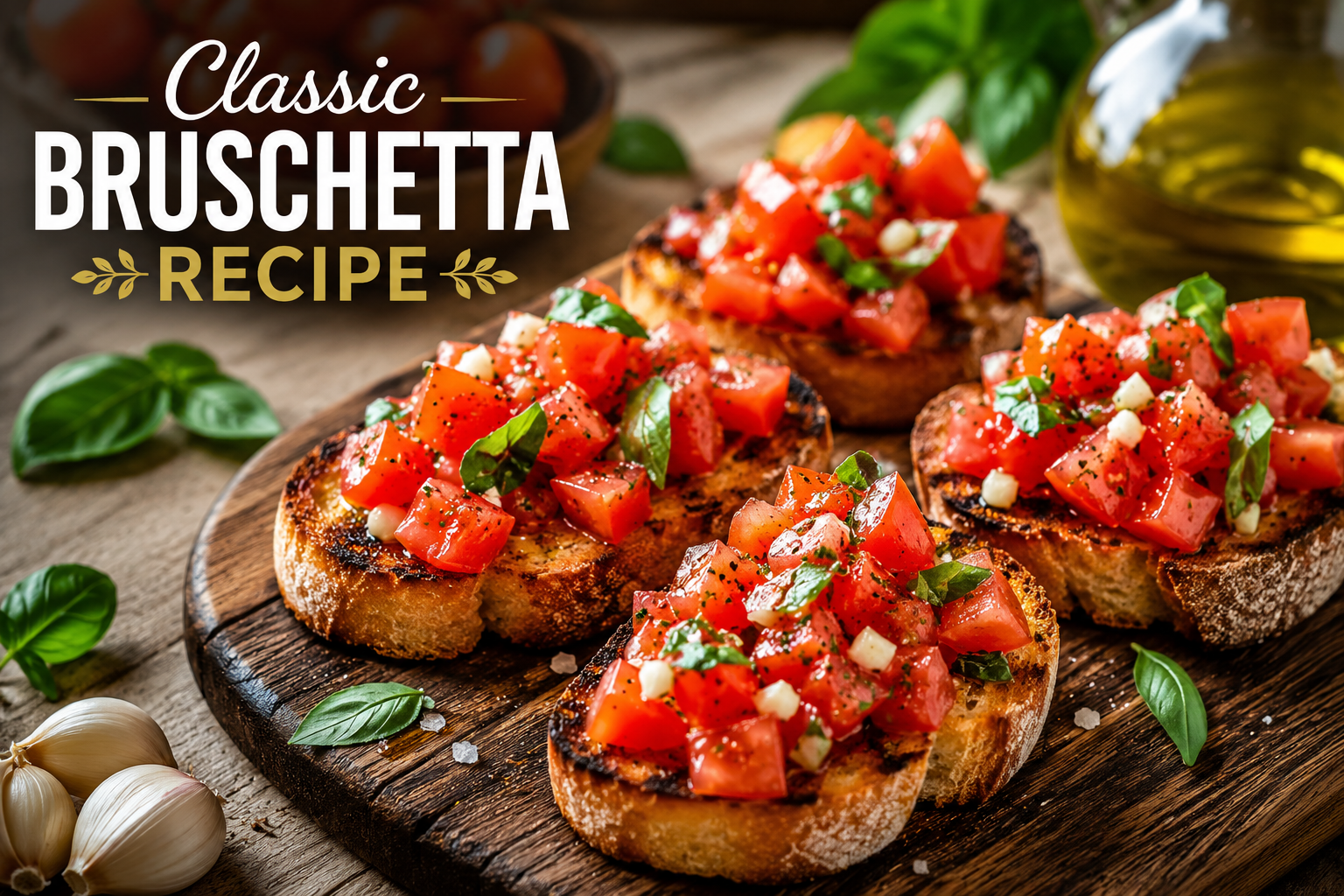
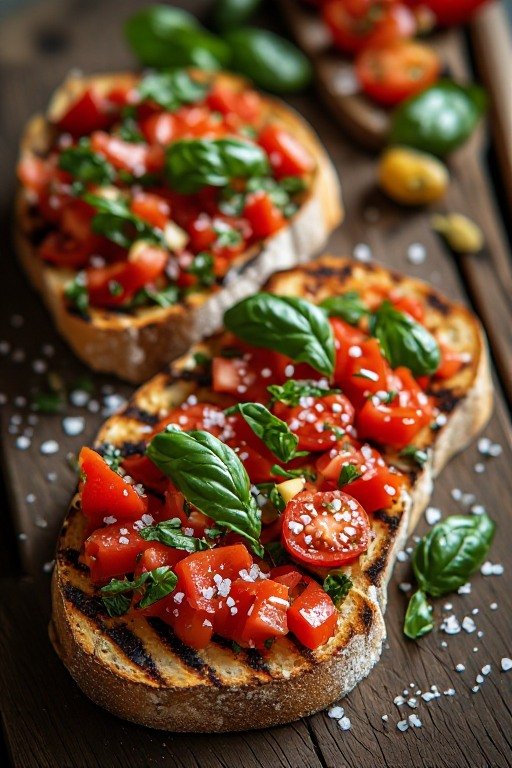
Thick slices of rustic bread grilled until golden and slightly charred at the edges. A whole garlic clove rubbed directly across the warm, porous surface until the bread smells like it just came out of an Italian kitchen. A generous drizzle of your best olive oil. And a spoonful of ripe tomatoes macerated with basil, garlic, and salt until they have become something far greater than the sum of their parts.
That is bruschetta. That is all it needs to be. And when it is made with proper attention to ingredients and technique, it is one of the finest things you can put in front of a guest.
This recipe gives you the authentic Italian version — no shortcuts, no unnecessary additions, and a full explanation of why each element matters and how to get it exactly right.
How to Pronounce Bruschetta
Before anything else — it is pronounced broo-SKEH-tah, not broo-SHEH-tah. The Italian word comes from the Roman dialect verb bruscare, meaning to roast over coals. The pronunciation is a small thing, but saying it correctly is a satisfying way to honor a dish that has been part of Italian culinary culture for centuries.
What Is Authentic Bruschetta?
Bruschetta originated as peasant food in central Italy — specifically in the olive-growing regions of Lazio, Tuscany, and Umbria — where farmers would toast stale bread over an open fire and rub it with garlic and the season’s freshly pressed olive oil. It was called fettunta in Tuscany, meaning “oily slice,” and was a way to taste the quality of the new olive oil harvest each autumn.
The tomato topping came later, after tomatoes became widely adopted in Italian cooking in the 18th century, and bruschetta al pomodoro — tomato bruschetta — became the version the world fell in love with.
What authentic bruschetta does NOT contain: balsamic vinegar drizzled on top, red onion in the tomato mixture, or cheese of any kind on the tomato version. These are additions that have become common outside Italy but are not part of the original dish. The authentic version relies entirely on the quality of its few ingredients — and those ingredients, when chosen well, need nothing else.
The Bread — The Most Important Decision
The bread is the foundation of bruschetta and deserves more consideration than most recipes give it.
The best bread for bruschetta: A rustic Italian loaf with a tight, chewy crumb and a firm crust. In Italy this would be pane di casa — a simple white country bread. Outside Italy, look for a good sourdough with a tight crumb, a ciabatta loaf sliced thickly, or any artisan Italian-style rustic loaf from a proper bakery.
What to avoid: Pre-sliced supermarket bread of any kind. It is too soft, too uniform, and collapses the moment the tomato mixture goes on top. Anything too airy or full of large holes will also fall apart — you want structure and density so the bread holds its shape and the crust stays crisp even as the tomatoes rest on it.
Slice thickness matters: Cut the bread thickly — at least 1.5 to 2 cm (approximately ¾ inch). Thin slices become brittle and crack when you bite them. Thick slices stay firm, give you something to actually hold onto, and provide enough interior softness to contrast with the exterior char.
Never use a baguette: A French baguette produces bruschetta that is too narrow, too crunchy all the way through, and falls apart when loaded with topping. Italian bread and French baguette are two genuinely different structures designed for different purposes.
The Tomatoes — The Star of the Topping
Bruschetta is a dish where ingredient quality is everything — and nowhere is this more true than with the tomatoes.
Best tomato varieties for bruschetta:
Roma tomatoes are the most practical and widely available option. Their thick flesh, small seed cavities, and relatively low water content mean they hold their shape when diced and do not make the topping watery. They are the most reliable choice for consistent results year-round.
Ripe vine tomatoes in peak summer produce a more intensely flavored topping — juicier and sweeter than Roma with a complexity that makes summer bruschetta genuinely exceptional.
Campari or cocktail tomatoes are the best year-round substitute — small, consistently sweet and deeply red, and available in most grocery stores regardless of season.
Heirloom tomatoes in summer are extraordinary — their flavor is complex, their color is beautiful, and bruschetta made with truly ripe heirloom tomatoes in August is one of the finest things you can eat.
What to avoid: Pale, underripe tomatoes from the supermarket in winter. Watery, flavorless tomatoes produce watery, flavorless bruschetta. If good tomatoes are not available, wait for the season — or use high-quality canned San Marzano tomatoes drained thoroughly and roughly chopped as an emergency substitute.
The ripeness test: A bruschetta tomato should be deeply colored, heavy for its size, slightly fragrant at the stem end, and yield very slightly to gentle pressure. If it feels rock hard or has any green around the core when cut, it will not produce good bruschetta.
Ingredients
Makes 12 to 16 pieces | Serves 6 to 8 as an appetizer
For the Tomato Topping
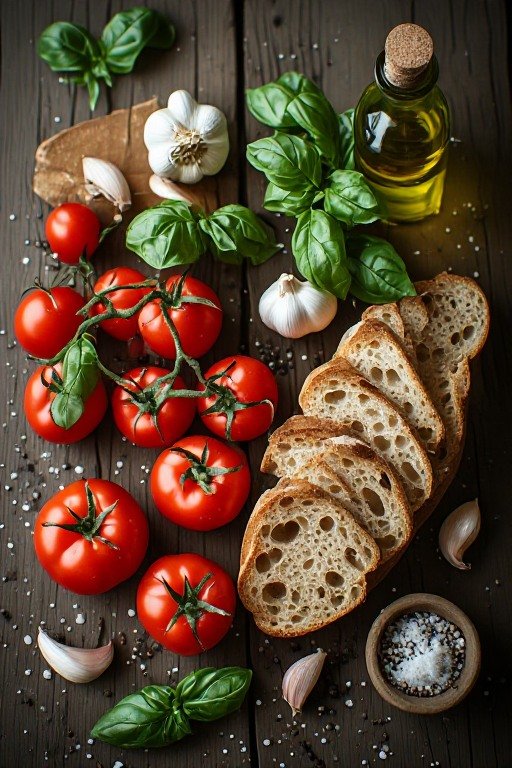
500g (about 1 lb) ripe Roma or vine tomatoes — approximately 4 to 5 medium tomatoes
3 tablespoons extra virgin olive oil — the best quality you own; this is the primary flavor
2 garlic cloves, very finely minced — for the tomato mixture
15 to 20 fresh basil leaves, roughly torn — never chiffonade for bruschetta; torn pieces look and taste better
½ teaspoon fine sea salt, plus more to taste
¼ teaspoon freshly ground black pepper
Optional: a tiny pinch of dried oregano — used in some southern Italian versions
For the Bread
1 large rustic Italian loaf — pane di casa, ciabatta, or a good artisan sourdough
1 whole garlic clove, peeled and halved — for rubbing on the toasted bread
3 to 4 tablespoons extra virgin olive oil — for drizzling over the finished toast
Flaky sea salt — for finishing
Ingredient Notes
On the olive oil: Extra virgin olive oil is the heart of bruschetta. Use the best quality you can afford — this is one of those recipes where the difference between a good oil and a cheap one is immediately, obviously, undeniably noticeable. Look for a bottle with a harvest or press date (not just an expiry date) that is within the last year. A fruity, slightly peppery Italian extra virgin is the ideal match.
On the garlic: Two separate garlic applications in this recipe serve two completely different purposes. The minced garlic in the tomato topping mellows and seasons the tomatoes during the maceration period. The whole halved clove rubbed directly on the toasted bread delivers a sharp, immediate garlic hit that is entirely different in character. Both are essential. Neither can substitute for the other.
On the basil: Fresh basil is absolutely non-negotiable. Dried basil produces an entirely different, much less vibrant flavor that does not belong in bruschetta. Use fresh leaves, tear them by hand rather than chopping them, and add them as close to serving as possible — basil darkens and loses its bright flavor quickly once torn.
Step-by-Step Instructions
Step 1 — Prepare the Tomato Topping
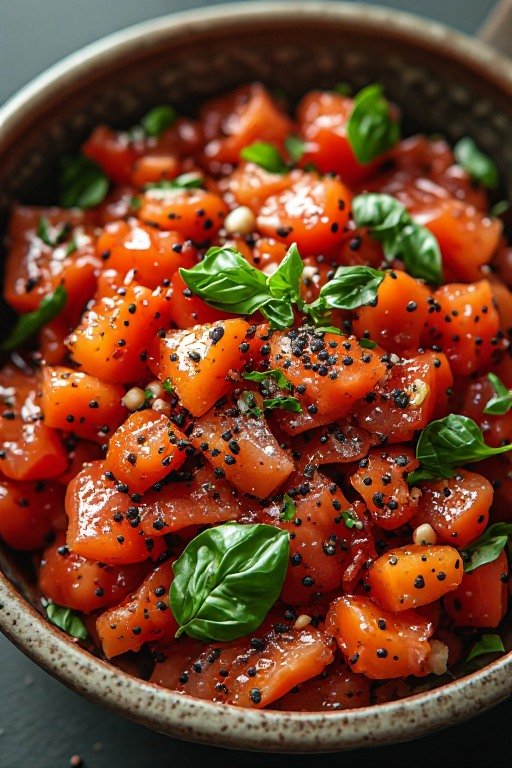
Dice the tomatoes into pieces approximately 1 to 1.5 cm in size — not too fine, not too large. You want pieces that hold their shape on the bread rather than turning into a sauce.
If your tomatoes are very watery, cut them in half first and gently squeeze each half over the sink to remove excess liquid before dicing. Roma tomatoes generally do not need this step but very juicy vine tomatoes often do.
Place the diced tomatoes in a bowl. Add the finely minced garlic, extra virgin olive oil, salt, and black pepper. Stir gently to combine.
Cover the bowl and let the mixture sit at room temperature for at least 30 minutes and up to 1 hour. This maceration period is where the real flavor development happens — the salt draws liquid from the tomatoes, the garlic mellows and integrates, and the olive oil coats every piece. The topping after 45 minutes tastes completely different and significantly better than it does immediately after mixing.
Add the torn basil leaves in the final 5 minutes before serving — not during the maceration period. Basil added too early darkens and loses its fresh, vibrant quality.
Taste and adjust salt, pepper, and olive oil before assembling.
The maceration is the most important technique in this recipe. Rushing this step means the flavors have not had time to develop and combine. A tomato topping assembled and immediately spooned onto bread tastes like diced tomatoes and olive oil. A topping that has rested for 45 minutes tastes like bruschetta.
Step 2 — Toast the Bread
Cut the bread into slices 1.5 to 2 cm thick. For a long rustic loaf, cut on a diagonal for more surface area and a more elegant shape.
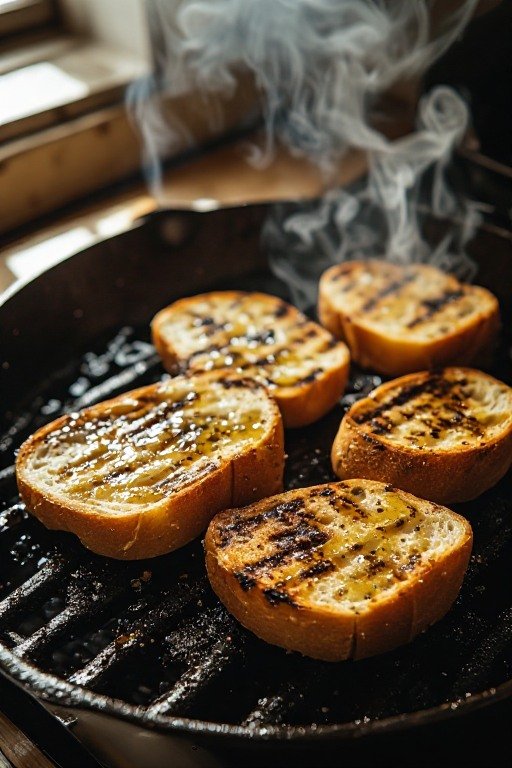
Grill method (best for flavor): Heat a grill pan or cast iron skillet over high heat until smoking. Brush or drizzle each slice lightly with olive oil on both sides. Grill for 1 to 2 minutes per side until golden with visible grill marks and slightly charred at the edges. The char is not a flaw — it is an essential part of the flavor.
Oven broil method (best for large batches): Arrange bread slices on a baking sheet and drizzle or brush lightly with olive oil. Place under the broiler 10 to 15 cm from the heat source. Broil for 1 to 2 minutes per side, watching carefully — bread under a broiler can go from perfectly golden to burnt in under a minute.
Toaster method (fastest, least flavor): Toast until golden. Works in a pinch but does not develop the same smoky depth as grilling or broiling.
The bread should be thoroughly golden and crispy on the outside with a slightly soft center — not burnt through or completely hard all the way to the middle.
Step 3 — Rub with Garlic
This is the most satisfying step in the entire recipe — and the one most outside-Italy recipes treat as optional, when it is actually mandatory.
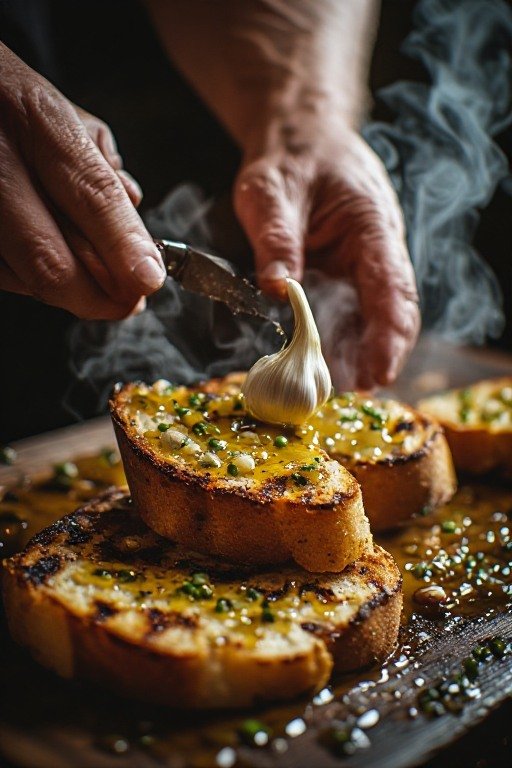
The moment the bread comes off the grill or out of the broiler while it is still hot, take the halved garlic clove and rub it firmly across the entire toasted surface. The hot, porous toast acts like a grater — it shreds tiny amounts of raw garlic directly into the surface of the bread, leaving an intensely aromatic garlic flavor that permeates every bite.
How much garlic? Authentic bruschetta is assertively garlicky. One pass with the clove for a mild result, two to three passes for the full traditional Italian experience. The garlic flavor mellows the moment the tomato topping goes on — so rub more generously than feels comfortable.
Why hot bread only: Cold bread does not have the open, porous texture to absorb the garlic properly. The grating effect only works while the bread is still warm and slightly porous from the heat. Rub immediately — within 30 seconds of removing from the heat.
Step 4 — Drizzle with Olive Oil
Immediately after rubbing with garlic, drizzle a generous amount of extra virgin olive oil over each slice. Do not brush — pour from the bottle or drizzle from a spoon. The bread should look visibly oiled, not just lightly coated.
This olive oil layer between the bread and the tomato topping serves as both flavor and as a barrier that slows the bread from absorbing the tomato liquid — keeping it crisp slightly longer.
Finish with a pinch of flaky sea salt over the oiled surface.
Step 5 — Add the Topping and Serve
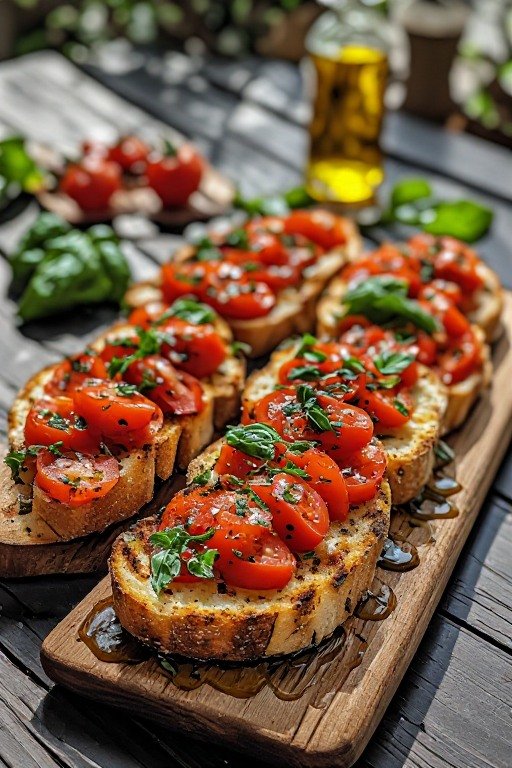
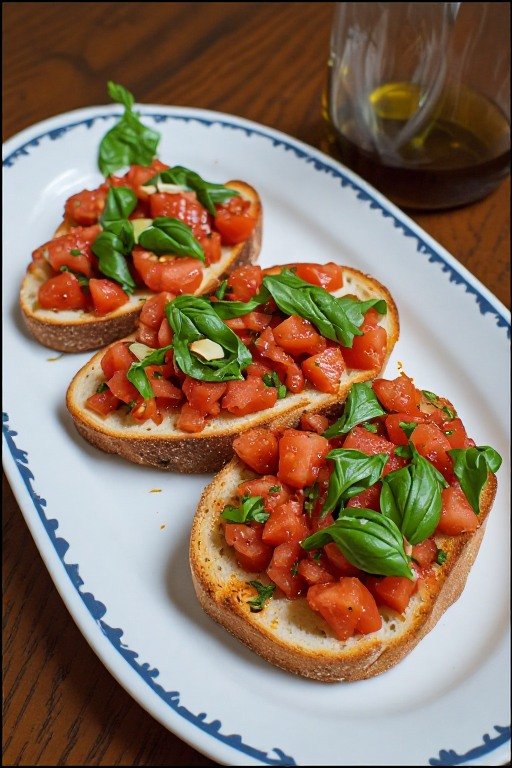
Spoon the macerated tomato topping generously over each slice. Do not be timid — a bruschetta loaded with topping is far more satisfying than one with a sparse, cautious amount. Every bite should have a good ratio of topping to bread.
If any basil leaves are still whole and particularly beautiful, place one or two as a final garnish on top.
Serve immediately. Bruschetta is a dish that exists in the window between the bread being warm and crispy and the bread absorbing the tomato liquid and going soft. That window is approximately 5 to 10 minutes — serve at the table as soon as it is assembled.
The serving sequence for parties: Toast and rub all the bread in advance. Keep the bread at room temperature uncovered so it stays crisp. Spoon the topping only when ready to serve — not before. This way you have the bread fully prepared ahead of time but the assembly happens at the last moment.
5 Tips for Perfect Bruschetta Every Time
Use your best olive oil. Bruschetta is one of the few dishes where the olive oil is a primary flavor rather than a background one. The quality of the oil you use is directly tasted in every bite. Buy a good Italian extra virgin with a recent press date and use it generously.
Let the tomatoes macerate properly. Thirty minutes minimum, forty-five to sixty minutes is ideal. This step transforms diced tomatoes into a cohesive, deeply flavored topping. Rushing it produces a noticeably inferior result.
Rub the garlic firmly and immediately. The bread must be hot and the garlic must be raw. This is what gives bruschetta its characteristic garlic intensity that no amount of garlic powder or garlic oil can replicate.
Add basil at the very end. Torn basil added to the tomato mixture more than 5 minutes before serving darkens and loses its fresh, vibrant quality. It should be added right before serving and should look vividly green on the finished bruschetta.
Serve within 10 minutes of assembly. Bruschetta does not wait well. The longer it sits after assembly, the softer the bread becomes as it absorbs tomato liquid. Assemble and serve immediately — this is a dish for the table, not the kitchen counter.
Variations
🧀 Bruschetta with Ricotta: Spread a generous amount of fresh whole-milk ricotta on the toasted, garlic-rubbed bread before adding the tomato topping. The creamy, mild ricotta adds richness and makes the bruschetta feel more substantial. Add a drizzle of good honey and a pinch of chili flakes on top.
🍄 Mushroom Bruschetta: Sauté 400g of mixed mushrooms (cremini, shiitake, and oyster) in butter with garlic, thyme, and a splash of white wine until deeply golden and all liquid has evaporated. Season generously and spoon over the toasted bread. Finish with fresh parsley and a shaving of Parmesan.
🥑 Avocado Bruschetta: Mash ripe avocado with lemon juice, salt, and chili flakes. Spread over the toasted bread and top with the tomato mixture. A modern interpretation that works beautifully as a light lunch.
🐟 White Bean and Tuna Bruschetta: Combine drained canned tuna with drained white cannellini beans, lemon juice, olive oil, fresh parsley, and capers. Spoon generously over the toasted, garlic-rubbed bread. A Tuscan classic that is simple, satisfying, and genuinely delicious.
🌿 Fett’unta (The Original): The simplest version — the original bruschetta before tomatoes arrived in Italy. Toast the bread, rub with garlic, drizzle abundantly with the finest extra virgin olive oil you own, and finish with flaky sea salt and nothing else. This version tastes best in autumn when fresh-pressed olive oil is available and reveals the true soul of bruschetta.
What to Serve with Bruschetta
Bruschetta works in multiple contexts beyond a standalone appetizer:
Occasion
Pairing
Italian dinner starter
Alongside a cheese board and olives
Summer party
With prosecco or a crisp Pinot Grigio
Casual lunch
Paired with a simple green salad
BBQ appetizer
Served while the main course grills
Soup starter
Before minestrone or tomato soup
Brunch
Alongside eggs and prosciutto
Storage Instructions
The tomato topping: Makes ahead beautifully — prepare up to 4 hours in advance and store covered in the refrigerator without the basil. Add the basil and bring to room temperature for 15 minutes before serving. Do not store for longer than 8 hours — the tomatoes become too soft and watery.
The toasted bread: Grill or toast the bread up to 2 hours ahead and store uncovered at room temperature. Do not cover or bag — moisture softens the crust. Reheat in a 175°C (350°F) oven for 3 to 4 minutes to re-crisp before serving if needed.
Assembled bruschetta: Cannot be stored — the bread absorbs the tomato liquid within 10 to 15 minutes. Always assemble immediately before serving.
Frequently Asked Questions
Does authentic Italian bruschetta have balsamic vinegar? No — traditional Italian bruschetta does not include balsamic vinegar as part of the tomato topping. This is a popular addition outside Italy that has become common in restaurants internationally, but it is not part of the original recipe. Balsamic adds sweetness and acidity that can overpower the delicate flavor of good tomatoes and olive oil. If you enjoy balsamic, a small drizzle of a good-quality aged balsamic over the finished bruschetta is a pleasant addition — but it is not classic.
Why is my bruschetta soggy? Two possible causes: the bread was sliced too thin and could not support the weight and moisture of the topping, or the bruschetta was assembled too long before serving and the bread absorbed the tomato liquid. Always use thick slices of dense-crumbed bread, and always serve immediately after assembly.
Can I make bruschetta ahead for a party? Yes — with the right approach. Prepare the tomato topping up to 4 hours ahead without the basil. Toast the bread up to 2 hours ahead and store uncovered. Add basil to the topping right before serving. Assemble the bruschetta at the very last moment and bring to the table immediately. This way all the labor is done in advance and the assembly takes under 3 minutes.
What is the difference between bruschetta and crostini? Both are Italian toasted bread appetizers but they are different in character. Bruschetta uses thick-sliced rustic bread grilled or toasted, rubbed with garlic, and topped generously. Crostini uses very thin slices of bread (usually baguette) toasted until fully crispy and dry throughout — they are smaller, crunchier, and typically used as a base for more elaborate toppings. Bruschetta is rustically Italian. Crostini are more delicate and refined.
Can I use cherry tomatoes? Yes — halved or quartered cherry tomatoes work beautifully, particularly Campari tomatoes. Their concentrated flavor and lower water content make them excellent for bruschetta. Halve them and proceed exactly as with diced regular tomatoes.
Nutritional Information (Per 2 Pieces, Approximate)
Nutrient
Amount
Calories
195 kcal
Total Fat
10g
Saturated Fat
1.5g
Carbohydrates
22g
Fiber
2g
Sugar
3g
Protein
4g
Sodium
310mg
Vitamin C
15% DV
Vitamin A
8% DV
Values are approximate and will vary based on bread type and olive oil quantity used.