
Introduction
Almond flour has become one of those ingredients people keep hearing about…
But many still don’t know what to actually do with it.
At first glance, it seems like a simple substitute for regular flour. But once you start cooking with it, you realize it changes the texture, flavor, and even the feel of a recipe completely.
It creates baked goods that are softer, slightly richer, and naturally nutty without needing extra ingredients. And because it’s lower in carbs and gluten-free, it’s become especially popular in healthier recipes.
The best part?
You don’t need complicated techniques to use it.
🧠 What Makes Almond Flour Different
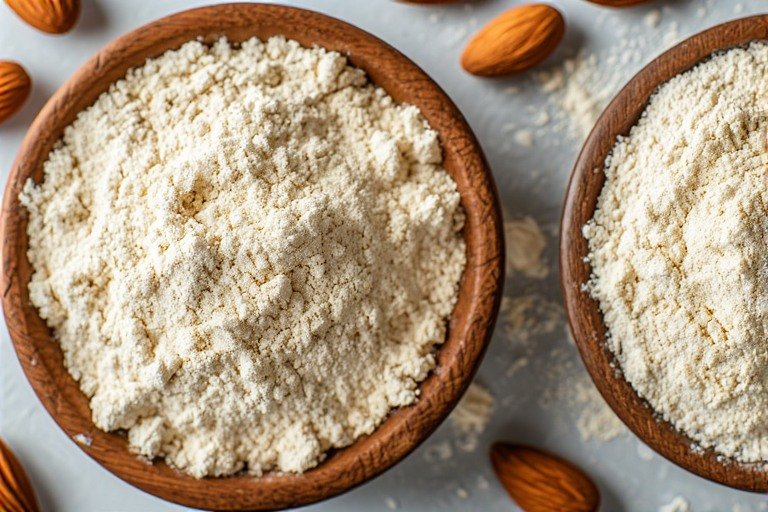
Almond flour behaves differently than regular flour.
Because it’s made from finely ground almonds, it contains natural oils and more moisture. That means recipes made with almond flour usually turn out softer and more tender instead of dry or dense.
It also has a mild nutty flavor that works especially well in baked recipes like cookies, muffins, pancakes, and quick breads.
The texture is what surprises most people.
Instead of tasting “healthy,” recipes often feel richer and more satisfying.

Ingredients Commonly Used with Almond Flour
Most almond flour recipes use simple pantry ingredients.
You’ll often see combinations like:
- Almond flour
- Eggs
- Butter or coconut oil
- Honey or maple syrup
- Baking powder
- Vanilla extract
Because almond flour doesn’t behave exactly like wheat flour, eggs are usually important for structure and texture.
Easy Almond Flour Pancakes
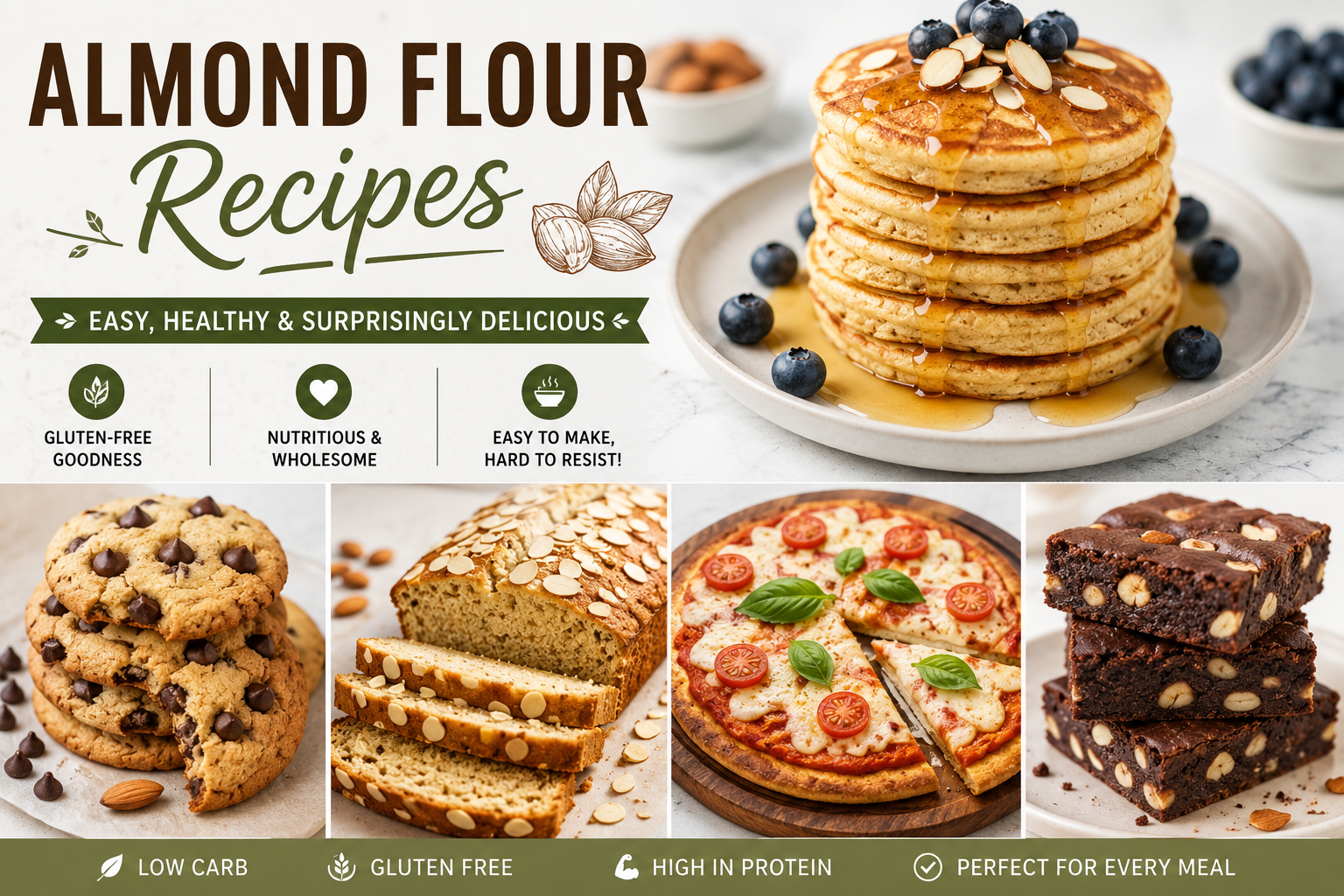
One of the easiest recipes to start with is almond flour pancakes.
In a bowl, mix almond flour, eggs, a little baking powder, vanilla, and milk until smooth. The batter will feel slightly thicker than regular pancake batter.
Heat a lightly buttered pan over medium heat and pour small portions onto the surface. Cook until bubbles appear, then flip carefully.
The result is soft, slightly fluffy pancakes with a richer texture than traditional versions.
They pair perfectly with fruit, honey, or maple syrup.

Almond Flour Cookies
Cookies are another recipe where almond flour works surprisingly well.
Because of the natural fats in almonds, the cookies stay soft inside while developing lightly crisp edges.
A simple combination of almond flour, butter, sugar, egg, and vanilla creates cookies that feel buttery and satisfying without being heavy.
Chocolate chips or chopped nuts also work really well in these recipes.

Almond Flour Muffins
Almond flour muffins are softer and more moist than many traditional muffins.
They work especially well with flavors like banana, blueberry, cinnamon, or chocolate. Since almond flour already has richness, you usually don’t need as much oil or butter.
The texture stays tender even after cooling, which makes them great for meal prep or breakfast.
Texture & Flavor
The biggest difference in almond flour recipes is texture.
They’re usually:
- Softer
- More moist
- Slightly richer
- Less dry than regular flour recipes
The flavor is mild, slightly nutty, and works well in both sweet and savory dishes.
🍽️ How to Serve Almond Flour Recipes
Most almond flour recipes are best served warm or fresh.
Pancakes pair well with fruits and syrup, while muffins and cookies work perfectly as snacks or breakfast options.
Because the texture stays soft, these recipes also feel more homemade and comforting.

Common Mistakes to Avoid
One common mistake is replacing regular flour with almond flour in equal amounts.
Almond flour absorbs moisture differently, so recipes often need more eggs or different ratios.
Another mistake is overbaking.
Because almond flour recipes contain natural oils, they can dry out quickly if baked too long.
Final Thoughts
Almond flour recipes are popular for a reason.
They’re simple, satisfying, and create a texture that feels softer and richer than many traditional recipes.
Once you start using almond flour properly, it becomes one of those ingredients that’s surprisingly versatile and easy to keep coming back to.